Spanish National Research Council (CSIC)
If you are the contact person for this centre and you wish to make any changes, please contact us.
'Ramón y Cajal' postdoctoral researcher at the Biologial Mission of Galicia and head of the ECOP research group – Landscape Ecology
Senior Scientist at the Spanish Institute of Oceanography, IEO-CSIC
Senior scientist at the CSIC at the Animal Health Research Centre (CISA), National Institute for Agricultural and Food Research and Technology (INIA)
Researcher at the Instituto Cajal, CSIC
Doctor in Ecology and postdoctoral researcher at the National Museum of Natural Sciences (CSIC) in Madrid
Professor of Economics at Durham University (United Kingdom), Research Professor at the Spanish National Research Council (CSIC) and Lead Author of the International Cooperation chapter of the IPCC's AR6
EMERGIA post-doctoral research in the Sky Quality Office
Research professor at public research organisations at the CSIC Institute of History, in the Department of Archaeology and Social Processes
Researcher at the Institute of Public Goods and Policies of the CSIC (IPP-CSIC)
CSIC research professor and expert in food safety and water quality
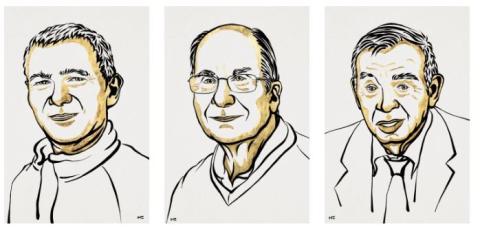
The Royal Swedish Academy of Sciences has awarded the Nobel Prize in Chemistry 2023 to Moungi G. Bawendi, Louis E. Brus, and Alexei I. Ekimov "for the discovery and synthesis of quantum dots." Quantum dots are tiny nanoparticles that diffuse their light from televisions and LED lights, and can also guide surgeons when removing tumor tissue, among many other applications.
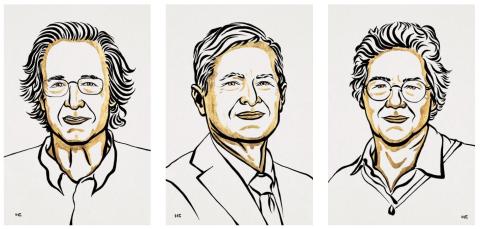
The Royal Swedish Academy of Sciences has awarded the 2023 Nobel Prize in Physics to Pierre Agostini, Ferenc Krausz and Anne L'Huillier for developing "experimental methods generating attosecond light pulses". These advances made it possible to observe the motion of particles in atoms on the shortest time scale captured by humans. An attosecond is a unit of time equivalent to one trillionth of a second, roughly the time it takes light to travel the diameter of an atom.

The Karolinska Institute has awarded the Nobel Prize in Medicine or Physiology to Katalin Karikó and Drew Weissman for their groundbreaking discoveries, which have radically changed our understanding of how mRNA interacts with our immune system, and made it possible to develop vaccines at unprecedented speed during the covid-19 pandemic.
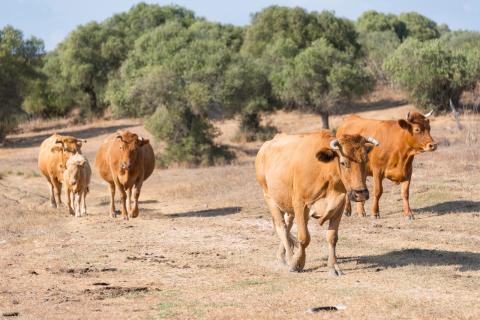
Since the first case of epizootic haemorrhagic disease (EHD) in Spain was detected in cattle in November 2022, it has spread among farms in several autonomous communities in dozens of outbreaks. The mosquito-borne disease does not affect humans, but has the potential to cause economic losses.
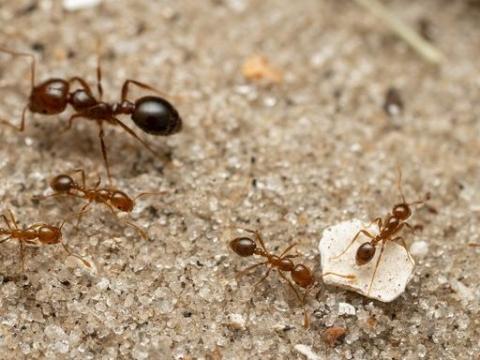
One of the world's most invasive species is Solenopsis invicta, an ant native to South America with a painful sting. In an article published in Current Biology, experts confirm the first official sighting of this species in Europe: 88 nests spread over five hectares near Syracuse in Sicily, Italy. The ants could soon spread across the continent, causing serious environmental, health and economic problems. The study is led by the Institute of Evolutionary Biology (IBE) of the CSIC and the UPF.
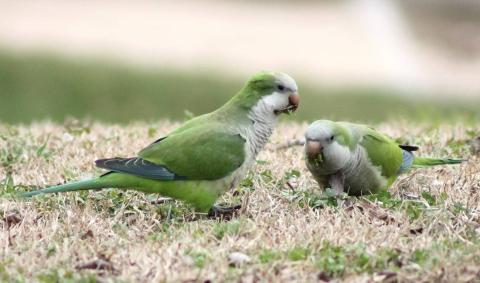
According to a new report from the Intergovernmental Science-Policy Platform on Biodiversity and Ecosystem Services (IPBES), human activities have introduced over 37,000 exotic species to regions around the world. The document highlights that more than 3,500 of these are harmful invasive exotic species that are often overlooked until it's too late.

A study in mice found "mild metabolic and neuropsychological malprogramming" in the offspring of females who, during gestation and lactation, had ingested emulsifiers, substances used to improve the texture of ultra-processed foods. The article, led by a team from IDIBAPS in Barcelona and published in PLoS Biology, states that the consumption during these periods of carboxymethylcellulose and polysorbate 80 - two common emulsifiers - diluted in water was associated with metabolic and cognitive deficits in the mouse offspring.

The decline of insects in Central and Western Europe in recent years is mainly due to human activities and the intensification of agriculture, according to a study funded by three companies (Bayer, BASF and Syngenta) that manufacture pesticides. The paper, published in PLoS ONE, summarises an analysis of 82 other published studies and explains the causes of population declines in two groups of insects: carabids (ground beetles) and lepidopterans (including moths and butterflies). The authors estimate that "anthropogenic activities in general" are most responsible for this decline, followed by agricultural intensification (including pesticides) and climate change in third place.
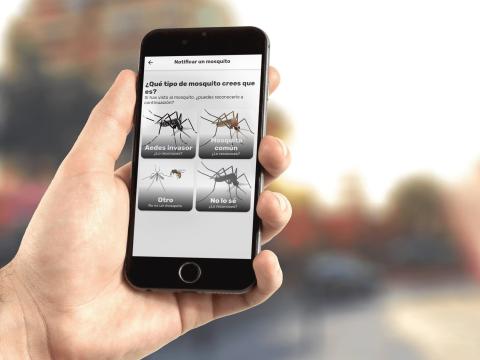
Today it is difficult to see science policies that do not mention citizen science or citizen participation in science. On World Mosquito Day, which is celebrated on August 20, we analyze what has been achieved by the Mosquito Alert project, based on citizen science and which the Ministry of Health has supported this summer within the framework of the National Plan for Disease Prevention, Surveillance and Control Transmitted by Vectors.
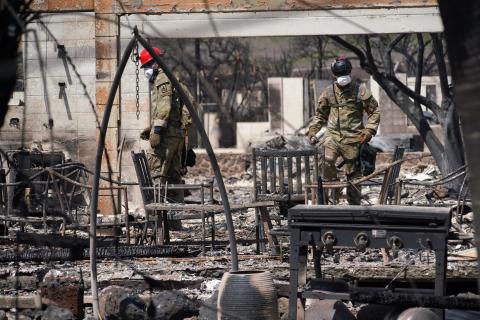
The fires in Hawaii, which have left at least a hundred dead and hundreds missing, have devastated entire towns and villages and have put the issue of how to prevent such intense fires back on the table. World Wildfire Prevention Day is celebrated this Friday 18 August. The increase in the occurrence and recurrence of large wildfires jeopardizes the resilience of socio-ecological systems. Efforts in prevention must be a priority and constant throughout the year. We have a joint responsibility as a society to face this unprecedented problem, which will worsen in the coming years.