Spanish National Research Council (CSIC)
If you are the contact person for this centre and you wish to make any changes, please contact us.
'Ramón y Cajal' postdoctoral researcher at the Biologial Mission of Galicia and head of the ECOP research group – Landscape Ecology
Senior Scientist at the Spanish Institute of Oceanography, IEO-CSIC
Senior scientist at the CSIC at the Animal Health Research Centre (CISA), National Institute for Agricultural and Food Research and Technology (INIA)
Researcher at the Instituto Cajal, CSIC
Doctor in Ecology and postdoctoral researcher at the National Museum of Natural Sciences (CSIC) in Madrid
Professor of Economics at Durham University (United Kingdom), Research Professor at the Spanish National Research Council (CSIC) and Lead Author of the International Cooperation chapter of the IPCC's AR6
EMERGIA post-doctoral research in the Sky Quality Office
Research professor at public research organisations at the CSIC Institute of History, in the Department of Archaeology and Social Processes
Researcher at the Institute of Public Goods and Policies of the CSIC (IPP-CSIC)
CSIC research professor and expert in food safety and water quality
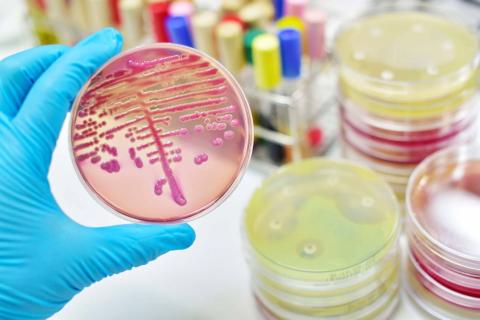
Cresomycin, a new synthetic molecule, exhibits robust efficacy against multiple evolutionarily divergent forms of antimicrobial resistance (AMR), according to a study published today in Science. By structurally analyzing how antibiotics bind to ribosomes of various bacterial species, researchers developed a new antibiotic molecule that adopts the exact conformation necessary for ribosomal binding.
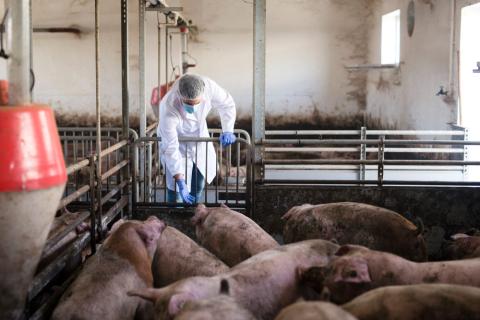
The European Centre for Disease Prevention and Control (ECDC) reported that on January 29th, Spanish authorities notified a possible case of human infection with swine flu virus A(H1N1)v in a worker from a Catalan pig farm. After being diagnosed with bronchitis, subsequent laboratory analyses confirmed it as swine flu A(H1N1)v. The ECDC informs that the patient has fully recovered, and to date, no new cases have been detected among close contacts or among the worker's colleagues at the farm.

In 2010, nearly 1,000 sub-basins around the world were facing water shortages. But when considering not only water quantity, but also water quality, this figure rises to more than 2,500, according to a study published in Nature Communications. By 2050, the authors estimate that up to a third of sub-basins will face severe shortages of clean water, which could affect 3 billion people. Southern China, Europe, North America and Africa will be the most affected regions.
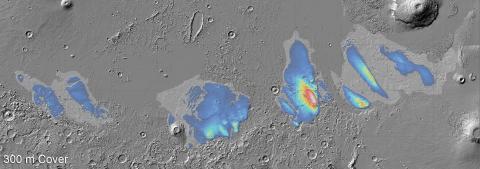
Fifteen years ago, the European Space Agency's (ESA) Mars Express probe revealed the presence of large deep deposits on Mars, in an area called the Medusae Fossae Formation (MFF), located at its equator. Now, new data from the probe's MARSIS radar indicate that the deposits are deeper than previously thought - up to 3.7 kilometers thick - and include both ice-rich and dusty layers. The results are published in Geophysical Research Letters.
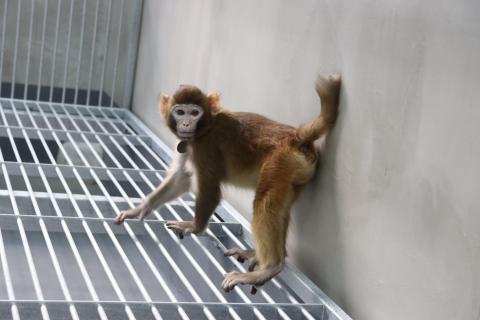
A team of Chinese researchers report today in the journal Nature Communications the successful cloning of a rhesus monkey, with a healthy placenta, which survived for more than two years. According to the authors, this could improve the efficiency of the monkey cloning process, which so far is very low. Previously, different teams have cloned more mammalian species, including 'Dolly the sheep' and another species of macaque (Macaca fascicularis).
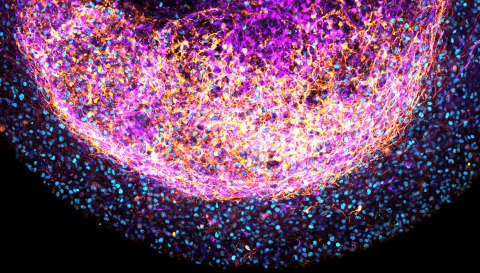
A team led by the Princess Máxima Pediatric Oncology Center and the Hubrecht Institute (The Netherlands) has generated small 3D brain models--known as organoids--from human fetal brain tissue. Until now, these brain organoids-which attempt to resemble real organs on a miniature scale-were grown in the laboratory using pluripotent or embryonic stem cells. The new technique, published in the journal Cell, allows regions of brain tissue to self-organize into three-dimensional brain structures. The authors used these organoids and the CRISPR-Cas9 tool to simulate the development of one type of brain tumor, glioblastoma, and see how it responded to different drugs.
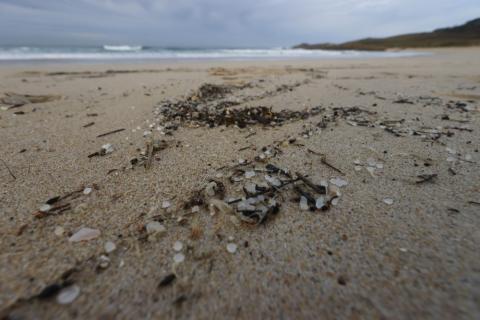
A spill of plastic pellets from containers from the merchant ship Toconao has reached several areas of the Galician coastline. For its part, the Government of Asturias has upgraded the Accidental Marine Pollution Plan to phase 2 due to the detection of microplastics on the coast.
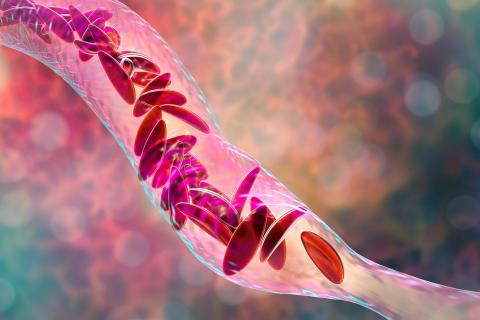
The European Medicines Agency (EMA) has recommended approval of the first drug in the European Union to use the CRISPR/Cas9 gene-editing technique. The drug, Casgevy, is indicated for the treatment of two rare inherited diseases, beta thalassaemia and sickle cell disease (sickle cell anaemia), caused by genetic mutations that affect the production or function of haemoglobin, the oxygen-carrying protein in red blood cells. Both conditions are debilitating and potentially fatal. The EMA opinion will be sent to the European Commission for a decision on an EU-wide marketing authorisation.

After an intense night of negotiations in Dubai (United Arab Emirates), the countries participating in COP28 reached a historic agreement by mentioning for the first time "moving away from fossil fuels" in the Global Stocktake document - the assessment of progress made towards achieving the climate goals set out in the Paris Agreement. The agreement comes after the first draft presented by the presidency did not make this mention - it referred only to "reducing consumption and production" of these fuels - which was described as "unacceptable" by countries such as Spain.

A study of more than 5,000 patients has developed a method to predict the biological age of our organs. They have analysed more than 4,000 proteins present in the blood and used machine learning models adapted to 11 different organs. According to the authors, almost 20 % of the population has accelerated organ ageing, which in many cases is associated with an increased risk of mortality of between 20 and 50 %. The results are published in the journal Nature.