Spanish National Research Council (CSIC)
If you are the contact person for this centre and you wish to make any changes, please contact us.
'Ramón y Cajal' postdoctoral researcher at the Biologial Mission of Galicia and head of the ECOP research group – Landscape Ecology
Senior Scientist at the Spanish Institute of Oceanography, IEO-CSIC
Senior scientist at the CSIC at the Animal Health Research Centre (CISA), National Institute for Agricultural and Food Research and Technology (INIA)
Researcher at the Instituto Cajal, CSIC
Doctor in Ecology and postdoctoral researcher at the National Museum of Natural Sciences (CSIC) in Madrid
Professor of Economics at Durham University (United Kingdom), Research Professor at the Spanish National Research Council (CSIC) and Lead Author of the International Cooperation chapter of the IPCC's AR6
EMERGIA post-doctoral research in the Sky Quality Office
Research professor at public research organisations at the CSIC Institute of History, in the Department of Archaeology and Social Processes
Researcher at the Institute of Public Goods and Policies of the CSIC (IPP-CSIC)
CSIC research professor and expert in food safety and water quality
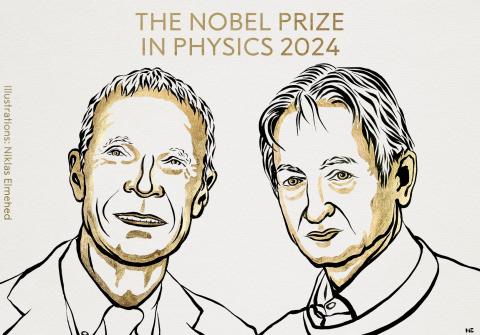
The Royal Swedish Academy of Sciences has awarded the Nobel Prize in Physics 2024 to researchers John J. Hopfield and Geoffrey E. Hinton for discovering the foundations that enable machine learning with artificial neural networks. Hinton for discovering the foundational basis that enables machine learning with artificial neural networks. This technology, inspired by the structure of the brain, is behind what we now call ‘artificial intelligence’.

The increase in human life expectancy may be slowing down, according to an analysis of data from nine regions around the world, including Spain, over the past three decades published today in Nature Aging. The accelerated rates of increase in life expectancy observed in the 20th century have slowed, especially after 2010: children born in recent years have a relatively low probability of reaching 100 years of age. The authors suggest that there is no evidence that a radical extension of life expectancy has occurred or will occur in the 21st century.

The Karolinska Institute has awarded the Nobel Prize in Medicine or Physiology to Victor Ambros and Gary Ruvkun for the discovery of microRNAs, small RNA fragments that do not contain instructions for making proteins but instead participate in the regulation of gene expression. Their role is fundamental in processes such as cell differentiation, and their alteration can influence diseases like cancer.

International research in which CREAF is participating estimates that more than 1,300 bird species will disappear over the next two centuries, which is more than double the number of extinctions recorded to date - 610 species have disappeared in the last 130,000 years. The study, published in the journal Science, shows that, for island endemics, the proportional losses have been and will be even greater. The authors warn that when a species becomes extinct, its role in the ecosystem may disappear with it.

A study has analyzed changes in the Earth's average global surface temperature over the past 485 million years and has discovered oscillations ranging from 11°C to 36°C, representing a variation of up to 25°C. The research concludes that temperatures during the Phanerozoic underwent more fluctuations than previously thought and shows a correlation between CO2 and changes in Earth's temperature. The article, published in the journal Science, combines thousands of data points with a modeling method used for weather forecasting.

A study carried out in China has analyzed tissues from 461 fur animals, mostly farm-raised. They found 125 virus species, 39 of which presented a high risk of interspecies transmission. According to the authors, who publish the results in the journal Nature, “there is a need for more extensive and regular surveillance to assess the public health risks that could result from fur animal farming”.

More than 52 million tonnes of plastic waste are emitted around the world every year, according to a study published in Nature that inventories plastic pollution in 50,702 cities. It concludes that littering is the largest source of plastic emissions in the global North, and uncollected waste is the largest source in the South.
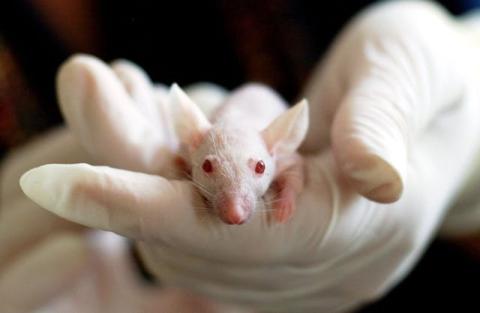
Mice with Alzheimer's disease are more resistant to the development of colorectal tumors, a study shows. An inverse relationship between Alzheimer's and cancer has already been shown in epidemiological studies in humans. An imbalance in certain intestinal bacteria contributes to this negative correlation in mice, adds the article published in PNAS.

An international team with Spanish participation has developed a database with the metagenome of bacteria, fungi, and yeasts present in more than 2,500 foods, mostly dairy products, followed by beverages and fermented meats. The authors identified more than 10,800 microorganisms, half of which were previously unknown species. The study, published in Cell, shows that food-associated microorganisms are present in 3% of the adult gut microbiome and 56% of that of newborns.
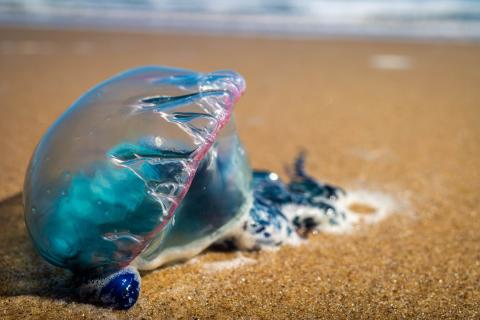
With summer, the presence of these gelatinous creatures on the Spanish coasts bothers swimmers, who can suffer injuries if they come in contact with them. Are there more jellyfish than before? Which ones are the most dangerous? What should I do if one stings me? How can I avoid it? In this guide, we answer the main questions on jellyfish so you know how to act.