Spanish National Research Council (CSIC)
If you are the contact person for this centre and you wish to make any changes, please contact us.
'Ramón y Cajal' postdoctoral researcher at the Biologial Mission of Galicia and head of the ECOP research group – Landscape Ecology
Senior Scientist at the Spanish Institute of Oceanography, IEO-CSIC
Senior scientist at the CSIC at the Animal Health Research Centre (CISA), National Institute for Agricultural and Food Research and Technology (INIA)
Researcher at the Instituto Cajal, CSIC
Doctor in Ecology and postdoctoral researcher at the National Museum of Natural Sciences (CSIC) in Madrid
Professor of Economics at Durham University (United Kingdom), Research Professor at the Spanish National Research Council (CSIC) and Lead Author of the International Cooperation chapter of the IPCC's AR6
EMERGIA post-doctoral research in the Sky Quality Office
Research professor at public research organisations at the CSIC Institute of History, in the Department of Archaeology and Social Processes
Researcher at the Institute of Public Goods and Policies of the CSIC (IPP-CSIC)
CSIC research professor and expert in food safety and water quality

While some studies have suggested that having a mother with Alzheimer's may increase the risk of developing the disease, a new study reveals that having a father with the disease may be related to a greater spread of tau protein in the brain, which is a sign of the disease. The study, published in Neurology, does not prove that having a father with Alzheimer's causes these brain changes; it only shows an association.
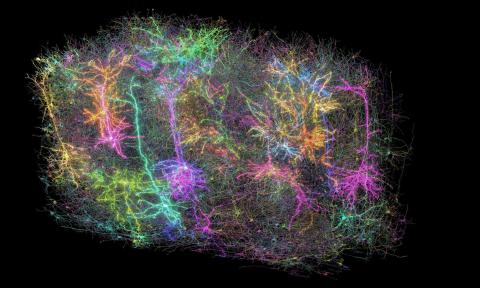
A set of articles published in Nature and Nature Methods draws a high-resolution map of the structure of and connections between the brain cells of mice. The map is based on data from a single cubic millimetre of brain and includes more than 200,000 cells, around 84,000 neurons and 524 million synaptic connections. Although this is a very small part of the mouse brain, it will help us understand how different types of cells work together.

An international team with Spanish participation has analysed the usefulness of a blood biomarker - the p-tau217 protein - for detecting Alzheimer's disease in 1,767 patients. According to the authors, who publish the results in the journal Nature Medicine, the test has detected the disease with high reliability in four hospital cohorts, as well as in a primary care cohort. They add that it is an assay that can be easily implemented in clinical laboratories and is already routinely used in some centres in Spain.

EMA’s human medicines committee has recommended not authorising the marketing of Kisunla (donanemab), a drug intended for the treatment of early-stage Alzheimer's disease. The committee considered that the benefits of this drug were not great enough to outweigh the risk of potentially fatal events. In recent years, several patients have died due to microbleeds in the brain.
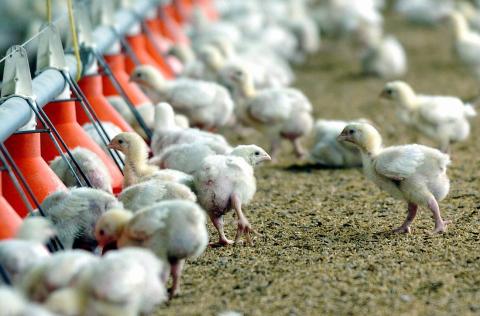
A team in the US has tested the efficacy of baloxavir, an antiviral already on the market for treating common flu, against avian influenza in mice. The results, published in the journal Nature Microbiology, show that it is more effective than the currently recommended oseltamivir (Tamiflu) except when the infection is via the mouth, in which case it is equally effective. According to the authors, baloxavir ‘could be considered for the potential treatment of serious H5N1 virus infections in humans’.

23% of people infected with SARS-CoV-2 between 2021 and 2023 developed long covid and more than half of them had persistent symptoms for two years. These are the main conclusions of a study led by ISGlobal that followed more than 2,700 people in Catalonia. The results are published in the journal BMC Medicine.
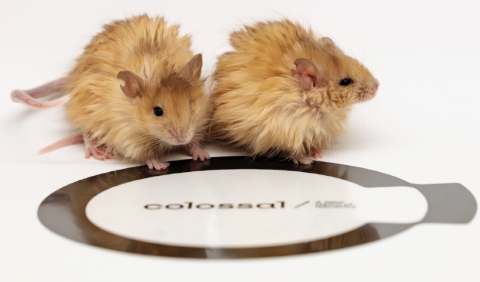
Colossal Biosciences has announced the creation of genetically modified mice with characteristics reminiscent of the fur of extinct mammoths, such as fur colour, texture and thickness. The non-peer-reviewed results were shared today in the BioRXiv prepublication repository.

An article reviews evidence on the accumulation of microplastics in human brain tissue recently published in Nature Medicine. The authors highlight practical measures to reduce exposure, noting that switching from bottled water to filtered tap water could reduce microplastic intake from 90,000 to 4,000 particles per year. The paper is a commentary in Brain Medicine.

According to a modelling study published in Nature Cities, the frequency of some types of fires in cities is expected to increase in the coming decades as a result of climate change. This increase would be seen in vehicle fires and in those that occur outdoors. The conclusions are based on data from more than 2,800 cities in 20 countries and could be useful for future urban planning and emergency response strategies.
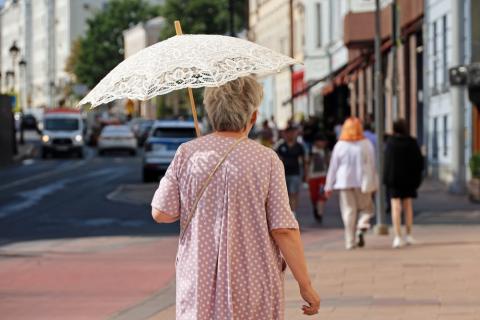
Research has analyzed how extreme heat influences the biological age of elderly populations, specifically in the United States. The study, published in Science Advances, used blood samples from more than 3,600 adults with an average age of 68 collected between 2010 and 2016. The team compared epigenetic aging trends with the number of days of extreme heat in the participants' places of residence. The models showed that more days of heat or long-term heat — over a period of one to six years — increased the biological age of the participants by more than two years.