Spanish National Research Council (CSIC)
If you are the contact person for this centre and you wish to make any changes, please contact us.
'Ramón y Cajal' postdoctoral researcher at the Biologial Mission of Galicia and head of the ECOP research group – Landscape Ecology
Senior Scientist at the Spanish Institute of Oceanography, IEO-CSIC
Senior scientist at the CSIC at the Animal Health Research Centre (CISA), National Institute for Agricultural and Food Research and Technology (INIA)
Researcher at the Instituto Cajal, CSIC
Doctor in Ecology and postdoctoral researcher at the National Museum of Natural Sciences (CSIC) in Madrid
Professor of Economics at Durham University (United Kingdom), Research Professor at the Spanish National Research Council (CSIC) and Lead Author of the International Cooperation chapter of the IPCC's AR6
EMERGIA post-doctoral research in the Sky Quality Office
Research professor at public research organisations at the CSIC Institute of History, in the Department of Archaeology and Social Processes
Researcher at the Institute of Public Goods and Policies of the CSIC (IPP-CSIC)
CSIC research professor and expert in food safety and water quality
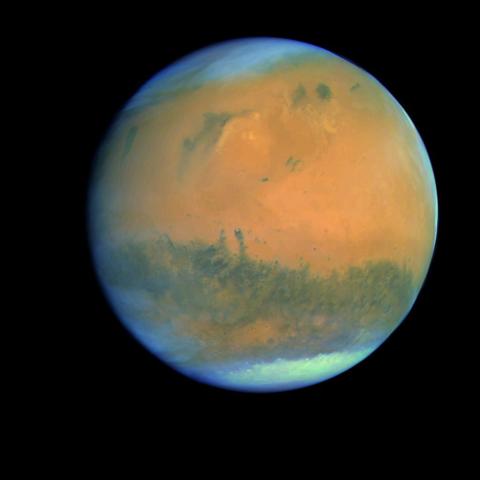
The red colour of Mars corresponds to a type of ferrihydrite that is the dominant form of iron oxide in Martian dust, although previous studies have attributed it to anhydrous haematite. The persistence of ferrihydrite, whose formation requires water, suggests that it formed during a cold, wet period, followed by a transition to the planet's current arid environment. The result, based on ESA and NASA space data and new laboratory experiments, is published in Nature Communications.
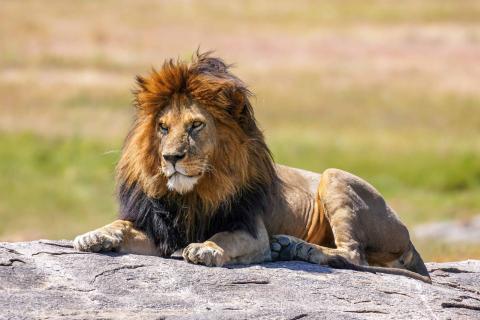
One study suggests that conservation efforts are concentrated around a small number of charismatic species, such as elephants. However, there are undervalued species, such as fungi, plants and invertebrates, that are critical to the functioning of ecosystems. The research, published in the journal PNAS, analysed more than 14,000 conservation projects spanning a 25-year period - from 1992 to 2016. Of the nearly $2 billion allocated by the projects, 83% went to vertebrates. Plants and invertebrates each received 6.6% of the funding, while fungi and algae received less than 0.2%.

An international team has analyzed data from nearly half a million people to analyze the influence of genes or environment on mortality, age-related diseases and aging. Although the relationship may vary according to the type of disease, their conclusions are that the environment -especially socioeconomic conditions, smoking habits and physical exercise- has a much greater influence than genetics in all the aspects studied. Among other data, environment explains 17 % of the variation in mortality risk, while genetics is limited to 2 %. The results are published in the journal Nature Medicine.

A team of researchers from the University of California (USA) has analyzed the presence of hate speech on the social network X (formerly Twitter) since its purchase by Elon Musk in October 2022 until June 2023. Their findings are that this type of racist, homophobic and transphobic speech increased by approximately 50 % throughout this period. In addition, the presence of bots and fake accounts did not decrease, contrary to Musk's own promises. The results are published in the journal Plos One.

An international team of scientists from the KM3NeT collaboration has detected the signal from the highest-energy cosmic neutrino to date, some 30 times higher than those previously detected. The result suggests that the particle came from beyond the Milky Way, although its precise origin has yet to be determined. The results are published in the journal Nature.

A multidisciplinary team of US researchers has analyzed the presence of micro- and nanoplastics in 52 human cadavers between 2016 and 2024. The concentrations of these particles were higher in the brain than in the liver or kidneys. They were also higher in the brains of people with dementia, although the researchers acknowledge that causality cannot be established. The results are published in the journal Nature Medicine.
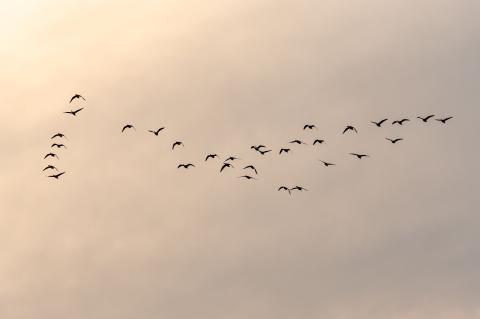
A meta-analysis that brings together data from 628 species of animals, plants and other organisms in terrestrial and marine ecosystems over the last three decades shows that most are losing genetic diversity, especially mammals and birds. ‘The threats affected two thirds of the populations we analysed and less than half are subject to conservation management measures,’ say the authors of the research, published in Nature.
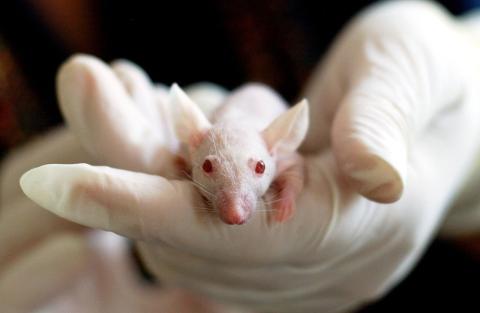
A team of researchers has used embryonic stem cell engineering to create a bipaternal mouse - a mouse with two male parents - that lived to adulthood. Their results, published in the journal Cell Stem Cell, show how targeting a particular set of genes involved in reproduction enabled this breakthrough in unisexual reproduction in mammals.
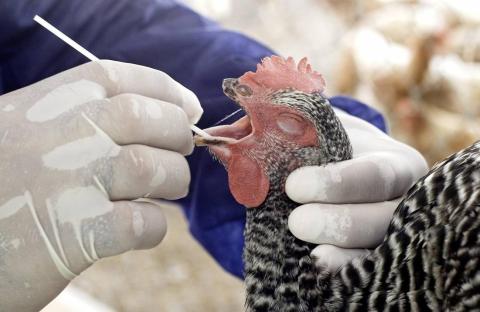
A team of researchers from the USA has analyzed the B lymphocytes of seven healthy people in whom no exposure to H5 influenza viruses, such as the avian flu virus, had been documented. The results show that they present antibodies capable of recognizing this type of virus, which, according to the authors, could represent “a first line of defense” in the event of a pandemic. The results are published in the journal Science Immunology.
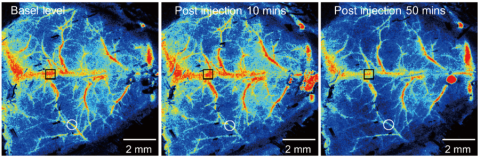
A study in mice reveals that immune cells in the brain 'engulf' microplastics, forming clumps that can cause brain clots. The findings, published in the journal Science Advances, highlight how microplastics can indirectly damage the brain by disrupting blood flow, rather than directly infiltrating brain tissue cells.