Spanish National Research Council (CSIC)
If you are the contact person for this centre and you wish to make any changes, please contact us.
'Ramón y Cajal' postdoctoral researcher at the Biologial Mission of Galicia and head of the ECOP research group – Landscape Ecology
Senior Scientist at the Spanish Institute of Oceanography, IEO-CSIC
Senior scientist at the CSIC at the Animal Health Research Centre (CISA), National Institute for Agricultural and Food Research and Technology (INIA)
Researcher at the Instituto Cajal, CSIC
Doctor in Ecology and postdoctoral researcher at the National Museum of Natural Sciences (CSIC) in Madrid
Professor of Economics at Durham University (United Kingdom), Research Professor at the Spanish National Research Council (CSIC) and Lead Author of the International Cooperation chapter of the IPCC's AR6
EMERGIA post-doctoral research in the Sky Quality Office
Research professor at public research organisations at the CSIC Institute of History, in the Department of Archaeology and Social Processes
Researcher at the Institute of Public Goods and Policies of the CSIC (IPP-CSIC)
CSIC research professor and expert in food safety and water quality
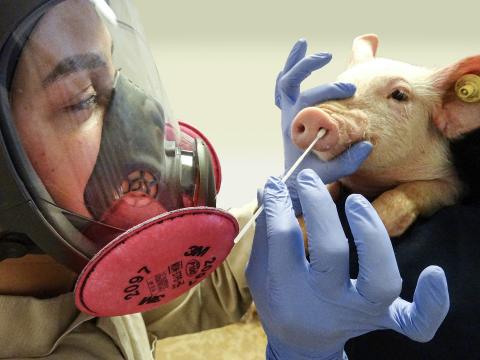
Influenza A can cause influenza in humans, birds, pigs, and other mammals. In 2009 and 2010, a pandemic caused by the pdm09 strain—popularly called 'swine flu' because it contained genetic sequences from avian, swine, and human influenza—caused thousands of human deaths worldwide. Since then, this lineage has crossed over 370 times from humans to pigs in the United States, according to a study published in PLOS Pathogens. The research also indicates that the circulation of the virus among pigs may cause further evolutionary changes in this lineage, which would increase the risk of the virus passing back to humans.
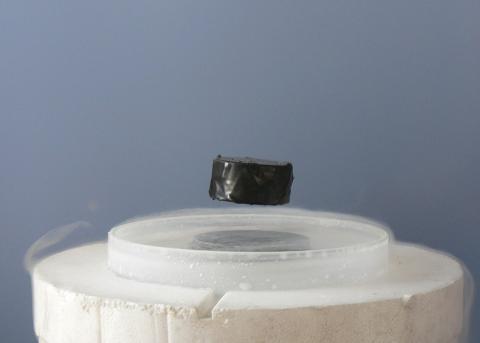
A team of South Korean researchers claims to have achieved a superconductor at room temperature and pressure for the first time in history. If true, it would mean a revolution in physics with implications for the whole of society. The material, called LK-99, is based on a copper-doped lead apatite framework. The article is a preprint and can be read in the ArXiv repository, where the research community shares their work before it is reviewed for publication in a scientific journal.
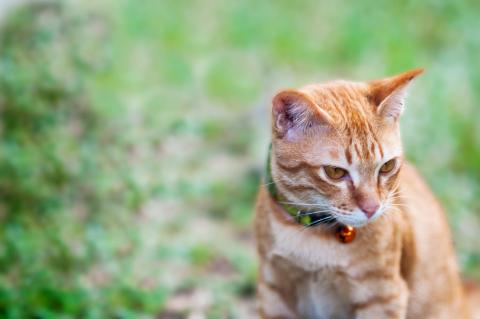
According to a statement issued Monday by the World Health Organisation (WHO), Poland has reported that "unusual" cat deaths have been found in several areas of the country. Of the 47 samples tested (46 from cats and one from a caracal, another type of feline), 29 were positive for the avian influenza A(H5N1) virus. The surveillance period for all contacts has now ended and no contacts have shown symptoms. According to WHO, "sporadic A(H5N1) infections of cats have been reported previously, but this is the first report of a large number of infected cats in a large geographical area within a country".

The Anthropocene Working Group of the International Commission on Stratigraphy has proposed Crawford Lake in Canada as a reference site for studying the Anthropocene as a possible geological epoch. This proposal for a Global boundary and Stratotype Section and Point (GSSP) was presented today at the International Congress of Stratigraphy in Lille, France. It is a necessary, but not sufficient step for the Anthropocene to enter the International Chronostratigraphic Table, the worldwide reference for geological units. Once approved by the AWG, this proposal has to go through three more votes in international geological bodies.
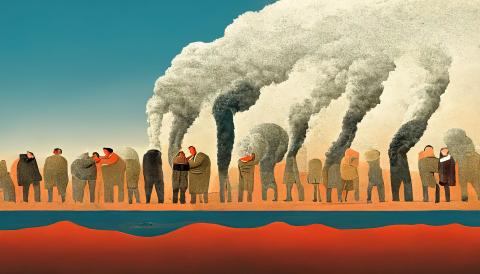
The term Anthropocene describes the profound changes on Earth due to human activities in the past decades. The concept comes from geology but has spread to other areas and has sparked controversy within science. In this article, we provide some keys to understand what the Anthropocene is, and why there has been debate in recent days surrounding its possible declaration.
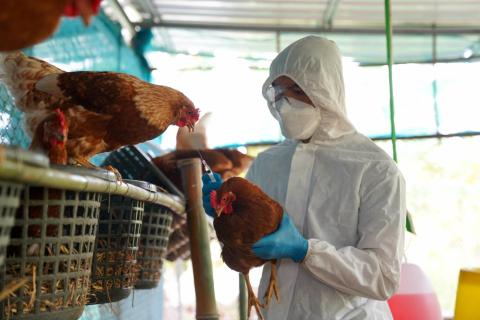
Although outbreaks of H5N1 avian influenza have reached record numbers in recent years, human infections remain anecdotal. A study published today in Nature identifies a protein responsible for inhibiting the replication of this virus in humans, while 'human' flus are able to evade it. The authors propose that this protein with antiviral activity evolved in primates and consider that resistance or sensitivity to it should be taken into account when assessing the zoonotic potential of avian influenza viruses.
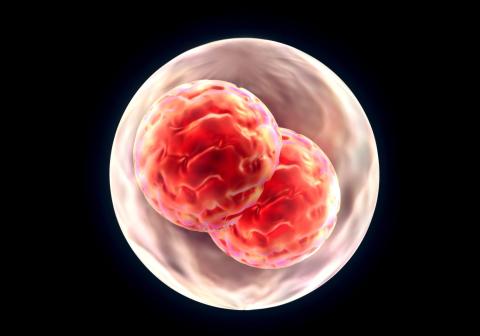
Berna Sozen's lab at Yale University has announced a new milestone in the competition to create synthetic embryos: their human pluripotent stem cells self-organise into structures that mimic embryonic development on days 9-14 after fertilisation and include extra-embryonic tissues. Their achievement is published in Nature at the same time as another similar study, that of Magdalena Zernicka-Goetz, who a fortnight ago previewed her stem cell-derived human embryo model to The Guardian, sparking a controversy with Jacob Hanna, author of a preprint showing that she had achieved true synthetic embryos.
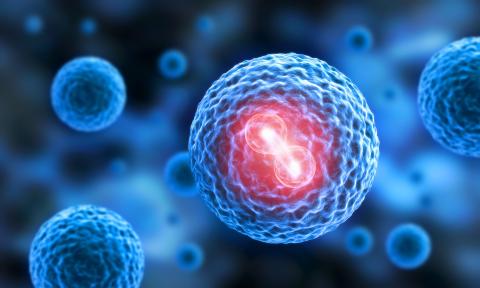
The latest episode of competition between research groups working on the same topic, a very common situation in science, should not distract us from the actual achievement: synthetic human embryos, in the laboratory, made from stem cells, up to a post-implantation stage. Now, we must decide what status or condition we will grant to these synthetic embryos. Once again, science is leaping forward and testing the limits of the laws, posing new ethical challenges for us to solve.

A team of researchers, led by IBM's Thomas J. Watson Center, has shown that a quantum computer can already help in the calculation of practical scientific problems that are inaccessible to today's classical computers. The "noise" and errors that accumulate still limit the applications of such computers, but the new study shows that, after adding a protocol that reduces these problems, a 127-cubit quantum computer is capable of simulating extremely complex physical states with high reliability. The results are published in the journal Nature.
Taurine is one of the most abundant amino acids in animals. As reported in research published in Science, its loss may contribute to the ageing process. According to the study, reversing age-associated taurine deficiency through supplementation improved life expectancy in worms and rodents, while improving some health parameters in non-human primates, which the authors believe would warrant further human trials to examine its effect on life expectancy and the potential risks involved.