Numerous fires are active in different parts of the peninsula
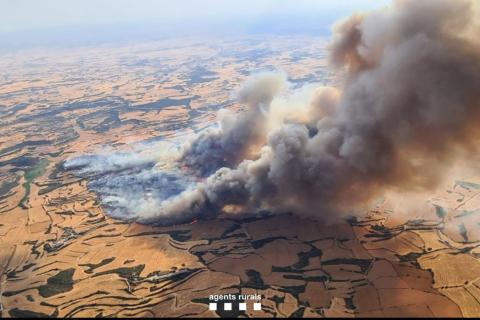
Several areas in the region of El Bierzo in León and the province of Zamora have seen numerous forest fires in recent hours, forcing more than a thousand people from different municipalities to evacuate. One person has died. The flames have affected the Las Médulas natural area, listed by UNESCO as a World Heritage Site. Another fire in Tarifa (Cádiz) has forced the evacuation of hundreds of people, and also in Tres Cantos (Madrid), where one person died. In addition, there are active outbreaks in several areas of Galicia. The government declares a pre-emergency phase.
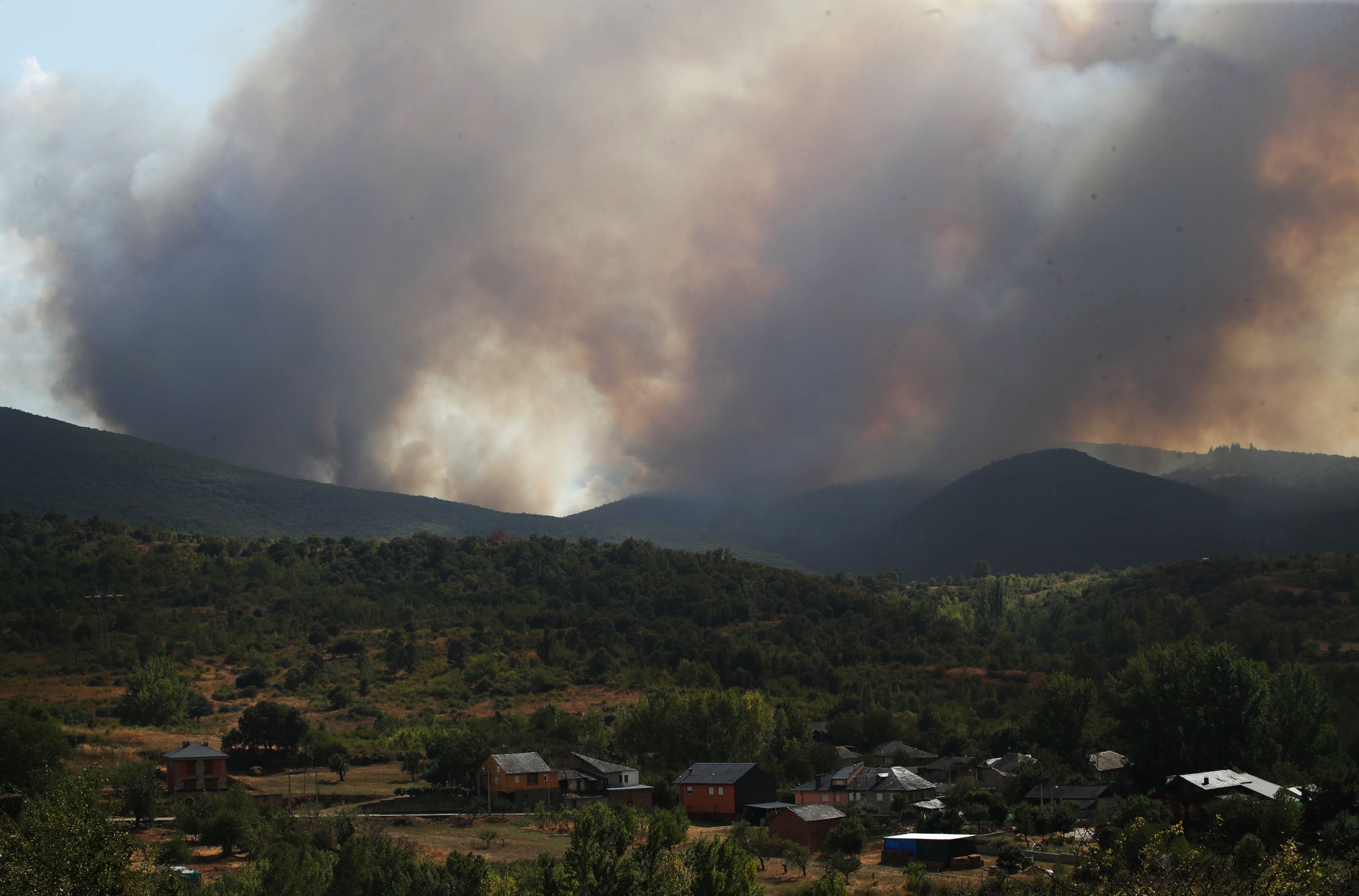
View of the forest fire affecting Las Médulas on Sunday. EFE/ Ana F Barredo.
Cristina Santín - incendios Zamora y León EN
Cristina Santín Nuño
Senior scientist at the CSIC and head of the Department of Biodiversity and Global Change of the Joint Institute for Biodiversity Research (University of Oviedo-CSIC)
With so many days of heatwave and high risk of fire, is it normal to have so many fires at the same time, or is this unusual?
"It's to be expected. After a spring as wet as this year's, when vegetation has grown a lot, we now find ourselves in a situation of extreme heat, strong winds and a long period (in some cases several months) without rain. If we add to this the fact that it is relatively easy for a spark to start a fire somewhere (whether due to dry storms, negligence and accidents or even deliberate causes), we have all the ingredients for the “Molotov cocktail” that we are seeing right now, not only in Spain but also in other Mediterranean countries".
What is the outlook for how this will develop?
"It will depend a lot on the weather over the next few days. We must not forget that, in many cases, when fires are very large, fast and intense, they cannot be completely controlled, no matter how many firefighting resources are dedicated to them.
In principle, it seems that the current heatwave will begin to subside in a couple of days, so that could give us a respite. With such a dry environment and such flammable landscape as we have now, extreme precautions must be taken to prevent negligence or accidents from starting fires that not only cause major environmental problems but also endanger the population."
What is your assessment of the fires so far this summer?
"Personally, today is a sad day for me because I am from El Bierzo and Las Médulas has burned down, a beautiful place with centuries-old chestnut trees and a UNESCO World Heritage Site. In Spain, we are facing a new reality of forest fires because our landscapes have changed a lot in recent decades (there is more vegetation that is susceptible to burning) and now, climate change is creating more opportunities for these landscapes to burn in a more widespread, intense and dangerous way. There is much to be done, such as improving fire prevention and communication, and ensuring that people living in rural areas are clear about what they need to do in these situations.
Jesús Santiago Notario - incendios León y Zamora EN
Jesús Santiago Notario del Pino
Professor of the Department of Animal Biology, Edaphology and Geology of the University of La Laguna
With so many days of heatwave and extreme fire risk, is it normal to have so many fires at the same time, or is this unusual?
‘The peninsula has suffered several recent heatwaves, this being the most intense and prolonged. This prepares (i.e. dries out) the fuel, so the ignition of several large fires is not unusual, at least to me.’
What is the outlook for how they will evolve?
‘It will depend, above all, on the weather and the characteristics of the vegetation affected. If the accumulation of combustible material is large enough, the intensity of the fire will generate its own air circulation pattern, making the behaviour of the fire more unpredictable and hindering its extinction and control.’
What is your assessment of the fires so far this summer?
‘Areas in the centre and north-west are burning, which are theoretically less prone to severe fires (compared to the Mediterranean coast, for example). I find this striking. In any case, the conditions of extreme and prolonged heat favour a scenario such as the current one.’
Adrián Regos - incendios León y Zamora EN
Adrián Regos Sanz
'Ramón y Cajal' postdoctoral researcher at the Biologial Mission of Galicia and head of the ECOP research group – Landscape Ecology
It is normal for the risk of fires to be very high during heat waves. Under these conditions, any ignition—whether natural or man-made—is enough to cause fires like the ones we are seeing in recent weeks. The number of ignitions in northwestern Spain is very high and, in most cases, man-made, either through negligence or intentionally.
Heat waves in summer are common, although recent records show an increase in their frequency, duration and intensity. This creates very favourable weather conditions for the spread of fire, especially if ignition occurs in areas with a high fuel load (vegetation), which makes it difficult to control the fire. In the north-west of the peninsula, the fire season is getting longer, so we can expect to see more fires well into autumn, before the rains arrive and when the vegetation is most stressed by drought.
This fire regime is part of the trend observed in recent years, and climate change will favour the proliferation of large forest fires, making them even more difficult to extinguish. This is not new: the sector has long been calling for improved working and professional conditions for those who fight fires, people who give their all — and sometimes their lives — to extinguish them. However, fires ‘are extinguished in winter’: prevention requires landscape-scale land management to make it more resistant and resilient. The current agroforestry landscape is the result of policies implemented over the last 50-60 years and cannot be reversed overnight, but in the current climate context, the only option is to plan prevention to optimise available resources. There is no single solution, but rather a set of measures tailored to each territory, integrated to generate synergies and maximise effectiveness. Part of the solution also lies in recognising and rewarding the fire protection functions provided by agro-pastoral and livestock activities, beyond their direct economic production.
Cristina Montiel - incendios León y Zamora EN
Cristina Montiel Molina
Professor of Regional Geographical Analysis and Director of the Research Group 'Forest Geography, Policy and Socioeconomics'
With so many days of heatwave and extreme fire risk, is it normal to have so many fires at the same time, or is this unusual?
"With this intense heatwave and extreme risk of forest fires, it is indeed inevitable that large forest fires will occur simultaneously, which is known as “fifth-generation fires”. Rather than normal, it is to be expected in the context of climate change.
Of course, we cannot consider it normal or acceptable because the causes of climate change are not normal or acceptable. What is unusual are the extreme temperatures, which are creating this risk of large simultaneous fires, known as thermal drought or “flash drought”, caused by the concentrated and prolonged impact of heat on vegetation and soil (high evaporation and evapotranspiration), even though last spring's rains prevented water shortages (scarcity of surface and groundwater).
Under these conditions of widespread fuel availability (propensity of vegetation to burn with high intensity and speed of propagation) due to the effects of thermal drought, high-speed wind gusts (even if they come from the north, as was the case in Navarre last week) and dry storms complete a meteorological scenario in which large fires are triggered in different places at the same time, regardless of the cause of ignition. And this is what is happening".
What is the outlook for how this will evolve?
"Given that the cause of this situation of simultaneous large fires we are experiencing is the heatwave, its evolution is linked to weather conditions. Fortunately, the preparedness and response of the defence system, together with an excellent weather and fuel condition information system, are enabling this emergency crisis to be managed with extraordinary professionalism and efficiency. In some cases, political decisions have also been very appropriate in declaring alert levels under the Special Civil Protection Plans for Forest Fires in the autonomous communities to prohibit certain activities in rural areas that increase the risk of ignition in this situation of extreme risk."
What is your assessment of the fires so far this summer?
"The assessment of the risk, occurrence and type of fires that are taking place cannot be positive in any way. Nor is the loss of human life and natural heritage. On the other hand, the assessment of the performance of the various emergency management systems in the autonomous communities that are being affected, the assessment of the professionalism and effectiveness of the defence services (forest firefighting teams and information, analysis and decision-making systems), and especially the assessment of the coordination at different levels and scales to manage these critical situations involving simultaneous large fires, is positive.
Víctor Fernández - incendios León y Zamora EN
Víctor Fernández-García
Lecturer in the Department of Engineering and Agricultural Sciences at the University of León
In my opinion, long- and short-term factors have converged to give rise to this series of episodes, which are, to a certain extent, predictable.
In the long term, the change in the socio-economic system that has taken place in recent decades, particularly in rural areas such as Galicia and the mountainous regions of Castile and León, stands out.
- Depopulation and the abandonment of traditional land use and practices have given rise to new landscapes that are more prone to large forest fires.
- In the shorter term, the spring of 2025 has been quite favourable for a high accumulation of fine fuel. This, together with the episodes of extreme heat we are experiencing in the current context of climate change, has created very favourable conditions for fire this summer in particular.