Spanish National Research Council (CSIC)
If you are the contact person for this centre and you wish to make any changes, please contact us.
'Ramón y Cajal' postdoctoral researcher at the Biologial Mission of Galicia and head of the ECOP research group – Landscape Ecology
Senior Scientist at the Spanish Institute of Oceanography, IEO-CSIC
Senior scientist at the CSIC at the Animal Health Research Centre (CISA), National Institute for Agricultural and Food Research and Technology (INIA)
Researcher at the Instituto Cajal, CSIC
Doctor in Ecology and postdoctoral researcher at the National Museum of Natural Sciences (CSIC) in Madrid
Professor of Economics at Durham University (United Kingdom), Research Professor at the Spanish National Research Council (CSIC) and Lead Author of the International Cooperation chapter of the IPCC's AR6
EMERGIA post-doctoral research in the Sky Quality Office
Research professor at public research organisations at the CSIC Institute of History, in the Department of Archaeology and Social Processes
Researcher at the Institute of Public Goods and Policies of the CSIC (IPP-CSIC)
CSIC research professor and expert in food safety and water quality

Over the last four years, we have seen that artificial intelligence (AI) is capable of playing a role in every stage of the scientific process. However, this carries risks: today, more than half of the peer reviews of papers are not carried out by researchers, but by AI systems, which are excellent at analysing proposals similar to others, but tend to reject innovative ideas. We are facing a revolution that is forcing us to redefine how we do science. Whether AI becomes a trick for misleading or a treat for the advance of knowledge will depend on us.
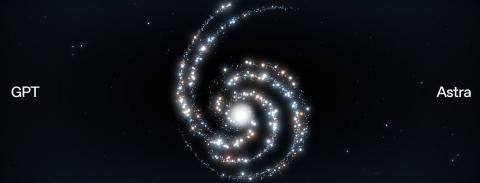
The artificial intelligence (AI) company OpenAI has unveiled GPT-6 Astra, “the world’s smartest and best-aligned model”, according to the company. The new model will use a technique known as ‘opaque recurrence’, which allows it to operate outside the sequential thinking of most reasoning models and which is causing concern amongst AI safety experts due to the possibility that the model’s thought process may be more difficult to monitor.
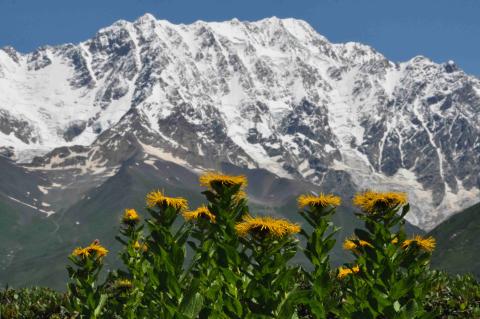
The peaks of European mountains such as the Pyrenees or the Sierra Nevada may be gaining plant species as the climate warms, but this apparent increase in biodiversity is masking a growing wave of local extinctions. These are the main conclusions of a study published in the journal Science, which includes Spanish participation and analyses nearly a thousand vegetation plots spread across 62 European mountain peaks. The reason is that higher-altitude mountain regions have gained plant species in recent decades as plants from lower altitudes have expanded up the slopes, but this may mask the decline or disappearance of specialised, high-altitude resident species.
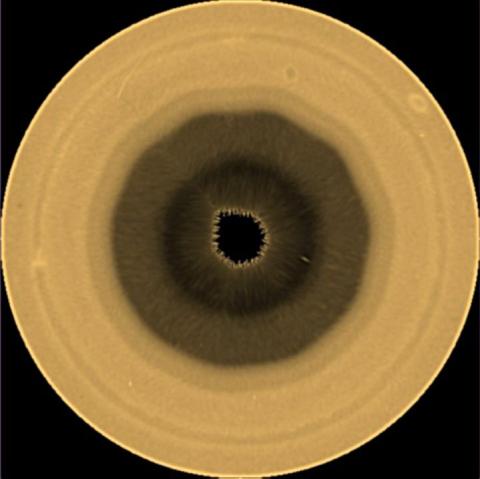
Thanks to the Voyager probe, we know that Saturn has a long-lasting hexagonal wave at its north pole, which is linked to a powerful jet of matter and energy. Now, a team led by the University of the Basque Country has discovered, for the first time, the presence of a decagonal wave at the south pole. The observations, carried out from the ground and using the Hubble Space Telescope, show that the decagon appears to have formed between 2023 and 2025 and may continue to evolve, in contrast to the more than 40 years of stability exhibited by the hexagon. The research is published in Science Advances and suggests that the ten-sided shape could be a meandering wave trapped by the curvature of a dominant atmospheric current.
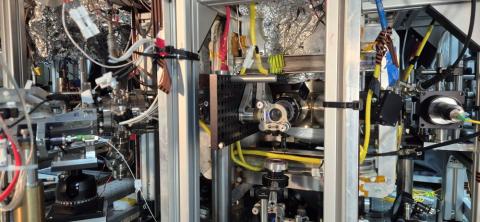
A team of researchers, including Nobel Laureate in Physics Roger Penrose, has observed for the first time an effect of gravity on a falling quantum object that had long been predicted. The result demonstrates that a fundamental principle underpinning Einstein’s theory of gravity remains consistent with the behaviour of matter in the quantum world. The study, published in the journal Science Advances, does not unify quantum mechanics and gravity, nor does it prove that gravity itself is quantum.
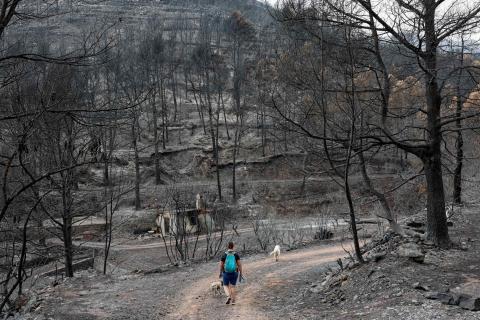
So far this year, up to 20 August, 262,000 hectares have been burnt in Spain, compared with the average of 105,600 hectares burnt between 2015 and 2024. Large-scale wildfires, exacerbated by climate change, are increasing both in frequency and in the area affected. But what happens in the forests after a fire? Can the woodland regenerate on its own? What criteria should be followed? We analyse, with the help of experts, how these ecosystems recover and what measures are taken to protect and restore them.
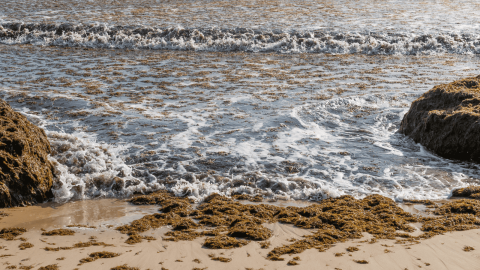
Every summer, algal blooms are common, from the Cantabrian Sea to the Mediterranean. Most play essential roles in aquatic ecosystems and have a high capacity to absorb CO₂. However, some can also cause problems, as is the case with the invasive alga Rugulopteryx okamurae, which has been spreading along the Spanish coastline for a decade.
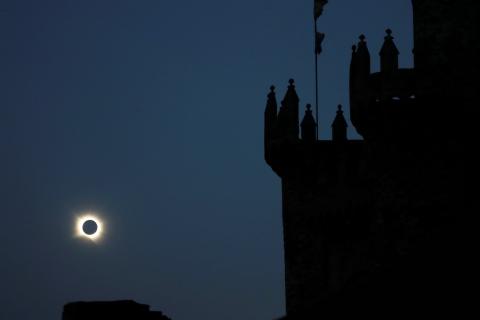
We hadn’t seen a total solar eclipse on the Iberian Peninsula since 1912, and this Wednesday, just before sunset, the celestial bodies aligned once more. That perfect cosmic dance between the Sun, the Moon and the Earth could be seen from numerous regions across Spain. Among the millions of people who observed the phenomenon in Spain, eclipse experts share their impressions with SMC Spain.
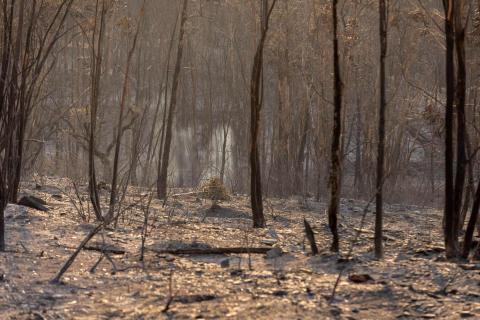
A study published in Science Advances has shown that areas affected by extreme wildfires – characterised by rapid spread and great difficulty in extinguishing them – have lower tree cover and reduced resilience compared to less intense fires, which may lead to long-term changes in vegetation. The team analysed 32.1 million hectares of coniferous forest in Canada and the western United States that were affected by fires between 2012 and 2023. Of this area, more than a third was burnt by extreme fires. In these cases, they observed that the faster the fire front advances, the greater the size and severity of the fire and the greater the distance from seed sources for the surviving trees, paving the way for long-term changes in vegetation.
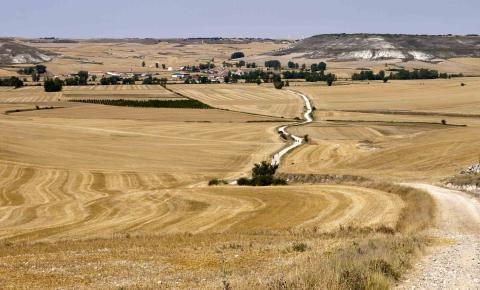
Next Monday, 17 August, COP17 on desertification gets underway in Ulaanbaatar (Mongolia). This is the first of three environmental summits to be held this year. The next event will be in Yerevan (Armenia), where the COP17 on biodiversity will be held from 19 to 30 October, and the year will conclude with the COP31 on climate change, which will take place in Antalya (Turkey) from 9 to 20 November and will be co-chaired by Australia. Why has there been no proposal for a single summit encompassing all three? Would a climate summit held every two years, like those on biodiversity and desertification, be more appropriate? With the United States out of the picture, who is leading them? To answer these and other questions, SMC Spain organised a briefing session with experts who have extensive experience of this type of summit.