Spanish National Research Council (CSIC)
If you are the contact person for this centre and you wish to make any changes, please contact us.
'Ramón y Cajal' postdoctoral researcher at the Biologial Mission of Galicia and head of the ECOP research group – Landscape Ecology
Senior Scientist at the Spanish Institute of Oceanography, IEO-CSIC
Senior scientist at the CSIC at the Animal Health Research Centre (CISA), National Institute for Agricultural and Food Research and Technology (INIA)
Researcher at the Instituto Cajal, CSIC
Doctor in Ecology and postdoctoral researcher at the National Museum of Natural Sciences (CSIC) in Madrid
Professor of Economics at Durham University (United Kingdom), Research Professor at the Spanish National Research Council (CSIC) and Lead Author of the International Cooperation chapter of the IPCC's AR6
EMERGIA post-doctoral research in the Sky Quality Office
Research professor at public research organisations at the CSIC Institute of History, in the Department of Archaeology and Social Processes
Researcher at the Institute of Public Goods and Policies of the CSIC (IPP-CSIC)
CSIC research professor and expert in food safety and water quality
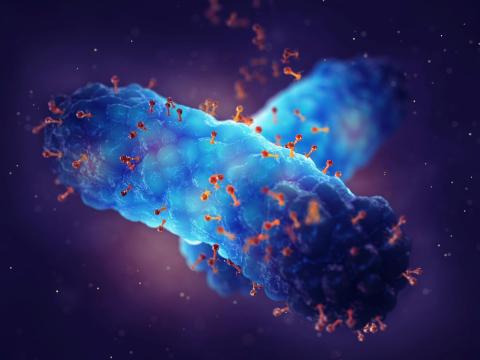
A team of researchers has designed complete and functional genomes for bacteriophages — viruses that feed on bacteria — from scratch using generative artificial intelligence (AI), and has tested them against bacteria that had developed resistance to this type of virus. The study, published in the journal Science, represents a step forward towards generative systems capable of designing complete biological systems. The authors also state that it raises important questions regarding biosafety and biosecurity.

OpenAI has stated in a press release that the internal version of its Astra AI model has found solutions to ten research problems in mathematics and computing, in areas such as geometry, group theory, operator algebras, quantum complexity, cryptography and combinatorics, amongst others. According to the company, the total number of tokens — basic units of information — required to solve these problems would cost around $2,000. OpenAI expresses “deep respect and understanding” for those concerned about the impact of AI on these disciplines, including the signatories of the Leiden Declaration on AI and Mathematics; and states that the attribution of results must honestly reflect how each one was obtained, whilst encouraging the mathematical community to review them. The company is publishing these results openly in a paper, accompanied by the model’s account of its reasoning process.

There are just a few days to go until 12 August, when we’ll be able to enjoy the first of the three eclipses we’ll see in Spain. This is a total solar eclipse — the Moon will completely cover the Sun’s disc — something not seen on the Iberian Peninsula since 1912. Experts from different regions of Spain with extensive experience in observing eclipses offer their recommendations. Choosing the right viewing spot, using approved eclipse glasses, coping with the heat and respecting the natural environment are key to observing the eclipse safely and enjoying the experience.
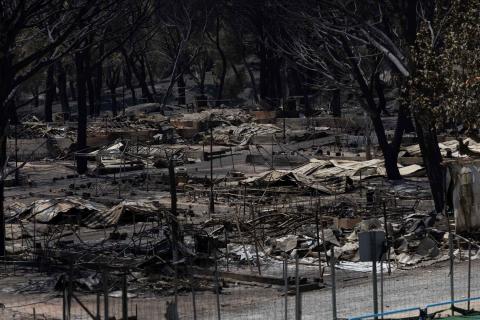
Human-induced climate change has made the ‘extreme’ weather conditions that fuelled the recent wildfires at least twice as likely in France and 20 times as likely in Spain, according to a new analysis by World Weather Attribution (WWA). The team analysed historical weather observations and used the Daily Severity Index (DSR), which incorporates heat, drought and wind conditions and reflects the difficulty of extinguishing a fire. The researchers examined the seven-day period with the highest DSR in south-western France and central Spain, where the fires occurred, and compared it with simulations of a pre-industrial climate. According to the study, under current climate conditions, events of this intensity are projected to occur once every 20 years in south-western France and once every six years in central Spain.
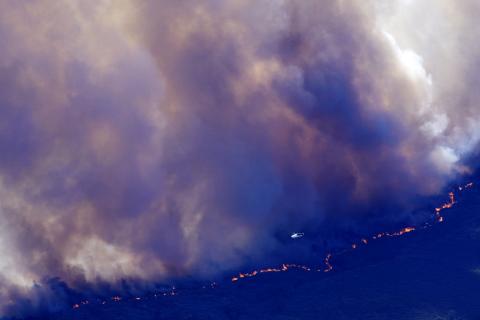
The fire in Ávila, which merged with the one in the south-western mountains of Madrid last Saturday and spread to the province of Toledo, remains unstabilised, although it is under control in some areas. Wind gusts of up to 30 km/h will complicate fire-fighting efforts on Monday, according to the Madrid 112 Safety and Emergency Agency. The fire in Ávila is now the largest in Spain’s recent history. Meanwhile, the fire that broke out on Saturday in La Vall d’Uixó (Castellón), which has spread into the Sierra de Espadán Natural Park, has not yet been stabilised either. In total, around 100,000 people have been evacuated or are under lockdown across all the fire fronts.

In 2025, a six-year-old Chinese girl named Mei (not her real name) became the first person in the world to undergo gene-editing therapy targeting the brain. She had a developmental delay associated with a rare genetic syndrome, Snijders-Blok-Campeau syndrome. According to Science, her parents had raised $860,000 to partially fund the treatment at Xinhua Hospital in Shanghai (China), led by Zilong Qiu, one of the neuroscientists competing to apply base editors — a version of CRISPR — in children with rare diseases. Now, Science and Retraction Watch have exclusively revealed that Mei died from a severe immune reaction seven days after receiving the treatment, a story that had been kept hidden. The entry on clinicaltrials.gov has not been updated since 2025; and when Qiu and his team published animal studies related to the trial in the journal Nature in early 2026, according to the journalistic investigation, they omitted any reference to Mei and her family.
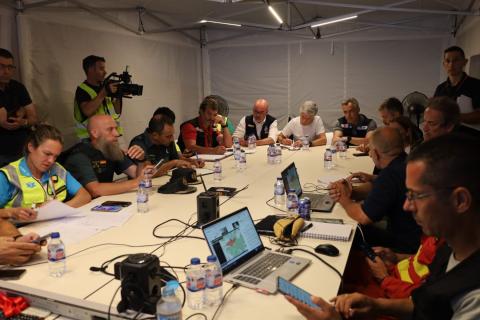
Early this morning, the Minister of Interior, Fernando Grande-Marlaska, declared a state of emergency of national interest in the Community of Madrid and the province of Ávila due to the forest fires in Villa del Prado, San Martín de Valdeiglesias and Burgohondo. According to Carlos Novillo, the Regional Minister for the Environment, Agriculture and the Interior of the Community of Madrid, the fires were beyond the capacity of the fire services to extinguish and posed a serious threat to the population. The Madrid 112 Security and Emergency Agency has reported that, although the night-time firefighting efforts have been effective, the fires have still not been contained or brought under control. More than 10,000 people remain evacuated.
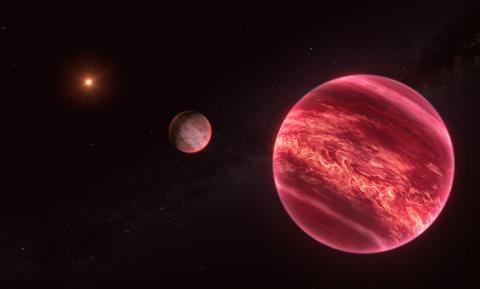
To date, more than 6,000 exoplanets — planets orbiting a star other than the Sun — have been discovered, but no moon outside the Solar System — known as an exomoon — has ever been definitively identified. Now, a study published in Nature presents evidence of what could be an exomoon orbiting a brown dwarf — an object halfway between a star and a planet. By analysing radial velocity data from observations made by the European Southern Observatory’s (ESO) Very Large Telescope, a team has identified a signal indicating the presence of a satellite with a minimum mass of 0.9 times that of Jupiter and an orbital period of around 170 days. “Although it is unclear whether this exosatellite will meet the criteria—yet to be defined—for being considered an exomoon, it represents an important step towards that first indisputable detection,” the authors state.
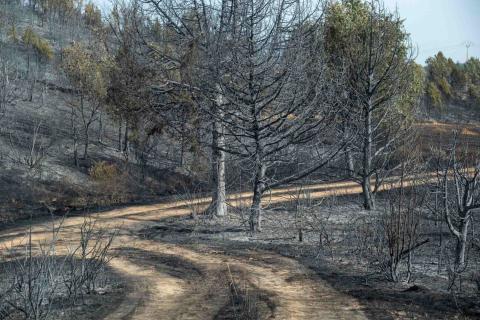
Data from the Copernicus European Forest Fire Information System (EFFIS) show that, as of 22 July, 119,458 hectares have been burnt in Spain. The average number of hectares burnt from 2006 to 2025 up to this date stands at 35,736 hectares. The fire in the Sierra Norte de Guadalajara, which has scorched more than 30,000 hectares and is still active, together with numerous fire fronts in other provinces and the fire in Los Gallardos (Almería), in which 13 people died, have caused the total area burnt to soar.
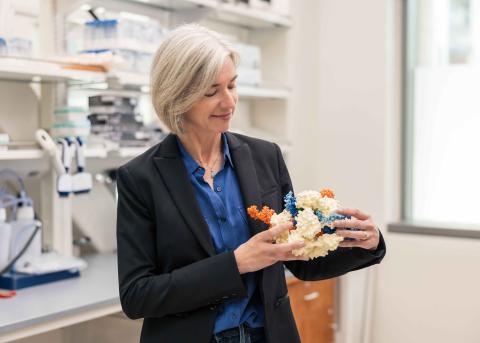
The range of CRISPR tools for genome editing can extend beyond nature-inspired designs thanks to proteins designed using artificial intelligence. A new study by Nobel laureate Jennifer Doudna’s team, published in Science, describes the design of synthetic RNA-guided nucleases, with sequences substantially different from those found in nature, which match or exceed the activity of their natural counterparts whilst offering novel properties.