Spanish National Research Council (CSIC)
If you are the contact person for this centre and you wish to make any changes, please contact us.
'Ramón y Cajal' postdoctoral researcher at the Biologial Mission of Galicia and head of the ECOP research group – Landscape Ecology
Senior Scientist at the Spanish Institute of Oceanography, IEO-CSIC
Senior scientist at the CSIC at the Animal Health Research Centre (CISA), National Institute for Agricultural and Food Research and Technology (INIA)
Researcher at the Instituto Cajal, CSIC
Doctor in Ecology and postdoctoral researcher at the National Museum of Natural Sciences (CSIC) in Madrid
Professor of Economics at Durham University (United Kingdom), Research Professor at the Spanish National Research Council (CSIC) and Lead Author of the International Cooperation chapter of the IPCC's AR6
EMERGIA post-doctoral research in the Sky Quality Office
Research professor at public research organisations at the CSIC Institute of History, in the Department of Archaeology and Social Processes
Researcher at the Institute of Public Goods and Policies of the CSIC (IPP-CSIC)
CSIC research professor and expert in food safety and water quality

A US team analyzed the genetic activity of individual brain cells from 15 men and 15 women and found 133 genes that showed consistent differences. Although biological sex explained only a small part of the differences they found when comparing all the brains, variants in many of these genes have been associated with neuropsychiatric and neurodegenerative disorders—such as ADHD, schizophrenia, depression, and Alzheimer's—suggesting that sex differences could play a role in the distinct risk men and women have of developing certain diseases. The authors, however, acknowledge that the sex-related differences in their study could stem from differences in socialization and experience. The results are published in Science.
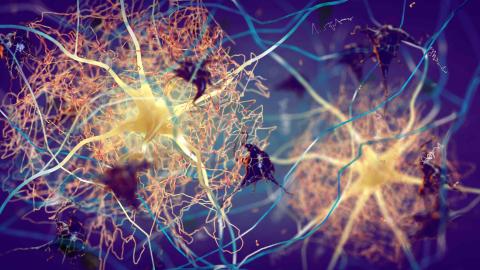
A review of studies conducted by the Cochrane Collaboration analyzed data from 17 clinical trials involving more than 20,000 participants who had been treated with amyloid-targeting drugs—such as lecanemab or donanemab—at a relatively early stage of Alzheimer’s disease. Results at 18 months of treatment show that “the absolute effects on cognitive decline and the severity of dementia were nonexistent or negligible, falling well below the thresholds established for a clinically meaningful difference,” according to a press release. Furthermore, the review concludes that these drugs likely cause more brain inflammation and microbleeds than the placebo.
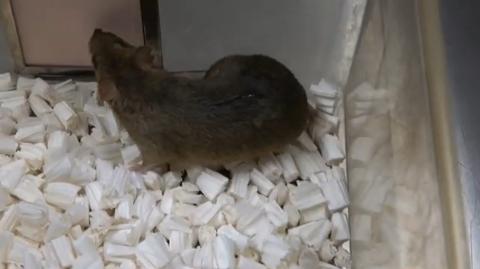
Repeated cloning cannot be sustained indefinitely in mammals, according to the findings of a twenty-year study on mice conducted in Japan. Serial cloning of mice led to an accumulation of lethal DNA mutations that affected birth rates from the 27th generation onwards, with the 58th generation being the last, according to the article published in Nature Communications, showing that sexual reproduction is necessary to prevent large-scale genetic mutations.

The German mathematician Gerd Faltings has won the Abel Prize, awarded by the Norwegian Academy of Science and Letters. Faltings, director emeritus of the Max Planck Institute for Mathematics, became a celebrity at the age of 29 for proving a conjecture that earned him the Fields Medal in 1986. His contributions have revolutionised arithmetic geometry, a branch of mathematics at the intersection of the two oldest: number theory and geometry.
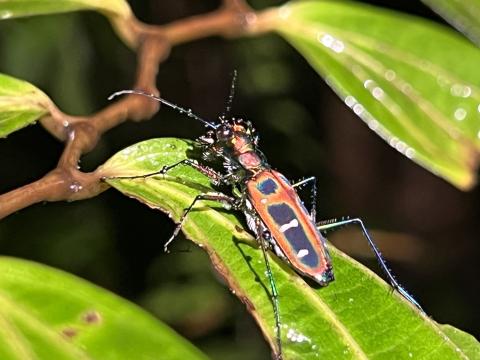
Global biodiversity is threatened by human impact, which has already led to the extinction of hundreds of species. However, the known tree of life continues to expand with the discovery of numerous clades (groups of organisms that share a common ancestor and all its descendants), according to a international study pubished in PNAS. According to their estimates, made between 2015 and 2020, more than 700 new genera, more than 20 new families, and more than three new orders are described each year, all based on newly discovered species. According to the authors, many new clades remain undiscovered, and describing them before they become extinct should be a priority for research and conservation.

A clinical trial (COSMOS) involving 958 healthy adults with an average age of 70 tested the ability of a multivitamin supplement, together with cocoa extract, to slow ageing. The results, published in Nature Medicine, show that the supplement slightly slowed two of the five biological markers of ageing measured after two years of daily use. The two markers affected were PCPhenoAge and PCGrimAge, whose rate of increase was reduced by 2.6 months and 1.4 months respectively. The slowing effect was greater among participants who initially showed more accelerated ageing. Cocoa showed no effect.
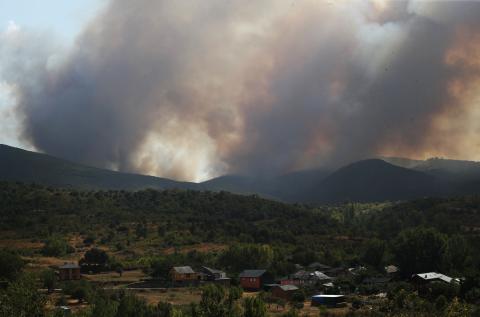
Forest disturbances in Europe—including fires, insect pest outbreaks, and windstorms—could double by the end of the 21st century compared with the 2001–2020 period if emissions are not reduced. In the case of wildfires, the annual area burned could nearly triple. The Mediterranean region ranks among the most vulnerable, and almost 90% of Mediterranean forests could be affected by increased fires and pest outbreaks under higher warming scenarios. The findings are published in a study in the journal Science involving Spanish research centers such as CREAF, the CTFC and the University of Girona.
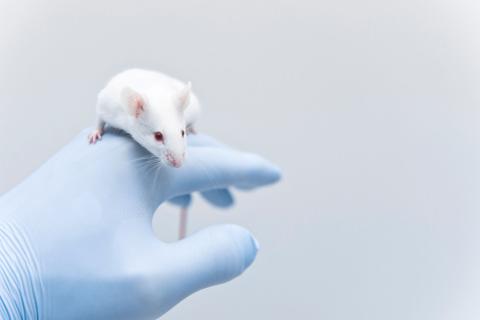
CAR-T cells, T lymphocytes modified in the laboratory to attack tumor cells, have shown promise against certain types of cancer. Now, a US team has followed the same concept and introduced artificial receptors into astrocytes, a type of nerve cell, with the aim of reducing the amyloid plaques characteristic of Alzheimer's disease. The experiments, conducted in mice, showed a significant reduction in amyloid, although no changes in the animals' behavior were observed. The results are published in Science.

According to the newspaper El País, the Catalan Regional Government has reported a case of swine flu —not swine fever, which is caused by another virus and does not affect humans— in an 83-year-old person in the province of Lleida. The newspaper points out that, as the patient had no contact with pigs that could transmit the virus, they may have been infected by another person.

In the ephemeral pools along the coasts of the Caribbean island of Curaçao lives Choanoeca flexa, a tiny unicellular aquatic organism belonging to the choanoflagellates, important for being close relatives of animals. As the pools evaporate and refill, C. flexa can switch between unicellular and multicellular forms in three different ways: by division, by aggregation, or by combining both, mechanisms that were previously thought to be mutually exclusive. The discovery, published today in Nature, may challenge current understanding of the origins of multicellular life.