Spanish National Research Council (CSIC)
If you are the contact person for this centre and you wish to make any changes, please contact us.
'Ramón y Cajal' postdoctoral researcher at the Biologial Mission of Galicia and head of the ECOP research group – Landscape Ecology
Senior Scientist at the Spanish Institute of Oceanography, IEO-CSIC
Senior scientist at the CSIC at the Animal Health Research Centre (CISA), National Institute for Agricultural and Food Research and Technology (INIA)
Researcher at the Instituto Cajal, CSIC
Doctor in Ecology and postdoctoral researcher at the National Museum of Natural Sciences (CSIC) in Madrid
Professor of Economics at Durham University (United Kingdom), Research Professor at the Spanish National Research Council (CSIC) and Lead Author of the International Cooperation chapter of the IPCC's AR6
EMERGIA post-doctoral research in the Sky Quality Office
Research professor at public research organisations at the CSIC Institute of History, in the Department of Archaeology and Social Processes
Researcher at the Institute of Public Goods and Policies of the CSIC (IPP-CSIC)
CSIC research professor and expert in food safety and water quality
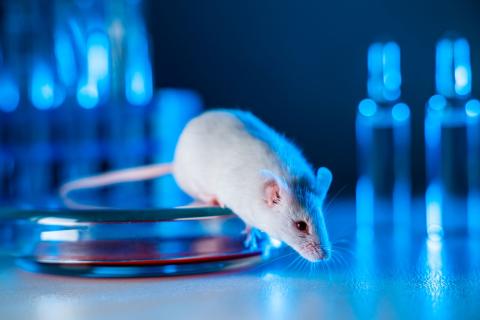
We often see headlines claiming that new research has found a ‘cure’ for diseases. However, what are the real chances of this being true? How does the current stage of the research affect its ultimate outcome? Has it already been tested on humans, or only on laboratory animals? In this article, we explain why animals are used in biomedicine, the reasons why mice are the most commonly used, the steps and timeframes involved from when a treatment appears effective until it can be determined whether it works in people, the characteristics and limitations of various disease models, and how results should be communicated to inform the public without raising false hopes.

An article published in Brain Health proposes using the concept of the ‘criticome’ to refer to the sensory, motor, social, cultural and environmental information recorded from pregnancy up to the age of 25, which is the period of greatest brain plasticity. According to the authors, this concept reframes autism, schizophrenia and depression as developmental disorders rather than purely synaptic disorders. Besides, they say this approach would have implications for educational policy, mental health care and screen use, amongst other issues.
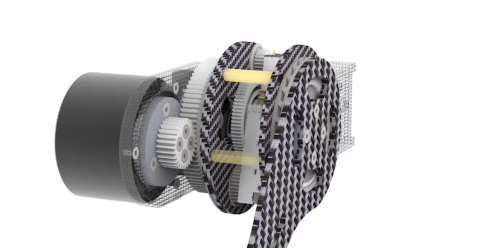
A lightweight robotic device aids neuromuscular recovery in children with spinal muscular atrophy, helping them to stand unaided, according to a study published in Nature. The research involved six participants aged between six and 10 and shows that the device achieved significant improvements in lower limb motor function after six weeks of assisted training. The study highlights that the improvement persists after training is discontinued and conventional physiotherapy routines are resumed, demonstrating the potential for lasting recovery.
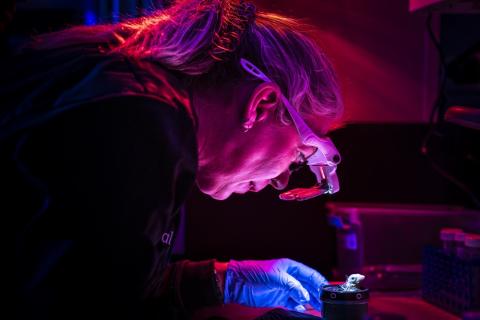
The US company Colossal Biosciences claims to have successfully incubated a bird in an artificial egg system until it hatched. In a press release, the company states that this technology allows a bird embryo to develop fully outside the shell of a biological egg, and could be used to bring back extinct bird species such as the giant moa from New Zealand’s South Island.

Decades ago, concerns began to be raised about the decline in honeybee populations. Although their situation has improved, the same cannot be said for other pollinating insects. Together, they enable the reproduction of nearly 90% of flowering plants and directly contribute to three out of every four crops that feed the world. We examine the causes of this decline, their current situation, and the measures being taken to protect them.
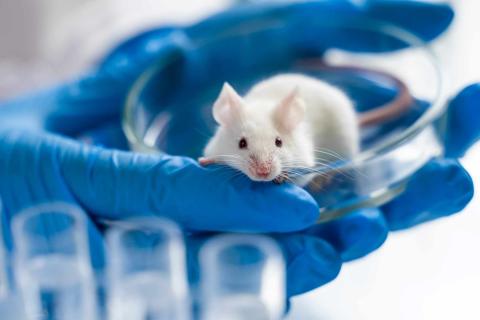
A team from the United States analyzed 611 samples from 341 model mouse strains stored at the Mutant Mouse Resource and Research Centers (MMRRC), a research resource network supported by the National Institutes of Health (NIH). By comparing the identity of each strain with its actual genetic profile, they found that approximately half of the samples showed discrepancies. Although the expected engineered mutation was generally present and many inconsistencies were relatively minor, some had the potential to compromise the validity and reproducibility of the experiments by introducing hidden genetic variables that could alter biological outcomes. The findings are published in Science.
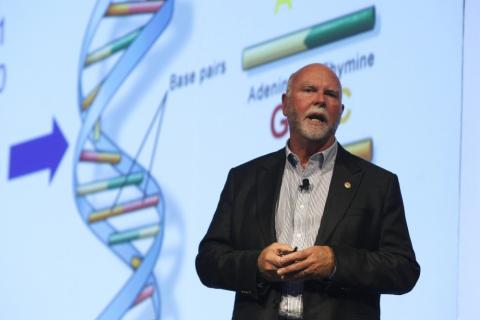
Craig Venter, the American biologist and entrepreneur who founded Celera Genomics to launch his own Human Genome Project in 1999 outside the public consortium, died Wednesday in San Diego at the age of 79, according to a statement from the J. Craig Venter Institute, which he led. Among other achievements, Venter completed the first full sequencing of a living organism’s genetic material and announced that he had succeeded in creating synthetic life.
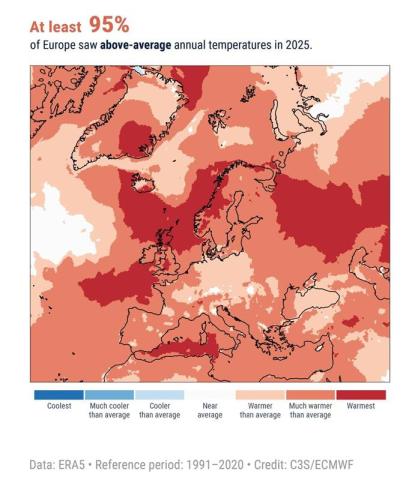
Rapid warming in Europe is reducing snow and ice cover, while very high air temperatures, drought, heatwaves, and record ocean temperatures are affecting regions from the Arctic to the Mediterranean. These are the main findings of the State of the Climate in Europe (ESOTC) 2025 report, prepared by the European Centre for Medium-Range Weather Forecasts (ECMWF), which operates the Copernicus Climate Change Service, and by the World Meteorological Organization (WMO). The data show that 95% of the continent recorded above-average annual temperatures last year, and river flows were below average for 11 months.

A study published in Science analyzed more than 100,000 human neocortical cells from weeks 13 to 23 of gestation, when cortical neurons are generated. The samples came from 26 donors, some with and others without Down syndrome. Using single-cell genomics, they observed how trisomy 21 disrupts the developmental sequence of various types of neurons, which could explain subsequent differences in cognition. A second study in the same journal, which examines the postnatal brains of children with Down syndrome, finds that many of these changes persist into childhood. The authors note that their study will not have short-term clinical applications, but they hope it can be used to develop specific drugs or create gene therapies.

One of the best-known genetic risk factors for developing Parkinson’s disease is carrying variants of the GBA1 gene. A new study published in the journal Nature Medicine compared the microbiomes of 43 carriers of this gene who had not developed the disease with those of 271 Parkinson’s patients and 150 healthy individuals. The results showed, in addition to alterations in the microbiome in the patient group, that 25% of the microbiome of carriers of this gene exhibited alterations, representing an intermediate profile between the other two groups. The results were validated using independent cohorts from the United Kingdom, South Korea, and Turkey. According to the authors, “alterations in the gut microbiome can identify individuals with both genetic and non-genetic risk in the general population who may be progressing toward Parkinson’s disease.”