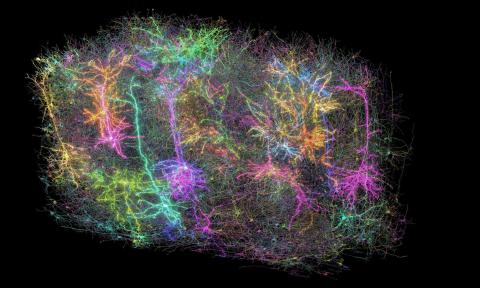
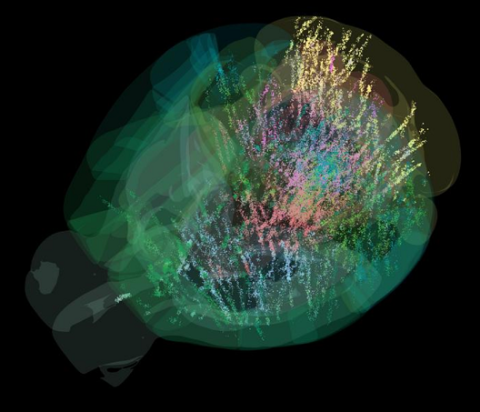
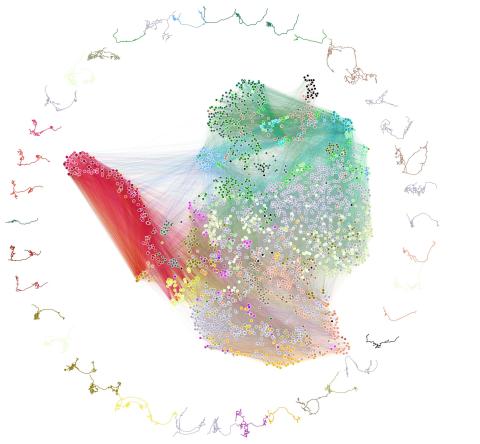
The most detailed brain development maps to date in mammals, including humans, are completed
An international consortium has published the most detailed maps to date of brain development in mammals, including mice and humans. According to the researchers, this work provides a detailed outline of how different types of brain cells arise and mature over time, which “will allow us to begin discovering how alterations in this process can lead to disorders such as autism or schizophrenia.” The results are published simultaneously in a set of 12 articles in the journal Nature.
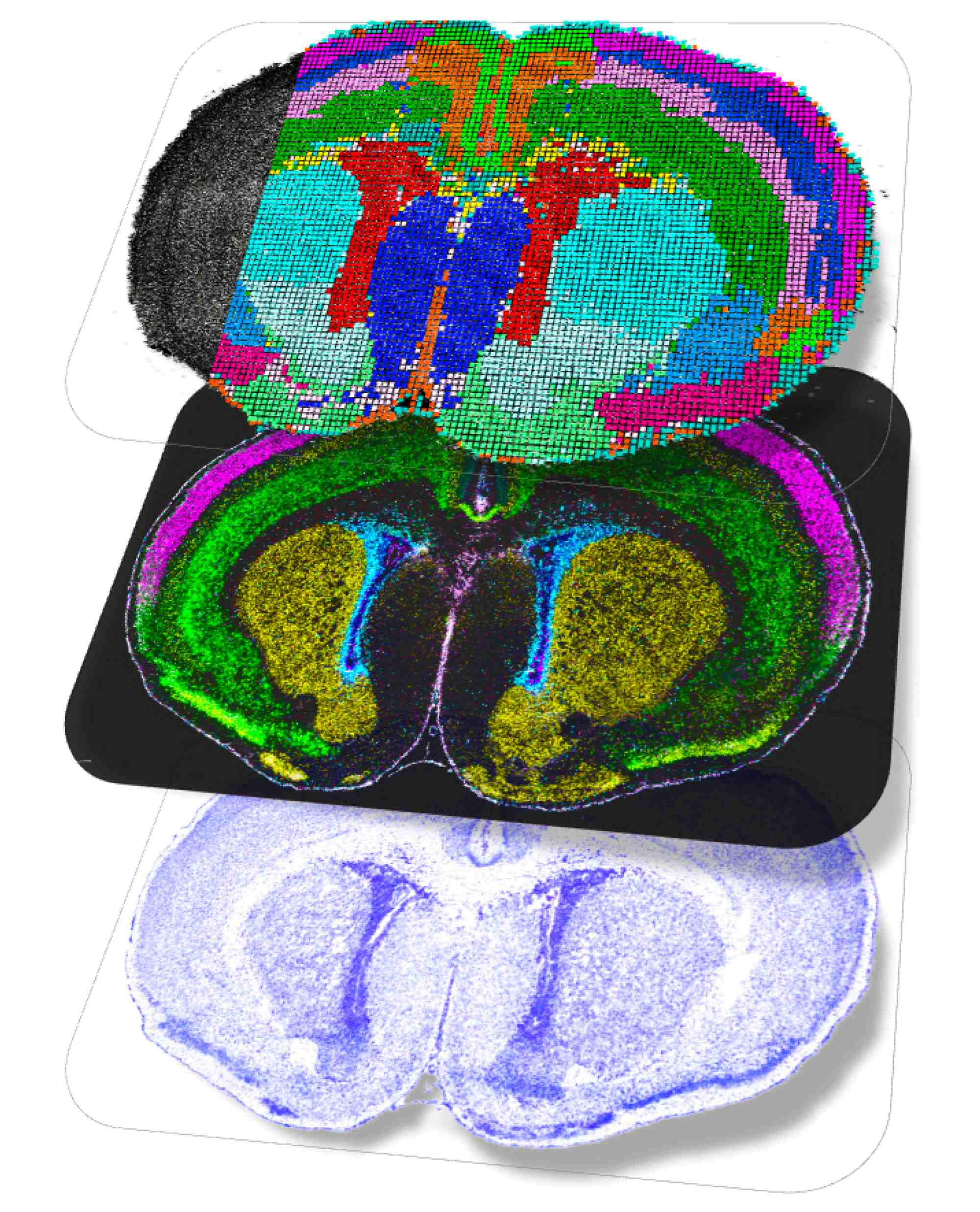
The postnatal mouse brain spatial multi-omics maps, highlighting cortical layer neuron maturation and oligodendroglial differentiation and myelination in cortex and corpus callosum. Credit: Zhang et al., Nature.
Yuste - Mapa mamíferos
Rafael Yuste
Professor of Biological Sciences and Director of the Center for NeuroTechnology at Columbia University (New York), President of the NeuroRights Foundation and promoter of the BRAIN project
This batch of articles is another outcome of the BRAIN Initiative, launched by President Obama in 2013 and expected to continue until 2030. This initiative, with a total estimated budget of over $6 billion, provides funding to more than 550 laboratories grouped into consortia, including the authors of these articles from the Allen Institute in Seattle.
The goal of BRAIN is the development and application of neurotechnology, defined as methods for mapping and modulating the brain. Among the most advanced methods used by BRAIN are transcriptomics, which allow for mapping the cell types present in the brain. Using these methods, these articles describe in detail the types of cells in the mammalian brain during its development.
This atlas of cell types in development is essential not only for scientifically understanding how the brain develops—something absolutely fascinating considering that it assembles and self-organizes without external instructions—but also provides fundamental information for understanding the alterations and pathologies that occur during pregnancy and in the early stages of life.
These results demonstrate how sustained investment in the development and application of new methods is of fundamental importance to science and medicine.
Laura López-Mascaraque - mapa cerebro EN
Laura López-Mascaraque
CSIC research professor at the Cajal Institute
This is a collection of works of enormous scope and quality, the result of exceptional international collaboration. These maps of brain development in mammals offer an extraordinarily detailed view of how the brain is built cell by cell, from its earliest stages to maturity. They help us understand the critical periods of development, those windows of time when the brain is particularly sensitive to stimuli and also to genetic or environmental alterations.
Understanding what happens in these early stages is essential to explaining the origin of many neurodevelopmental disorders, from autism to schizophrenia, and to designing more precise prevention or intervention strategies.
Although there are still significant challenges, such as fully integrating information between species or between different stages of development, this series of studies represents a significant advance in developmental neuroscience and provides an important knowledge base for understanding how the brain is constructed and how its diseases arise.
- Research article
- Peer reviewed