Genetically modified pigs developed to resist classical swine fever infection
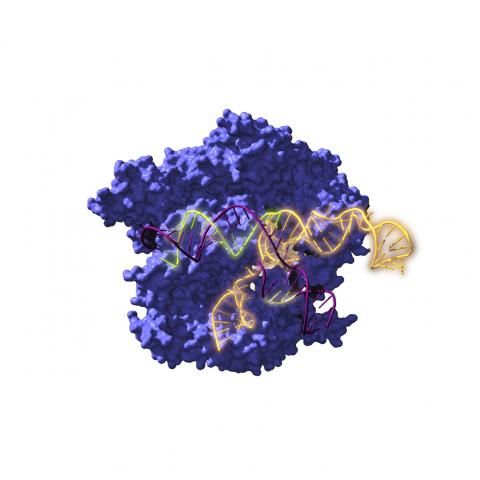
An international team has used the CRISPR gene-editing tool to modify a key gene for the replication of the classical swine fever virus in pigs. The experiment, conducted on four animals, showed complete protection against the disease. According to the researchers, this breakthrough could serve as an additional method for controlling this type of virus, which entails significant economic and animal welfare costs. The results are published in the journal Trends in Biotechnology.
Christian - Peste
Christian Gortázar
Professor of Animal Health at the Institute for Research in Game Resources (IREC) and head of the Health and Biotechnology Research Group (SaBio) at the University of Castilla-La Mancha
The work is very interesting, methodologically sound, and innovative, with the only drawback being the very small sample size (n=4).
Animal genomes have already been edited to improve production traits, such as heat resistance or feed conversion into growth. There is also some precedent for gene editing, for example, to create pigs resistant to the porcine reproductive and respiratory syndrome virus (PRRS). This work proposes the same for an important virus, the pestivirus that causes classical swine fever (CSF) in pigs. The trial, despite including very few experimental animals, is very promising. The implications for CSF control could be significant. However, it is a disease that can be controlled through vaccines, biosecurity, and attention to the wild reservoir. It would be very interesting to achieve similar effects in more insidious diseases that do not yet have good approved vaccines, such as African swine fever.
[Regarding potential limitations] In the case of editing for CSF resistance, a relatively small and simple virus (positive RNA; 12.5 kilobases (kb) in length) has required only one or a few mutations. In complex viruses such as ASF [African swine fever] (DNA, 170-190 kb) or in bacteria with a much larger genome, pig genome editing may be considerably more complex.
On the other hand, this type of genetic editing is obviously only possible/acceptable in livestock, not in wildlife—including potential reservoirs of the pathogen—or in humans. And few countries still accept livestock genome editing in products for consumption and trade.
Gadea - Peste porcina
Joaquín Gadea
Professor of Physiology and researcher at the Faculty of Veterinary Medicine of the University of Murcia
The article describes the generation of pigs with mutations in the DNAJC14 gene, a gene involved in pestivirus replication. Previous studies in cell cultures, conducted by researchers at the University of Lübeck (Germany), had shown that DNAJC14 plays an essential role in the replication of these viruses. In this work, in collaboration with the team at the Roslin Institute (Edinburgh), edited animals were generated by microinjecting zygote-stage embryos with the CRISPR/Cas9 system, with the aim of introducing a specific point mutation (W576A) into this gene.
The results show that these animals, and the cells derived from them, are resistant to infection with classical swine fever virus, and that their cell cultures also exhibit resistance to bovine viral diarrhea virus (BVDV).
Overall, this is a high-quality article, both in its experimental design and in the clarity of the results and their practical implications. It confirms the usefulness of gene editing as a tool for generating viral resistance in production animals, which has enormous health, animal welfare, and economic implications. Classical swine fever remains one of the most devastating diseases in the swine sector, causing high mortality, production losses, increased antibiotic use, and impacts on food safety due to the reduced availability of high-quality animal proteins.
This work is part of a growing line of evidence showing that gene editing targeting host genes can confer resistance to high-impact viruses. Previously, resistance to the porcine reproductive and respiratory syndrome (PRRS) virus through mutation of the CD163 gene, as well as partial resistance to the swine influenza virus, had been described. This new study significantly expands the repertoire of target genes and demonstrates the versatility and robustness of the gene editing strategy for controlling infectious diseases.
At the University of Murcia, we are working on the creation of animals resistant to two or more diseases. To date, we have obtained embryos and piglets with mutations in genes related to resistance to PRRS and influenza, both of which have a major impact on the swine sector and, in the case of influenza, also on human health.
This study was funded by a leading multinational swine genetics company (Genus/PIC), a pioneer in the commercial use of gene-edited animals. In fact, Genus/PIC has already obtained FDA approval for the commercial use of CD163KO pigs, resistant to PRRS. The DNAJC14 model described in the article has been patented by the University of Edinburgh (PCT/GB2025/050430), which will allow for its potential transfer and industrial licensing.
Unfortunately, European authorities have not yet authorized the use of gene-edited animals, despite the EFSA issuing reports stating that gene editing is not equivalent to transgenesis and that its risk is comparable to that of natural reproduction. This situation, coupled with the lack of business support and the limited patent protection available to academic groups, is hindering the development of these models in Spain. The lack of resources to maintain qualified personnel remains one of the main structural problems facing Spanish science.
This is preliminary work that must be complemented with additional studies evaluating potential off-target effects, as well as impacts on the growth, development, and productive and reproductive characteristics of the animals. These analyses will be essential to confirm the safety and productive viability of the generated models, as has been previously done with CD163KO pigs.
In summary, this article represents a major, high-quality scientific breakthrough, consolidating gene editing as a realistic and effective tool for controlling infectious diseases in livestock, allowing for simultaneous improvements in animal health and productivity.
Crooke et al.
- Research article
- Peer reviewed
- Experimental study
- Animals