University of Murcia
If you are the contact person for this centre and you wish to make any changes, please contact us.
Head of the Circadian Rhythm and Cancer group at the Pascual Parrilla Murcian Institute of Biosanitary Research and Vice Dean of the Faculty of Biology at the University of Murcia
Immunologist.
Lecturer in the Toxicology Department of the Veterinary Faculty of the University of Murcia
Head of the Cardiology Department at the Virgen de la Arrixaca Hospital and Professor at the University of Murcia
Professor of Prehistory at the University of Murcia.
Professor of Physiology and researcher at the Faculty of Veterinary Medicine of the University of Murcia
Professor of Music at the Faculty of Education, University of Murcia, and editor of the flamenco research journal La Madrugá.
Educational counsellor in the region of Murcia
Professor of Physiology and Director of the Chronobiology Laboratory at the University of Murcia
Professor in the Department of Physiology at the University of Murcia
Full Professor in the Department of Teaching and School Organization. Member of the Educational Technology Research Group.
Full professor and principal investigator of the Gametogenesis, Fertilization, and Embryonic Development Group at the University of Murcia
Professor of Toxicology in the Department of Social and Health Sciences at the University of Murcia
Principal researcher at the Murcia Institute for Biomedical Research and professor in the Department of Human Anatomy and Psychobiology at the University of Murcia
Founder and director of the circadian consulting spin-off Kronohealth, researcher at the Chronobiology Laboratory of the University of Murcia, collaborator at CIBERFES, and coordinator of the Chronobiology Working Group of the Spanish Sleep Society
Head physician of the Preventive Medicine Department at Reina Sofía University General Hospital (Murcia) and associate professor in the Department of Social and Health Sciences at the University of Murcia
Professor of Ophthalmology at the University of Murcia
Associate Professor in the Department of Human Anatomy and Psychobiology at the University of Murcia
Professor of Haematology, University of Murcia
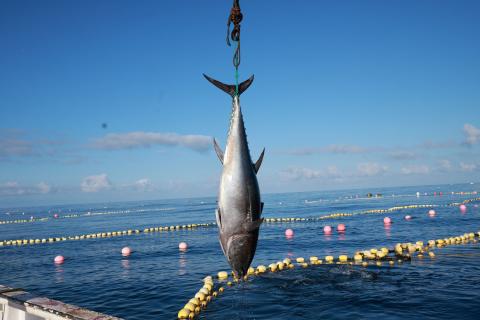
Although human-caused mercury emissions have been declining since 1990 in Europe and North America and since 2010 in East Asia, large reserves have accumulated in the soil and water. A Perspective article published in Science and written by two researchers from the Blas Cabrera Institute of Physical Chemistry at the CSIC warns that climate change—through global warming, wildfires, permafrost thaw, changes in precipitation, and altered ocean conditions—may be increasing the mobilization of accumulated mercury. According to the authors, this phenomenon may exacerbate risks to the environment and the health of humans and other organisms, primarily due to its concentration in shellfish and fish.
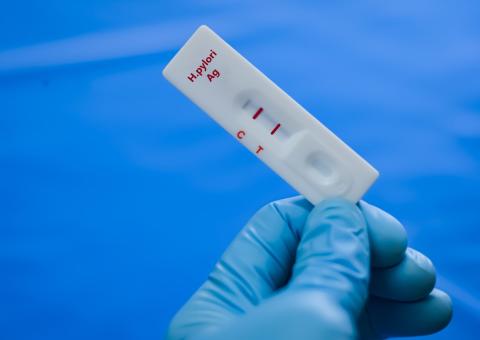
In 2024, some 2.3 million new cases of cancer worldwide were linked to infections — 12 per cent of all cases diagnosed that year — according to a study published in the journal The Lancet Oncology. Almost all of these cases are linked to five pathogens: the stomach bacterium Helicobacter pylori, the human papillomavirus (HPV), the hepatitis B and C viruses, and the Epstein-Barr virus. Low- and middle-income countries account for 77 per cent of all infection-related cancer cases.

A global review, which analysed 23 meta-analyses containing data on nearly three million children across 64 countries, identified associations between screen use and various aspects of children’s mental health and development. According to the authors, these findings may help to inform and refine guidelines and policies on screen use. The results are published in the journal JAMA Pediatrics.
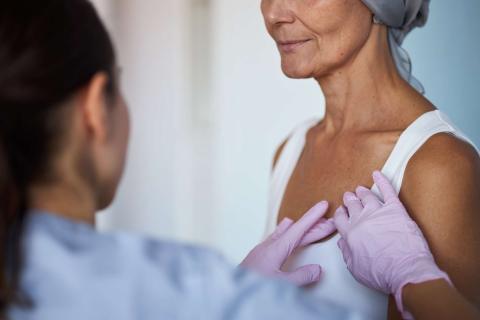
A team led by the Silent Spring Institute (USA) drew up in 2024 a list of 921 chemicals that could increase the risk of developing breast cancer. They have now published an analysis of the presence of these compounds in everyday products in the United States. According to their findings, 485 are present in pesticides and as many as 462 in food, amongst other sources studied. Although the study does not allow for the estimation of risk or the establishment of causality, according to the authors, “transparency regarding how and where the population is exposed to these products will help to support public health research, exposure reduction and health protection regulations”. The study is published in Environmental Health Perspectives.
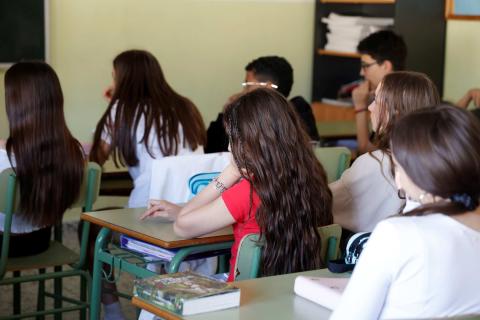
Following the publication of the results of the PISA 2025 report, the question arises as to how to interpret them and explain the possible causes of the decline in reading and maths results, both internationally and in Spain. We have sought the views of experts in education, sociology, inequality, educational technology and pedagogy.

A meta-analysis involving over a million participants has identified more than a thousand genetic variants associated with human personality. The study, published today in the journal Nature, examines the possible links between DNA variations and differences in personality. The results do not suggest that personality can be predicted from DNA, but rather that some variants may influence behavioural traits, whilst acknowledging that other environmental factors may have a greater impact. In their work, the authors focus on five traits: extraversion, agreeableness, conscientiousness, neuroticism and openness to experience.

A study published in the journal JAMA Network Open assessed the attitudes of Australian teenagers in the context of the implementation of minimum age restrictions on social media use in their country. The research team found that the majority of respondents expressed their intention to continue using social media after the regulations came into force, despite the fact that, in this sample, symptoms of anxiety and depression were associated with a history of social media use and with a younger age at the time of first use.

Every summer, algal blooms are common, from the Cantabrian Sea to the Mediterranean. Most play essential roles in aquatic ecosystems and have a high capacity to absorb CO₂. However, some can also cause problems, as is the case with the invasive alga Rugulopteryx okamurae, which has been spreading along the Spanish coastline for a decade.

Pupils who set up a social media account in early adolescence appear to perform less well in subsequent standardised tests, according to a study published today in Nature Human Behaviour and based on a sample of 5,227 Italian pupils. The study is observational, so it does not allow for a causal link to be established between social media use and academic performance. Furthermore, it was carried out using questionnaires in which students had to recall and report on their use of these services when they were younger.

An article published in Nature shows that the last Neanderthals in northwestern Europe exhibited greater genetic variability than previously thought, which, according to the authors, could call into question the idea that this was one of the causes of their extinction. The study included genetic data from 27 Neanderthals dating back about 52,500 years, found at ten sites in France and Belgium. The genome of a 45,000-year-old Neanderthal found in Belgium was also sequenced. According to the results, these Neanderthals lived in large, well-connected groups, as they showed no signs of inbreeding. Although they temporarily coexisted with early modern humans in that region, the study found no evidence of interbreeding with them.