University of Murcia
If you are the contact person for this centre and you wish to make any changes, please contact us.
Head of the Circadian Rhythm and Cancer group at the Pascual Parrilla Murcian Institute of Biosanitary Research and Vice Dean of the Faculty of Biology at the University of Murcia
Immunologist.
Lecturer in the Toxicology Department of the Veterinary Faculty of the University of Murcia
Head of the Cardiology Department at the Virgen de la Arrixaca Hospital and Professor at the University of Murcia
Professor of Prehistory at the University of Murcia.
Professor of Physiology and researcher at the Faculty of Veterinary Medicine of the University of Murcia
Professor of Music at the Faculty of Education, University of Murcia, and editor of the flamenco research journal La Madrugá.
Educational counsellor in the region of Murcia
Professor of Physiology and Director of the Chronobiology Laboratory at the University of Murcia
Professor in the Department of Physiology at the University of Murcia
Full Professor in the Department of Teaching and School Organization. Member of the Educational Technology Research Group.
Full professor and principal investigator of the Gametogenesis, Fertilization, and Embryonic Development Group at the University of Murcia
Professor of Toxicology in the Department of Social and Health Sciences at the University of Murcia
Principal researcher at the Murcia Institute for Biomedical Research and professor in the Department of Human Anatomy and Psychobiology at the University of Murcia
Founder and director of the circadian consulting spin-off Kronohealth, researcher at the Chronobiology Laboratory of the University of Murcia, collaborator at CIBERFES, and coordinator of the Chronobiology Working Group of the Spanish Sleep Society
Head physician of the Preventive Medicine Department at Reina Sofía University General Hospital (Murcia) and associate professor in the Department of Social and Health Sciences at the University of Murcia
Professor of Ophthalmology at the University of Murcia
Associate Professor in the Department of Human Anatomy and Psychobiology at the University of Murcia
Professor of Haematology, University of Murcia
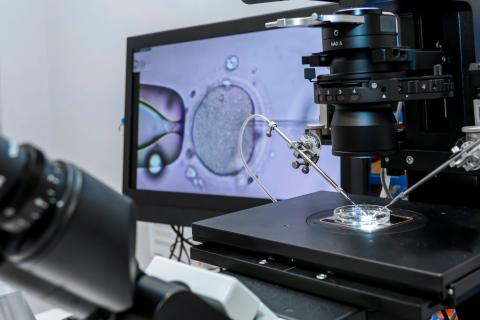
A systematic review with a meta-analysis published in The Lancet Obstetrics, Gynecology, & Women’s Health concludes that there is insufficient evidence that most complementary treatments for in vitro fertilization (IVF) improve fertility in patients undergoing this procedure. Some of these techniques involve introducing platelet-rich plasma into the uterus or ovaries, administering a lipid infusion into the bloodstream, administering corticosteroids, or performing preimplantation genetic testing to detect aneuploidies—that is, abnormalities in chromosome number. According to the study, which included 85 clinical trials, there is only evidence—albeit of low quality—suggesting a possible benefit from three treatments: EmbryoGlue—a method of embryo transfer containing hyaluronic acid—endometrial scraping, and physiological intracytoplasmic sperm injection—a technique for selecting sperm.
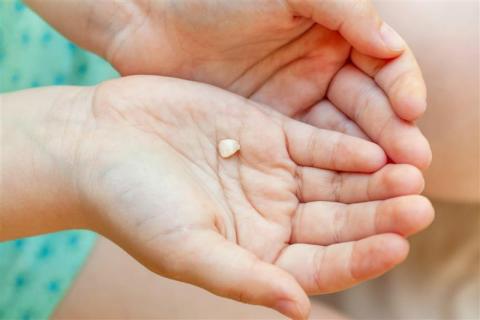
Exposure to neurotoxic metals poses the greatest risk to children’s brain development between the ages of six and nine months, according to an analysis of baby teeth from 489 children in Mexico. The study, published in Science Advances, identifies this window as a critical developmental stage during which exposure to these metals is linked to increased behavioural problems in childhood and smaller brain volume. The study includes boys and girls aged between 8 and 14 years old and uses their milk teeth as biomarkers to reconstruct concentrations of lead, zinc, copper, manganese, magnesium, lithium, strontium, barium and tin, from 20 weeks before birth to 40 weeks after.

How much homework do teachers assign? If children spend more time doing homework, do they get better grades? What should homework be like in order to be useful? There are conflicting opinions on this subject, as well as a great deal of academic research. In this article, we present evidence to unravel some of the controversies –with a focus on primary education, which is usually completed between the ages of six and twelve.

When Neanderthals and modern humans had offspring together, little Neanderthal DNA from the X chromosome entered the human gene pool. A study published in the journal Science traced ancient gene flow and found a relative excess of 62% modern human ancestry on Neanderthal X chromosomes. This suggests that the couples who had children were mostly Neanderthal men and modern human women, although the authors cannot rule out the possibility that demographic processes played a significant role.

The Prime Minister, Pedro Sánchez, announced on Tuesday from Dubai that Spain will ban children under the age of 16 from accessing social media and will adopt other measures to increase control over digital platforms and ensure that their executives are held accountable for violations. Sánchez made this announcement in his speech to the plenary session of the World Government Summit and announced that next week the government will approve a series of measures, including this ban.
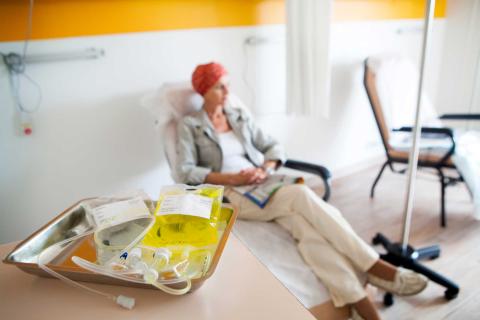
[Nature Medicine has retracted this article on 24 June 2026]
A phase 3 clinical trial conducted in China tested 210 patients with advanced non-small cell lung cancer—the most common type—to see whether the time of day when immunotherapy and chemotherapy were administered influenced their effectiveness. The data indicate that, on average, those who received therapy after 3 p.m. did not see their cancer worsen for 5.4 months. In contrast, those who received it before that time did not see their cancer worsen for an average of 11.7 months, almost twice as long. Overall, response rates were 56.2% and 69.5%, respectively. The results, published in Nature Medicine, suggest that scheduling therapy early in the day may offer a simple and cost-free way to improve treatment efficacy.

Moderate-intensity physical activity, such as walking at an average speed of 5 km/h for an additional five minutes per day, is associated with a 10% reduction in all-cause mortality among most adults, according to a study published in The Lancet. The research also found that reducing sedentary time by 30 minutes per day was associated with an estimated 7% reduction in all-cause mortality if adopted by most adults. The study analyzed data from more than 135,000 adults from Norway, Sweden, the United States, and the United Kingdom, with an average follow-up of eight years.

A study published in the journal Scientific Reports reveals an increase in simplicity, negativity, and stress-related words in pop song lyrics in the United States over the last few decades. The authors also conclude that this phenomenon was attenuated in times of social crisis, such as the COVID-19 pandemic, which ‘highlights the role of music in both shaping and reflecting moods.’ The data included more than 20,000 songs from the US charts between 1973 and 2023.
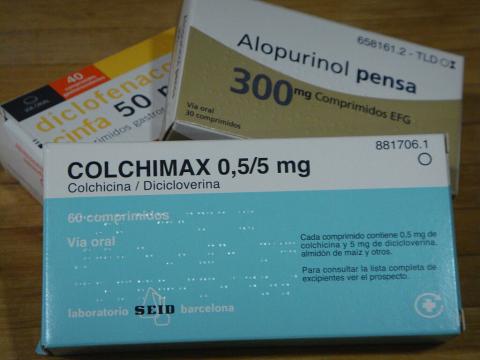
A review conducted by the Cochrane Collaboration analyzed the effects of colchicine—a medication commonly used to treat some rheumatic diseases—on people who had already experienced a cardiovascular event. The review included 12 clinical trials with more than 23,000 patients and concluded that colchicine reduces the risk of stroke or heart attack in these individuals. Overall, for every 1,000 people treated, there were 9 fewer heart attacks and 8 fewer strokes compared to those who did not take the medication, with no apparent serious side effects.
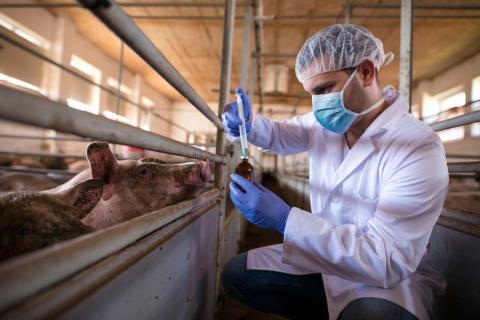
An international team has used the CRISPR gene-editing tool to modify a key gene for the replication of the classical swine fever virus in pigs. The experiment, conducted on four animals, showed complete protection against the disease. According to the researchers, this breakthrough could serve as an additional method for controlling this type of virus, which entails significant economic and animal welfare costs. The results are published in the journal Trends in Biotechnology.