Spanish National Research Council (CSIC)
If you are the contact person for this centre and you wish to make any changes, please contact us.
'Ramón y Cajal' postdoctoral researcher at the Biologial Mission of Galicia and head of the ECOP research group – Landscape Ecology
Senior Scientist at the Spanish Institute of Oceanography, IEO-CSIC
Senior scientist at the CSIC at the Animal Health Research Centre (CISA), National Institute for Agricultural and Food Research and Technology (INIA)
Researcher at the Instituto Cajal, CSIC
Doctor in Ecology and postdoctoral researcher at the National Museum of Natural Sciences (CSIC) in Madrid
Professor of Economics at Durham University (United Kingdom), Research Professor at the Spanish National Research Council (CSIC) and Lead Author of the International Cooperation chapter of the IPCC's AR6
EMERGIA post-doctoral research in the Sky Quality Office
Research professor at public research organisations at the CSIC Institute of History, in the Department of Archaeology and Social Processes
Researcher at the Institute of Public Goods and Policies of the CSIC (IPP-CSIC)
CSIC research professor and expert in food safety and water quality

Consuming up to four cups of coffee a day is associated with an increase in telomere length in people with severe mental disorders, such as schizophrenia or bipolar disorder. Telomere length is an indicator of cellular ageing and is shorter in people with these disorders, although the causes are not clearly understood. According to the study, published in BMJ Mental Health, the effect shown is comparable to ‘a biological age five years younger’ in coffee drinkers.
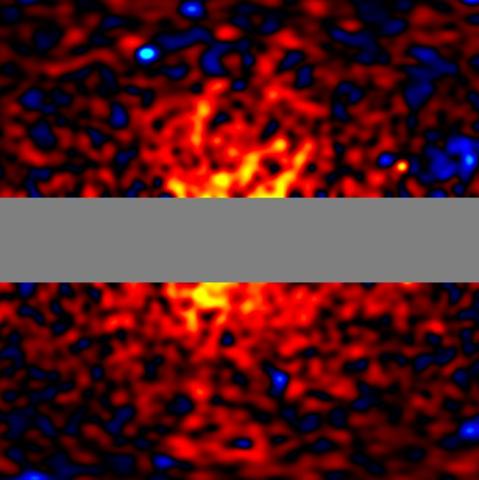
A century ago, astronomer Fritz Zwicky observed that galaxies were moving faster than their mass should allow, leading him to infer the presence of an invisible structure, dark matter. Since the particles that make up dark matter do not interact with electromagnetic force, they cannot be observed directly, as they do not absorb, reflect, or emit light. Now, NASA's Fermi space telescope has found specific gamma rays in the center of the Milky Way that are consistent with the decay of theoretical dark matter particles, although they could also come from other sources. “If this is correct, to my knowledge, it would be the first time that humanity has ‘seen’ dark matter,” said study author Tomonori Totani in a press release. The article is published in the Journal of Cosmology and Astroparticle Physics.
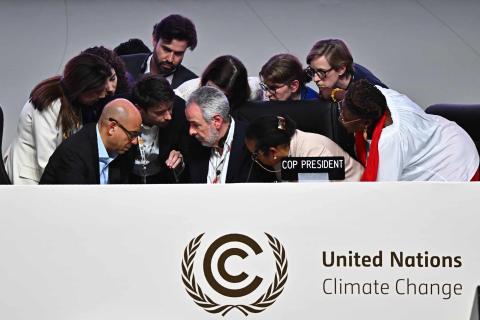
One day after the deadline, COP30 in Belém (Brazil) has finally reached a minimal agreement. The text does not mention a roadmap for abandoning fossil fuels, as requested by more than 80 states, including the European Union. The agreement states that countries agreed to accelerate climate action and triple funding for developing countries facing extreme weather events.
A team at Google DeepMind has developed AlphaProof, an artificial intelligence system that learns to find formal proofs by training on millions of self-formulated problems. According to the authors, the system “substantially improves upon previous-generation results on historical problems from mathematical competitions.” Specifically, in the 2024 International Mathematical Olympiad (IMO) for secondary school students, “this performance, achieved after several days of computation, resulted in a score equivalent to that of a silver medalist, marking the first time an AI system has achieved medal-level performance.” The results are published in the journal Nature.
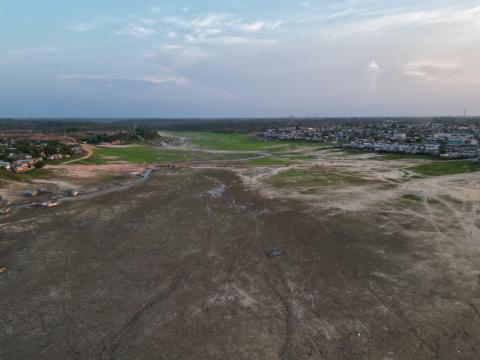
Lakes are considered sentinels of climate change, although most research has focused on temperate regions. An international team analysed 10 tropical lakes in the central Amazon during the 2023 drought, which caused high mortality among fish and river dolphins. Using satellite data and hydrodynamic models, the authors show how intense drought and a heatwave combined to raise water temperatures: five of the 10 lakes experienced very high daytime temperatures, exceeding 37°C. Specifically, temperatures in the shallow waters of Lake Tefé soared to 41°C—hotter than a thermal bath. The study is published in Science.
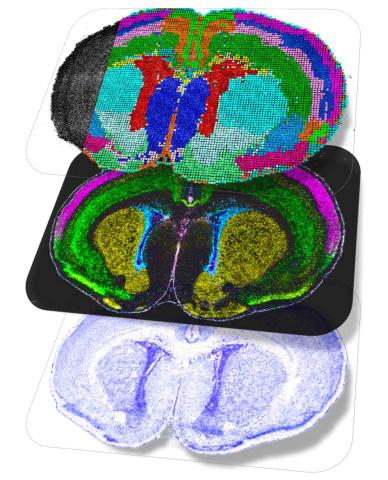
An international consortium has published the most detailed maps to date of brain development in mammals, including mice and humans. According to the researchers, this work provides a detailed outline of how different types of brain cells arise and mature over time, which “will allow us to begin discovering how alterations in this process can lead to disorders such as autism or schizophrenia.” The results are published simultaneously in a set of 12 articles in the journal Nature.
COP30 will kick off on 10 November in Belém, a Brazilian city and gateway to the Amazon. Expectations are high because it coincides with the tenth anniversary of the Paris Agreement, whose goal of limiting the temperature increase to 1.5 °C was shattered in 2024. In addition, this year countries must present a new version of their measures to combat climate change in a turbulent geopolitical context, marked by the Trump administration's abandonment of the climate agenda.
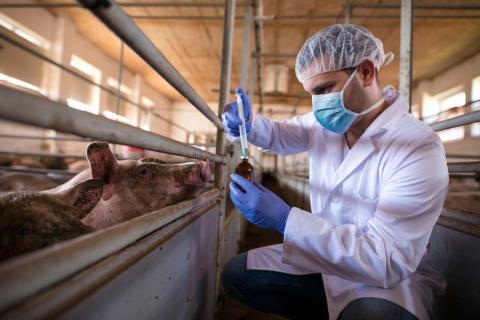
An international team has used the CRISPR gene-editing tool to modify a key gene for the replication of the classical swine fever virus in pigs. The experiment, conducted on four animals, showed complete protection against the disease. According to the researchers, this breakthrough could serve as an additional method for controlling this type of virus, which entails significant economic and animal welfare costs. The results are published in the journal Trends in Biotechnology.
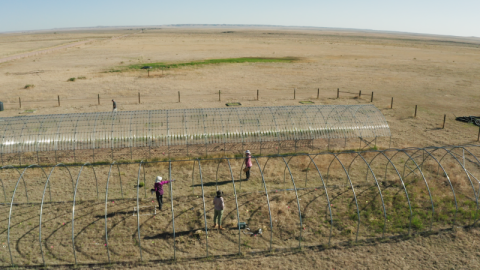
Some ecosystems are able to adapt to moderate droughts, even if they last for several years. However, in scrublands and grasslands, when the phenomenon is extreme and prolonged, their capacity to store carbon plummets. This is the main conclusion of an international study that has assessed the effects of the duration and severity of droughts on the productivity of 74 grassland and pasture ecosystems on six continents. According to the authors, the most vulnerable areas are arid and semi-arid regions, such as those in the Mediterranean region and the southwestern United States. The study, published in Science, involves CREAF, CSIC and IICG-URJC, among other centres.
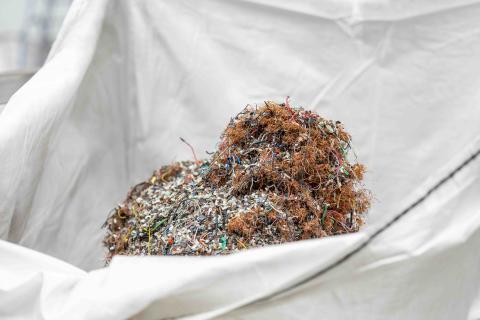
In 2050, the total volume of waste electrical and electronic equipment in Europe will reach between 12.5 and 19 million tonnes, compared to 10.7 million tonnes – around 20 kilograms per person – in 2022, according to the report 2050 Critical Raw Materials Outlook for Waste Electrical and Electronic Equipment. Of this volume, only 54% was collected and treated correctly in 2022. Furthermore, of the one million metric tonnes of critical raw materials such as copper, aluminium and silicon present in this waste, less than half was successfully recovered, according to the report's estimates.