Although we hear a lot about the term extreme fire, it would be more appropriate to talk about extreme behaviour in terms of speed or intensity, according to Cristina Montiel Molina, professor of Regional Geographical Analysis and director of the Forest Geography, Politics and Socioeconomics research group at the Complutense University of Madrid. At a briefing held last Tuesday by the Science Media Centre Spain, the researcher pointed out that a fire is a blaze that spreads out of control.
As for the term mega-fire, it was coined after the fifth generation of fires, but there is no 100% standardised definition, explained Mariona Borràs, forest engineer and head of the Social Base and Community area at the Pau Costa Foundation. ‘The surface area is not a parameter that defines a type of fire,’ she added, explaining that other parameters such as speed, intensity and flame height are also taken into account. ‘A large forest fire is one that is beyond the capacity to be extinguished,’ no matter how many resources are deployed. It can only be tackled when there is a change in fuel or the weather conditions improve. ‘Labelling is difficult,’ warned Borràs. ‘You have to wait and see how the fires evolve and how they end’ in order to identify them.
Montiel also clarified the characteristics of the different generations of fires. The classification developed by Marc Castellnou, a firefighter in Catalonia and fire analyst, made it clear that fires must be fought differently because their behaviour was changing. But ‘the concept of generations does not mean that there is a succession, and that when we are in the sixth we no longer have the third generation,’ insisted Montiel. On the contrary, generations of fires ‘coexist and coexist,’ said the researcher. In this article published in 2023, you can see the characteristics of each generation.
How climate change influences these phenomena
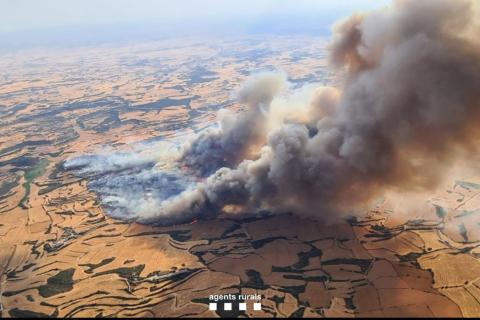
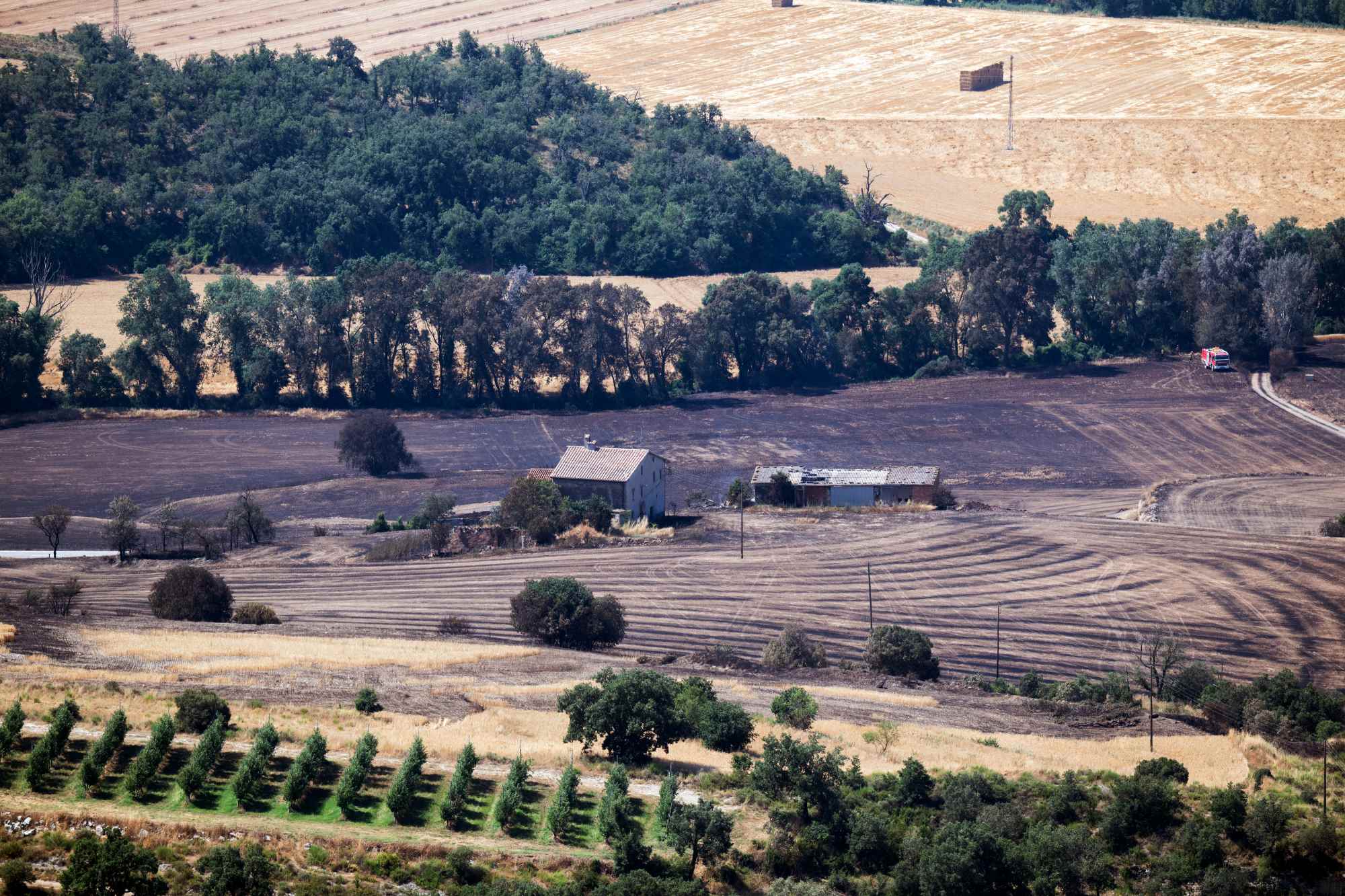
Climate change is an important factor in the emergence of different types of fires, exacerbating the effects of landscape change, Montiel explained. Last month was the hottest June on record in Western Europe, according to data from Copernicus, with an average temperature 2.81ºC above the 1991-2020 average. The heat remained extreme on 1 July, when the fire broke out in the province of Lleida, killing two people and behaving in an extreme manner, as we explained in this article.
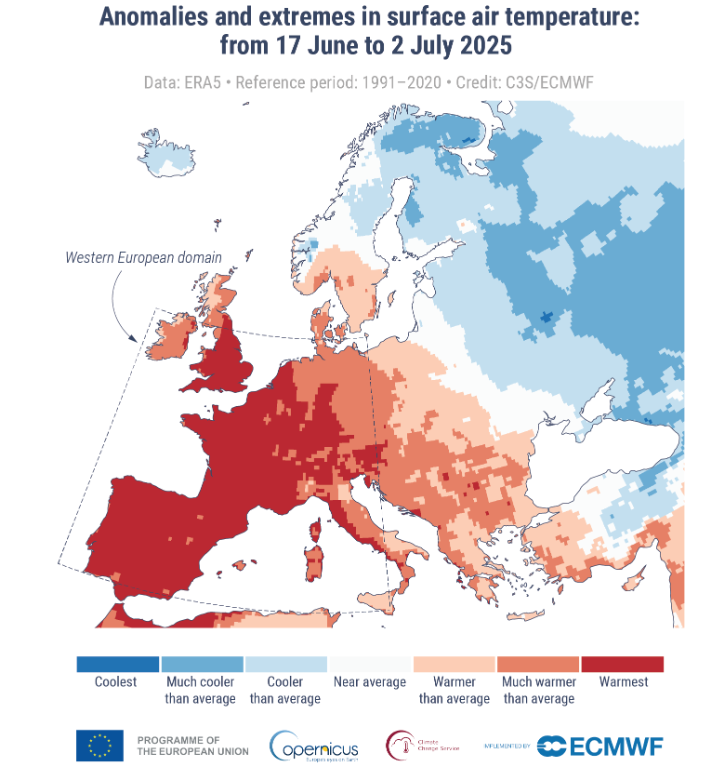
‘Climate change has many manifestations: one of them is precisely this extreme behaviour of weather conditions,’ said Montiel. ‘It is the main vector that is influencing, not determining, but conditioning the different behaviour of these mega-fires,’ she added.
In the face of these phenomena, more research is needed to guide emergency response, Borràs stressed. ‘There is a lack of models and investment in science and research,’ said the engineer, to understand the behaviour of convection, its formation and evolution. Without these tools, firefighting services ‘are flying a bit blind,’ she said at the briefing.
To reduce vulnerability and prevent fires, land-use planning and management measures are insufficient, Montiel lamented. ‘The effects of these measures are limited,’ he stressed. In his view, there is a lack of coordination and shared responsibility between different sectors, from landowners and neighbourhood communities to local councils and other public administrations. ‘This is not just a matter for firefighters or civil protection,’ he stressed.