Biodiversity Research Institute (CSIC-University of Oviedo-Principality of Asturias)
If you are the contact person for this centre and you wish to make any changes, please contact us.
Researcher at the Mixed Institute for Biodiversity Research (IMIB), CSIC-University of Oviedo-Principality of Asturias
Senior scientist at the CSIC and head of the Department of Biodiversity and Global Change of the Joint Institute for Biodiversity Research (University of Oviedo-CSIC)
Researcher at the Joint Institute for Biodiversity Research of the University of Oviedo
Professor at the University of Oviedo, researcher at the Joint Institute for Biodiversity Research (IMIB) of the CSIC-University of Oviedo
Researcher at the Mixed Institute for Biodiversity Research (IMIB), CSIC-University of Oviedo-Principality of Asturias
Researcher at the Biodiversity Research Institute (CSIC-University of Oviedo-Principality of Asturias)
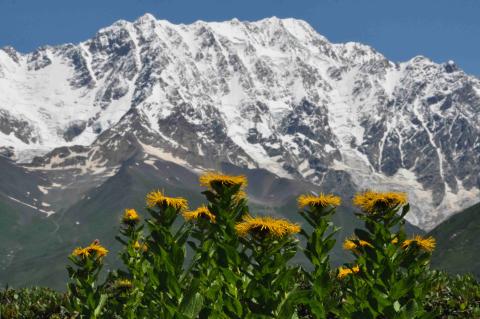
The peaks of European mountains such as the Pyrenees or the Sierra Nevada may be gaining plant species as the climate warms, but this apparent increase in biodiversity is masking a growing wave of local extinctions. These are the main conclusions of a study published in the journal Science, which includes Spanish participation and analyses nearly a thousand vegetation plots spread across 62 European mountain peaks. The reason is that higher-altitude mountain regions have gained plant species in recent decades as plants from lower altitudes have expanded up the slopes, but this may mask the decline or disappearance of specialised, high-altitude resident species.
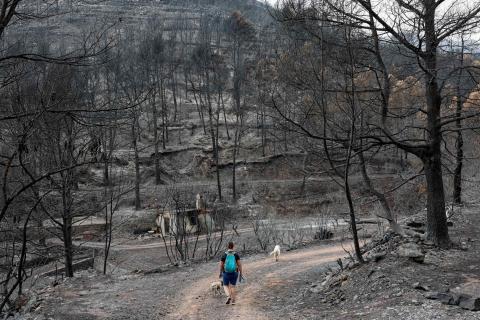
So far this year, up to 20 August, 262,000 hectares have been burnt in Spain, compared with the average of 105,600 hectares burnt between 2015 and 2024. Large-scale wildfires, exacerbated by climate change, are increasing both in frequency and in the area affected. But what happens in the forests after a fire? Can the woodland regenerate on its own? What criteria should be followed? We analyse, with the help of experts, how these ecosystems recover and what measures are taken to protect and restore them.
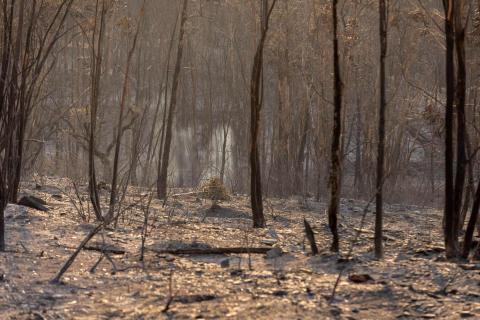
A study published in Science Advances has shown that areas affected by extreme wildfires – characterised by rapid spread and great difficulty in extinguishing them – have lower tree cover and reduced resilience compared to less intense fires, which may lead to long-term changes in vegetation. The team analysed 32.1 million hectares of coniferous forest in Canada and the western United States that were affected by fires between 2012 and 2023. Of this area, more than a third was burnt by extreme fires. In these cases, they observed that the faster the fire front advances, the greater the size and severity of the fire and the greater the distance from seed sources for the surviving trees, paving the way for long-term changes in vegetation.
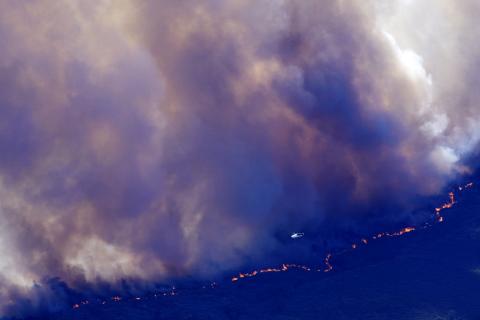
The fire in Ávila, which merged with the one in the south-western mountains of Madrid last Saturday and spread to the province of Toledo, remains unstabilised, although it is under control in some areas. Wind gusts of up to 30 km/h will complicate fire-fighting efforts on Monday, according to the Madrid 112 Safety and Emergency Agency. The fire in Ávila is now the largest in Spain’s recent history. Meanwhile, the fire that broke out on Saturday in La Vall d’Uixó (Castellón), which has spread into the Sierra de Espadán Natural Park, has not yet been stabilised either. In total, around 100,000 people have been evacuated or are under lockdown across all the fire fronts.
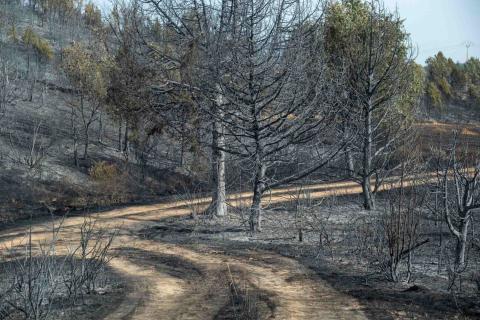
Data from the Copernicus European Forest Fire Information System (EFFIS) show that, as of 22 July, 119,458 hectares have been burnt in Spain. The average number of hectares burnt from 2006 to 2025 up to this date stands at 35,736 hectares. The fire in the Sierra Norte de Guadalajara, which has scorched more than 30,000 hectares and is still active, together with numerous fire fronts in other provinces and the fire in Los Gallardos (Almería), in which 13 people died, have caused the total area burnt to soar.
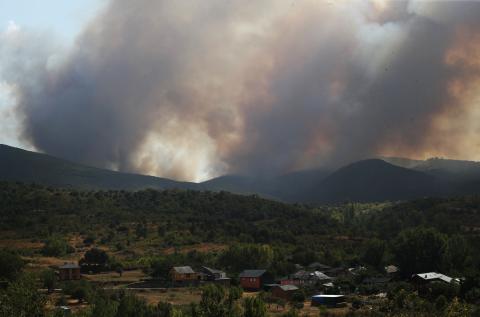
Forest disturbances in Europe—including fires, insect pest outbreaks, and windstorms—could double by the end of the 21st century compared with the 2001–2020 period if emissions are not reduced. In the case of wildfires, the annual area burned could nearly triple. The Mediterranean region ranks among the most vulnerable, and almost 90% of Mediterranean forests could be affected by increased fires and pest outbreaks under higher warming scenarios. The findings are published in a study in the journal Science involving Spanish research centers such as CREAF, the CTFC and the University of Girona.
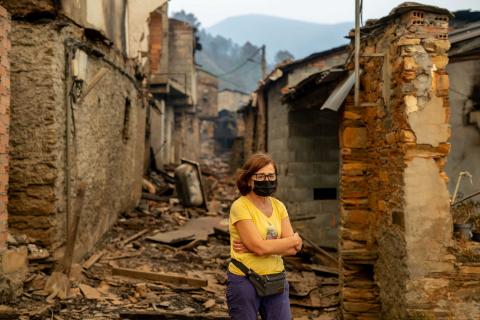
A US team has analyzed the evolution of the global population exposed to forest fires between 2002 and 2021. The study indicates that the number of people exposed has increased by 40%, despite a 26% reduction in the area burned. This is mainly due to the increase in the population living in urban-forest interfaces. 85% of exposures occurred in Africa, even though forest fire disasters in North America, Europe, and Oceania have received most of the attention, notes the study, which is published in the journal Science.
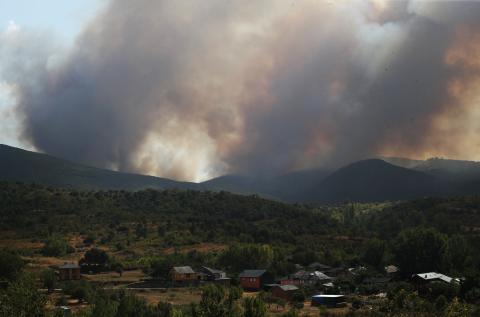
Several areas in the region of El Bierzo in León and the province of Zamora have seen numerous forest fires in recent hours, forcing more than a thousand people from different municipalities to evacuate. One person has died. The flames have affected the Las Médulas natural area, listed by UNESCO as a World Heritage Site. Another fire in Tarifa (Cádiz) has forced the evacuation of hundreds of people, and also in Tres Cantos (Madrid), where one person died. In addition, there are active outbreaks in several areas of Galicia. The government declares a pre-emergency phase.
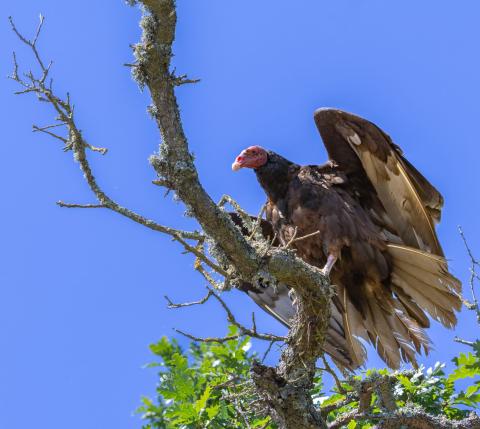
A team from Stanford University (USA) has analysed the conservation status of 1,376 species of scavenger animals. The results, published in the journal PNAS, indicate that 36% of them are threatened or in decline, especially large species and obligate scavengers, which depend exclusively on carrion for food. In contrast, the number of small and facultative scavengers, such as rodents, for which carrion is not their only source of food, is increasing. According to the authors, this ‘could increase the risks of diseases that large scavengers have helped to mitigate’.
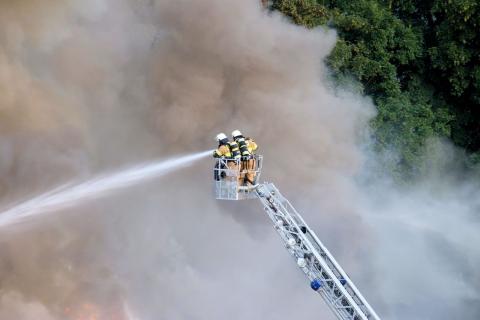
The frequency and magnitude of extreme wildfires appear to have doubled in the last 20 years. Moreover, the six most extreme years for these events have occurred since 2017, according to a paper published in Nature Ecology & Evolution in which the authors used satellite data from 2003 to 2023.