University of Santiago de Compostela
If you are the contact person for this centre and you wish to make any changes, please contact us.
Professor of Preventive Medicine and Public Health at the University of Santiago de Compostela, researcher at CRETUS and IDIS, and Visiting Professor at Brown University (USA)
Professor in the Communication Sciences department and researcher in the 'Novos Medios' group
Researcher in Population Genetics in Biomedicine at the Instituto de Investigación Sanitaria de Santiago de Compostela (IDIS) and Professor at the Faculty of Medicine of the University of Santiago de Compostela
Assistant Professor in the Astronomy and Astrophysics Section of the Department of Applied Mathematics at the University of Santiago de Compostela
Professor emeritus at the University of Santiago de Compostela, theoretical physicist and scientific delegate for Spain on the CERN Council when the Higgs boson was discovered
Assistant Professor in the Department of Preventive Medicine and Public Health
Professor of Computer Science and Artificial Intelligence, Singular Centre for Research in Intelligent Technologies (CiTIUS)
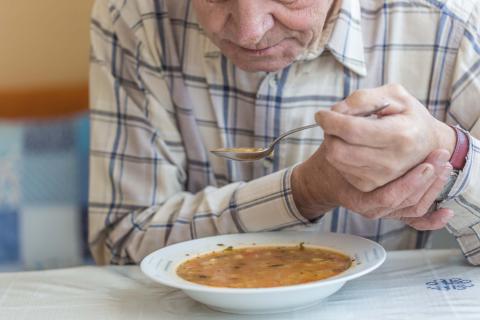
Various studies have shown that smokers have a lower risk of developing Parkinson’s disease, but the causes remain unknown. A study has analysed the role played by carbon monoxide — a toxic gas produced by the combustion of tobacco — in this association. To this end, the team conducted a twelve-year follow-up study of more than half a million adults in China. The results show that regular smoking was associated with an increased risk of lung cancer, ischaemic heart disease, stroke and all-cause mortality, but with a lower risk of Parkinson’s disease. Most strikingly, amongst people who had never smoked, higher levels of exhaled carbon monoxide—which the authors measured—were associated with a lower risk of Parkinson’s disease. According to the study, published in JAMA Neurology, these findings demonstrate a possible protective role of carbon monoxide in the disease, rather than smoking itself.

OpenAI has stated in a press release that the internal version of its Astra AI model has found solutions to ten research problems in mathematics and computing, in areas such as geometry, group theory, operator algebras, quantum complexity, cryptography and combinatorics, amongst others. According to the company, the total number of tokens — basic units of information — required to solve these problems would cost around $2,000. OpenAI expresses “deep respect and understanding” for those concerned about the impact of AI on these disciplines, including the signatories of the Leiden Declaration on AI and Mathematics; and states that the attribution of results must honestly reflect how each one was obtained, whilst encouraging the mathematical community to review them. The company is publishing these results openly in a paper, accompanied by the model’s account of its reasoning process.
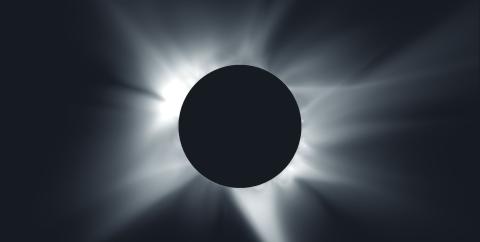
There are just a few days to go until 12 August, when we’ll be able to enjoy the first of the three eclipses we’ll see in Spain. This is a total solar eclipse — the Moon will completely cover the Sun’s disc — something not seen on the Iberian Peninsula since 1912. Experts from different regions of Spain with extensive experience in observing eclipses offer their recommendations. Choosing the right viewing spot, using approved eclipse glasses, coping with the heat and respecting the natural environment are key to observing the eclipse safely and enjoying the experience.

On Tuesday, the Council of Ministers approved the draft bill amending the current Tobacco Act, which was passed in 2005. The bill now begins its passage through Parliament and includes new measures to tackle smoking and regulate tobacco-related products. The text prohibits the consumption of tobacco by minors — in addition to its sale —, extends smoke-free zones to outdoor seating areas and other spaces, and restricts the advertising of tobacco-related products. It also treats e-cigarettes and other devices in the same way as traditional tobacco cigarettes, amongst other measures.
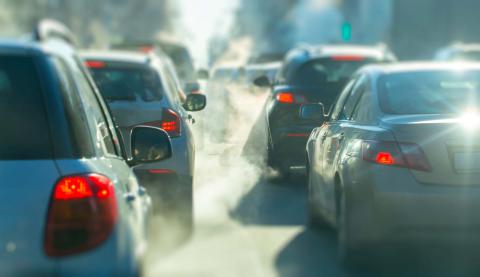
A Danish study published in JAMA Neurology found an association between long-term exposure to residential road traffic noise and an increased risk of developing Parkinson's disease. The study followed more than three million Danish adults aged 40 years and older for 18 years using data from Denmark's national administrative and health registries. The researchers assessed residential road traffic noise exposure at both the most exposed and the least exposed façades of participants' homes. The study also found that individuals with a quiet façade had a lower risk of developing Parkinson's disease than those whose homes were exposed to high levels of noise on all sides.
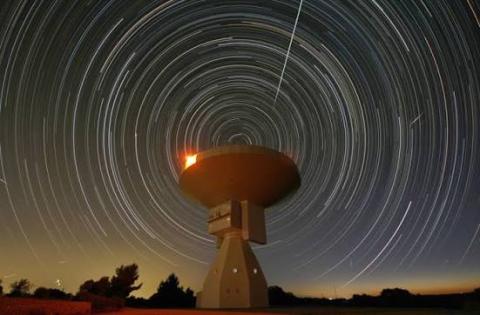
A team led by a Spanish researcher has identified, near the centre of the Milky Way, a type of sugar composed of four carbon atoms, known as erythrulose, which on Earth is found in raspberries and self-tanning products. This would suggest that complex and biologically relevant molecules can form in space. Ribose and glucose had previously been discovered in samples from meteorites and asteroids, but until now no sugar had been directly detected in the interstellar medium. The finding is published in Nature Astronomy.
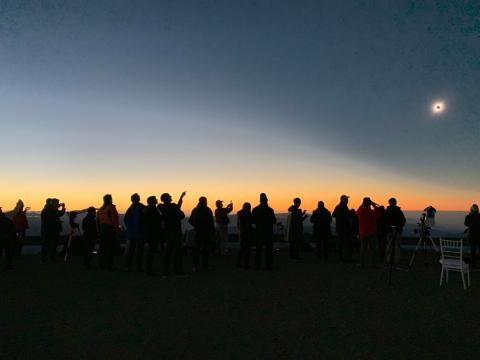
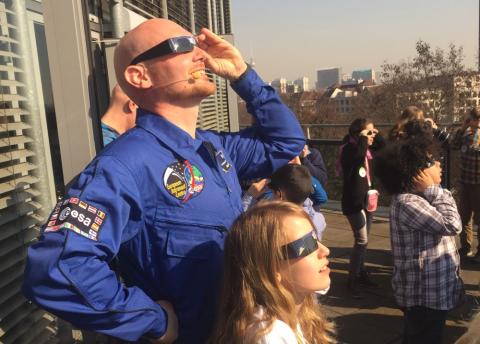
To fully experience the astronomical phenomenon of a total eclipse, you need to prepare in advance. The main concern is eye safety, but there are other health risks that can easily be avoided. We explain the main personal precautions to bear in mind.
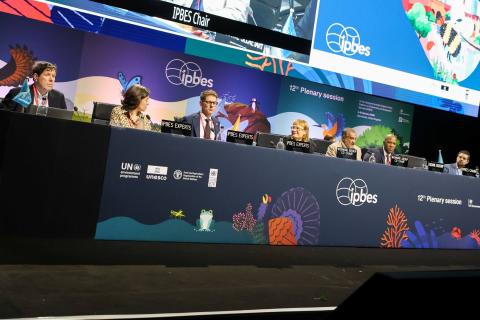
Meeting in Manchester (United Kingdom), the plenary session of IPBES (Intergovernmental Science-Policy Platform on Biodiversity and Ecosystem Services) ratified its Assessment on Business and Biodiversity, which presents data to understand the dependence and impact of businesses on nature and proposes more than 100 measures to improve the global situation. Three of its representatives explained the main results and proposals at a briefing organized by SMC Spain.

In a sample of academic articles retracted by medical journals, the proportion of female authors is lower than the overall share of female researchers in these fields. "The underrepresentation of women among retracted authors, particularly for misconduct-related retractions, may reflect systemic gender imbalances in academia rather than differences in scientific integrity," writes the author of the study in PLoS One. His analysis, based on 878 retracted publications in nine clinical areas, estimates that 16.5% of the first authors of retracted papers were female, while the proportion of first authors of biomedical publications exceeds 40%.