University of Santiago de Compostela
If you are the contact person for this centre and you wish to make any changes, please contact us.
Professor of Preventive Medicine and Public Health at the University of Santiago de Compostela, researcher at CRETUS and IDIS, and Visiting Professor at Brown University (USA)
Professor in the Communication Sciences department and researcher in the 'Novos Medios' group
Researcher in Population Genetics in Biomedicine at the Instituto de Investigación Sanitaria de Santiago de Compostela (IDIS) and Professor at the Faculty of Medicine of the University of Santiago de Compostela
Assistant Professor in the Astronomy and Astrophysics Section of the Department of Applied Mathematics at the University of Santiago de Compostela
Professor emeritus at the University of Santiago de Compostela, theoretical physicist and scientific delegate for Spain on the CERN Council when the Higgs boson was discovered
Assistant Professor in the Department of Preventive Medicine and Public Health
Professor of Computer Science and Artificial Intelligence, Singular Centre for Research in Intelligent Technologies (CiTIUS)

Periodontal disease—chronic inflammation of the gums—is correlated with minor brain damage in older people, according to a study published in Neurology Open Access. The study compared magnetic resonance images of the brains of 800 adults with periodontal disease with those of 343 people without the condition.

If the United States did not change the time twice a year, there would be a lower incidence of obesity and strokes. This is the conclusion of a study by Stanford University (USA) published in PNAS that compared how three different time policies — permanent standard time (winter), permanent daylight saving time, and biannual time changes — could affect circadian rhythms and the health of the population. By modelling light exposure, circadian impacts and health characteristics county by county, the researchers estimate that permanent standard time would prevent about 300,000 cases of stroke per year and reduce the number of people with obesity by 2.6 million, compared to biannual changes. Permanent daylight saving time would also be positive, although with a smaller impact.

Although tobacco consumption is declining in many parts of the world, there appears to be an increase in the number of lung cancer cases among non-smokers. One of the possible causes of this increase is air pollution. Now, researchers in the US, with Spanish participation, have analysed the genomes of 871 lung tumours in people from various locations who had never smoked. The results, published in the journal Nature, indicate that greater exposure to pollution is linked to an increase in the number of mutations, including those commonly associated with tobacco.

Competition to attract audiences encourages media outlets to spread misinformation, according to a study published in Science Advances. The research applies a mathematical framework - called a zero-sum game - to analyse the dynamics between immediate media benefits and long-term damage. The model showed how an ‘arms race’ can emerge between news sources: when one player resorts to misinformation, the other has to do the same in order to compete.

In online debates, Large Language Models (LLMs, i.e. Artificial Intelligence systems such as ChatGPT) are more persuasive than humans when they can personalise their arguments based on their opponents’ characteristics, says a study published in Nature Human Behaviour which analysed GPT-4. The authors urge researchers and online platforms to ‘seriously consider the threat posed by LLMs fuelling division, spreading malicious propaganda and developing adequate countermeasures'.

Research has analyzed how extreme heat influences the biological age of elderly populations, specifically in the United States. The study, published in Science Advances, used blood samples from more than 3,600 adults with an average age of 68 collected between 2010 and 2016. The team compared epigenetic aging trends with the number of days of extreme heat in the participants' places of residence. The models showed that more days of heat or long-term heat — over a period of one to six years — increased the biological age of the participants by more than two years.
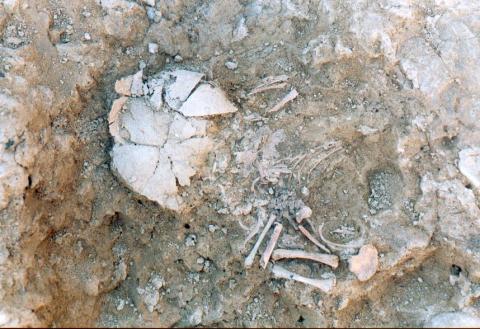
A team of researchers led by the Max Planck Institute for Evolutionary Anthropology in Germany has analysed nearly 10,000 ancient genomes and found six cases of people with Down's syndrome and one with Edwards' syndrome. Most of them died before or shortly after birth. The findings correspond to different periods up to 5,500 years old and several of them have been found in Navarra. According to the authors, "the care with which the burials were carried out and the objects found with these individuals indicate that ancient societies probably treated people with trisomies 18 and 21 as members of their communities". The findings are published in Nature Communications.
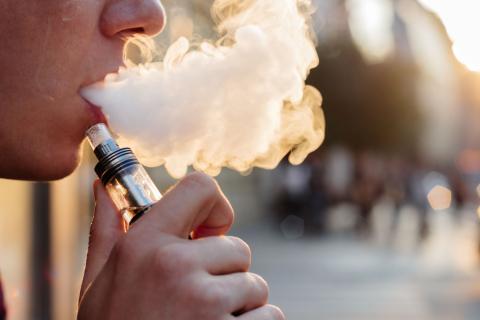
E-cigarettes combined with traditional therapies are more effective for smoking cessation than regular therapies alone, says a study conducted in Switzerland and published in the New England Journal of Medicine. The study involved two groups of about 600 participants each. At a 6-month control visit, 59.6% of the members of the e-cigarette group had not smoked tobacco in the previous week, compared to 38.5% in the control group.

For the treatment of many diseases it is necessary to use large molecules that do not resist the digestion process and must be injected. Now, a group of scientists at the Institute of Chemical Sciences and Engineering in Lausanne (Switzerland) has developed a method for synthesizing a type of protein called cyclic peptides, capable of binding to varied and complex targets, and they have done so in a way that makes them capable of being administered orally. According to the press release accompanying the publication, this opens "a new era in drug development".
According to a survey conducted in Spain, with 403 respondents from the biomedical research field, four out of ten admit to having committed some type of misconduct in their work. The press regularly reports on scandals in science. Among the most recent cases, El País reported that the CSIC has opened a disciplinary proceeding against five individuals suspected of receiving money in exchange of false affiliations. These cases of misconduct may seem isolated, but they reflect broader dysfunction of the research system. In this guide, we provide keys to better understand how these cases arise and evolve, and to cover their nuances.