University of Santiago de Compostela
If you are the contact person for this centre and you wish to make any changes, please contact us.
Professor of Preventive Medicine and Public Health at the University of Santiago de Compostela, researcher at CRETUS and IDIS, and Visiting Professor at Brown University (USA)
Professor in the Communication Sciences department and researcher in the 'Novos Medios' group
Researcher in Population Genetics in Biomedicine at the Instituto de Investigación Sanitaria de Santiago de Compostela (IDIS) and Professor at the Faculty of Medicine of the University of Santiago de Compostela
Assistant Professor in the Astronomy and Astrophysics Section of the Department of Applied Mathematics at the University of Santiago de Compostela
Professor emeritus at the University of Santiago de Compostela, theoretical physicist and scientific delegate for Spain on the CERN Council when the Higgs boson was discovered
Assistant Professor in the Department of Preventive Medicine and Public Health
Professor of Computer Science and Artificial Intelligence, Singular Centre for Research in Intelligent Technologies (CiTIUS)
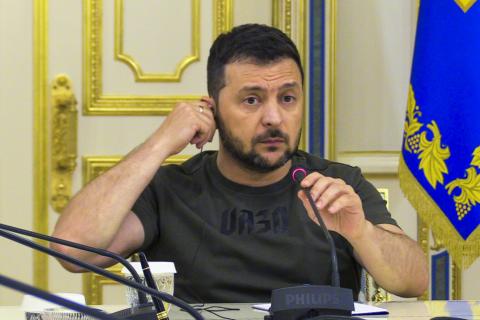
A research project has analysed the Twitter discourse related to deepfakes in the context of the Russia-Ukraine war in 2022, studying almost 5,000 tweets related to these videos. Deepfakes are synthetic media that mix an original video with content generated by artificial intelligence, often with the aim of mimicking a person. The research, published in PLoS ONE, looks at the lack of literacy about deepfakes and the scepticism and misinformation that can arise when real media is mistakenly identified as fake. The authors warn that efforts to raise public awareness of this phenomenon can undermine trust in other legitimate media, that can also be seen as suspect.
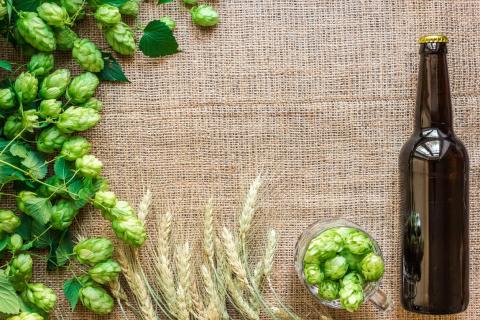
Research has compiled data on brewing hop yields and alpha content - which gives beer its bitter aroma and affects quality - between 1971 and 2018 in hop-growing areas of Germany, the Czech Republic and Slovenia. The results, published in the journal Nature Communications, show that, compared to 1994, hop production has decreased by 0.2 tonnes per hectare per year and alpha bitterness content has fallen by 0.6%. Combining the data with climate models, the authors estimate that by 2050 hop yields and alpha content will fall by 4 - 18% and 20 - 31% respectively. According to the models, the cause will be higher temperatures and more frequent and severe droughts due to climate change.
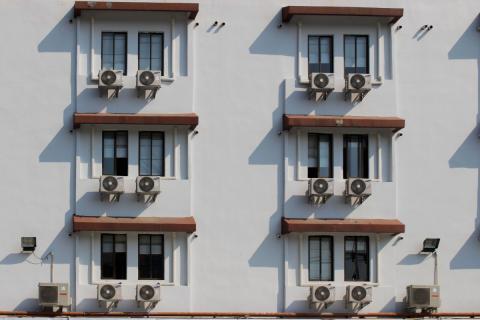
Capping the consumption of European households who consume most energy - those with the highest incomes and education levels - could achieve "considerable emissions reductions", according to a UK research team. This benefit could also be achieved by simultaneously increasing the consumption of the poorest and most vulnerable users. The analysis, published in Nature Energy, estimates that limiting the energy use of the top 20 % of consumers in 27 countries in Europe would reduce emissions from domestic energy consumption by 11.4 %, 16.8 % from transport, and 9.7 % from total energy consumption. The article states that the association between high income and high energy consumption is particularly strong in countries such as Spain, where income inequality is relatively high.
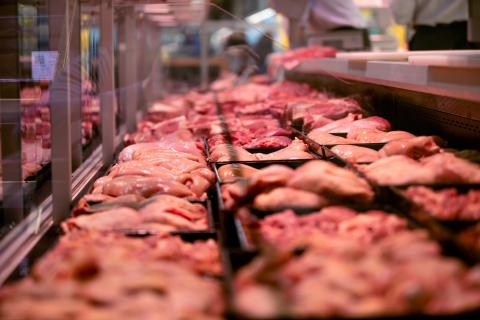
A research team including scientists from the University of Santiago de Compostela and the Centro Tecnológico Agroalimentario de Lugo has analysed the presence of potentially pathogenic bacteria in 100 meat samples bought in supermarkets in Oviedo, Spain in 2020. The researchers found E. coli bacteria which produce enzymes that make the bacteria resistant to various types of antibiotics in more than half of the turkey (68 %) and chicken (56 %) samples, and less frequently in beef (16 %) and pork (12 %) samples. They also found E. coli bacteria that can cause urinary tract infections. The team presented these results at the European Congress of Clinical Microbiology and Infectious Diseases (ECCMID), which is being held in Copenhagen, Denmark, until 18 April.
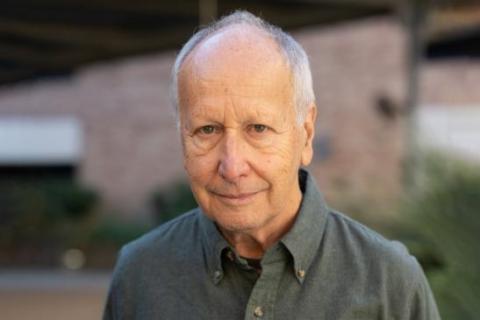
The Norwegian Academy of Science and Letters has awarded the Abel Prize to Luis A. Caffarelli, a native of Argentina with US-Argentine nationality, for his "fundamental contributions to the theory of the regularity of nonlinear partial differential equations". Considered the Nobel Prize of mathematics, the award recognises work over an entire career - unlike the Fields Medal, which is awarded for a result under the age of 40. Caffarelli has become the first Latin American to receive this award.
A study estimates that household energy expenditure has increased by 62.6 to 112.9 % in 2022, following the Russia-Ukraine conflict. This represents an increase of 2.7 to 4.8 % of overall household expenditure. The analysis, published in Nature Energy, warns that this increase could push between 78 and 141 million people worldwide into extreme poverty.
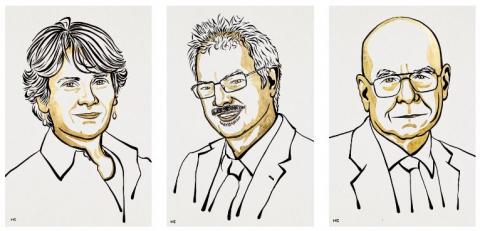
The Nobel Prize in Chemistry 2022 has been awarded to Barry Sharpless and Morten Meldal for laying the foundations of click chemistry, which quickly and efficiently joins molecular building blocks; and to Carolyn Bertozzi, who pioneered bioorthogonal reactions, which use this technique inside living organisms without altering the chemistry of the cell.
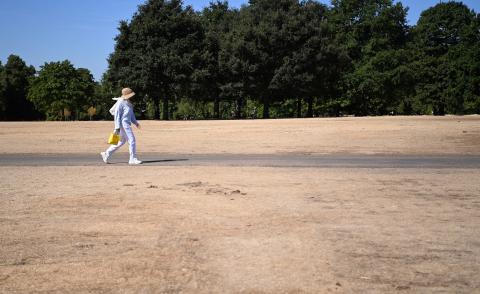
The lack of rainfall and the decrease in available water resources have caused 47% of European territory to be on drought pre-alert and 17% to be on alert. The lesser experience of northern countries in managing this phenomenon and the high vulnerability of southern regions mean that this drought is having a major impact on various economic sectors, in addition to supply cuts.
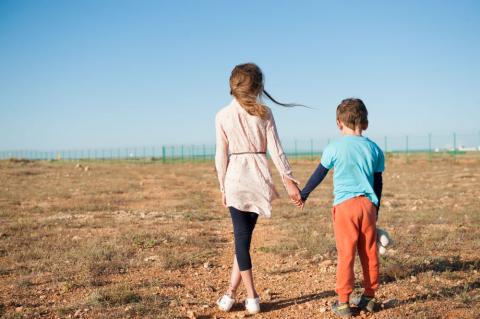
A study published in PNAS sets out a worst-case scenario for current climate change, explains the likelihood of its occurrence and analyses the devastating consequences it would have. It also includes a research agenda to address it.
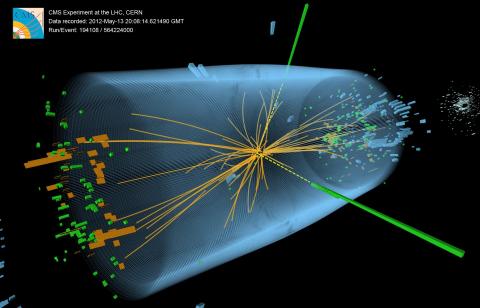
On 4 July 2012, physicists from all over the world celebrated the milestone achieved by CERN's Large Hadron Collider (LHC) in Geneva: they had found the elusive Higgs boson, described theoretically in 1964 and a key part of the standard model. Among the dozens of scientists who participated in that discovery, with the ATLAS and CMS experiments, there were many Spanish physicists, who ten years later appreciate what it meant.