
University of Barcelona
If you are the contact person for this centre and you wish to make any changes, please contact us.
Doctor in Biology and research professor in the Department of Evolutionary Biology, Ecology, and Environmental Sciences at the University of Barcelona.
Ramón y Cajal researcher at the Institute of Neurosciences at the University of Barcelona
PhD candidate in the Department of Social Psychology and Quantitative Psychology at the Faculty of Psychology, University of Barcelona
ICREA Research Professor and Coordinator of the Regenerative Medicine Programme at the Bellvitge Biomedical Research Institute (IDIBELL), member of CIBER-BBN, Director of the Clinical Translation Programme in Regenerative Medicine in Catalonia, and Professor of Physiology at the University of Barcelona.
Professor of Preventive Medicine and Public Health at the University of Barcelona and member of the Spanish Society of Epidemiology
Associate professor at the University of Barcelona, ICREA Academia fellow, and member of the Scientists’ Coalition for an Effective Plastics Treaty.
Senior Consultant at the Department of Preventive Medicine and Epidemiology at Hospital Clínic in Barcelona, Professor of Public Health and Dean of the Faculty of Medicine and Health Sciences at the University of Barcelona
Professor of Microbiology, University of Barcelona
Professor of Cognitive Neuroscience
Brainlab, Department of Clinical Psychology and Psychobiology, University of Barcelona (UB).
UB Institute of Neuroscience
Sant Joan de Déu Research Institute

English ethologist Jane Goodall died on Wednesday at the age of 91 in California (United States), where she was participating in a lecture tour. This was announced by the Jane Goodall Institute on its social media. ‘Dr Goodall's discoveries as an ethologist revolutionised science and she was a tireless advocate for the protection and restoration of our natural world,’ the statement said. Her observations and analysis of chimpanzees in the wild over decades were a milestone in primatology.

An international team has analysed cancer incidence and mortality worldwide using data available since 1990. Between then and 2023, there was an increase of almost 75% in deaths from this cause, with more than 40% of all deaths associated with preventable risk factors. Estimates indicate that by 2050 there will be a similar increase in mortality, due in part to the ageing of the population. The increase will be particularly pronounced in low- and middle-income countries. The results are published in The Lancet.

For women diagnosed with early-stage breast cancer, the long-term risk of developing a second primary cancer is low, around 2–3 per cent higher than that of women in the general population. This is one of the conclusions of a study published by The BMJ, which analysed data from nearly half a million women diagnosed in England between 1993 and 2016 with early-stage invasive breast cancer who underwent surgery. During a follow-up period of up to 20 years, around 65,000 women developed a second primary cancer, but the absolute excess risk compared to the risks in the general population was small.

Until now, perceived well-being followed a U-shaped curve depending on age, declining – due to worry, stress or depression – until people reached middle age, around 50, and then rebounding into old age. With malaise, the U is inverted and we talk about the ‘unhappiness curve’, shaped like a hump. Now, research published in PLOS One with data from the US and the UK claims that this age-related malaise is declining and that there is no longer such a hump. The reason for the change is said to be the deterioration of mental health among young people, especially those under 25. The study also includes data from 44 countries between 2020 and 2025, including Spain, and confirms that the malaise no longer takes the form of a hump, but decreases with age.

Researchers in the United States have used stem cells created from patients with a very rare type of ALS, more prevalent in Brazil, to target a key gene in the stress response and reverse the damage suffered by motor neurons in the laboratory. They believe it is "a promising proof-of-concept for future therapeutic strategies" and "could help lay the foundation for genetically informed clinical trials".

Ahead of the anticipated conclusion of a United Nations global treaty on plastics, a group of international experts calls for greater attention to health effects when addressing plastic pollution. The work, published in The Lancet, reviews current evidence on how plastics—including microplastics and plastic chemicals—affect health, and announces the launch of a new project to monitor these effects.

Between 2021 and 2024, the Android Earthquake Alerts system detected an average of 312 earthquakes per month and sent alerts in 98 countries associated with 60 events of magnitude greater than 4.5, according to a study published in the journal Science. The study also includes comments from users who received the alerts: 85% said they felt tremors, 36% received the alert before noticing them, 28% during the event and 23% after they occurred. In addition, 84% said they would trust the system more next time, according to the research team from Google and the universities of California - Berkeley and Harvard (USA).

In Spain, immigrant employees earn 29% less than other workers, according to a study published in Nature. This gap is comparable to that observed in Canada, but greater than that of other European countries in the study, such as Germany, Norway and France (19-20%), and much higher than the gap observed in the United States (10%) and Sweden (7%). ‘The segregation of immigrant workers into lower-paid jobs accounts for approximately three-quarters of the overall wage differences between immigrants and natives,’ the study states.
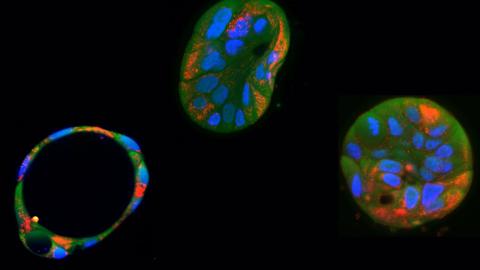
A team from the Netherlands has successfully edited pathogenic mutations in mitochondrial DNA in human cells, changes in DNA that cause disease, according to research published in PLoS Biology. The authors used a genetic tool known as a base editor. Until now, techniques derived from CRISPR have made it possible to correct mutations in nuclear DNA, and new techniques are being developed that allow mitochondrial DNA to be edited.

An oral formulation of risperidone could be administered weekly instead of daily to treat patients with schizophrenia with the same efficacy, according to a phase III clinical trial published in The Lancet Psychiatry. The study included 83 patients in the United States.