
University of Barcelona
If you are the contact person for this centre and you wish to make any changes, please contact us.
Doctor in Biology and research professor in the Department of Evolutionary Biology, Ecology, and Environmental Sciences at the University of Barcelona.
Ramón y Cajal researcher at the Institute of Neurosciences at the University of Barcelona
PhD candidate in the Department of Social Psychology and Quantitative Psychology at the Faculty of Psychology, University of Barcelona
ICREA Research Professor and Coordinator of the Regenerative Medicine Programme at the Bellvitge Biomedical Research Institute (IDIBELL), member of CIBER-BBN, Director of the Clinical Translation Programme in Regenerative Medicine in Catalonia, and Professor of Physiology at the University of Barcelona.
Professor of Preventive Medicine and Public Health at the University of Barcelona and member of the Spanish Society of Epidemiology
Associate professor at the University of Barcelona, ICREA Academia fellow, and member of the Scientists’ Coalition for an Effective Plastics Treaty.
Senior Consultant at the Department of Preventive Medicine and Epidemiology at Hospital Clínic in Barcelona, Professor of Public Health and Dean of the Faculty of Medicine and Health Sciences at the University of Barcelona
Professor of Microbiology, University of Barcelona
Professor of Cognitive Neuroscience
Brainlab, Department of Clinical Psychology and Psychobiology, University of Barcelona (UB).
UB Institute of Neuroscience
Sant Joan de Déu Research Institute
[Nature Medicine has retracted this article on 24 June 2026]
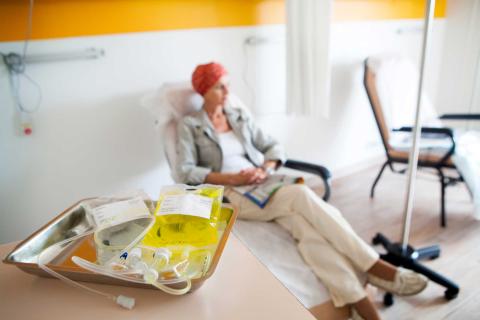
A phase 3 clinical trial conducted in China tested 210 patients with advanced non-small cell lung cancer—the most common type—to see whether the time of day when immunotherapy and chemotherapy were administered influenced their effectiveness. The data indicate that, on average, those who received therapy after 3 p.m. did not see their cancer worsen for 5.4 months. In contrast, those who received it before that time did not see their cancer worsen for an average of 11.7 months, almost twice as long. Overall, response rates were 56.2% and 69.5%, respectively. The results, published in Nature Medicine, suggest that scheduling therapy early in the day may offer a simple and cost-free way to improve treatment efficacy.

The American Psychiatric Association has unveiled the new features of the forthcoming Diagnostic and Statistical Manual of Mental Disorders (DSM) in five articles published in The American Journal of Psychiatry. Among the highlights are the proposed change of name — it will become the Diagnostic and Scientific Manual — and the intention for it to be more dynamic, incorporating biomarkers for diagnosis and integrating the socioeconomic, cultural and environmental determinants of health. According to the authors, the aim is to enable a more personalised and inclusive clinical practice, aligned with scientific rigour. The most recent update was published in 2022 with the DSM-5-TR, and specialists are currently unaware of the date of the next edition, as they reported during a briefing with journalists.
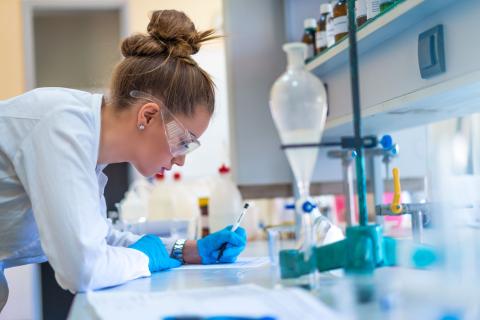
Before being published, studies written by female researchers are spend a longer time in peer review than articles by male authors, according to an analysis of more than 36 million publications in biomedical and life science journals. The median peer review time is between 7.4% and 14.6% longer for female authors than for male authors in most disciplines, says the analysis published in PLoS Biology.

An international team has used a type of artificial intelligence (AI) to identify the most important factors influencing cancer survival in almost every country in the world. The study provides information on policy improvements or changes that could be implemented in each nation to have the greatest impact. In general, access to radiotherapy, universal health coverage, and economic strength emerged as common and important factors. Furthermore, information for each country, including Spain, can be accessed through an online tool. The results are published in Annals of Oncology.
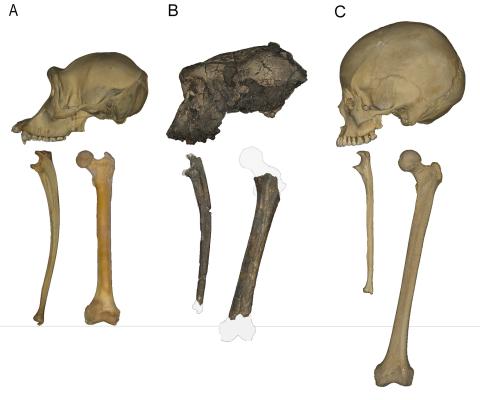
A US research team presents new evidence in Science Advances that Sahelanthropus tchadensis was a biped that evolved from an ape ancestor. Based on the study of two partial ulnas and a femur, they conclude that S. tchadensis—the oldest known hominid, which lived around 7 million years ago—had bones similar in size and shape to those of chimpanzees, but with a relative proportion more similar to that of hominids.

A longitudinal study published in the journal International Gambling Studies states that boys and girls who play videogames with gambling-like elements, such as tool boxes, are more likely to gamble with real money in the future. The lead researcher warns that, to protect minors, regulation should go ‘beyond loot boxes, including a variety of gambling-like elements, such as social casino games, prize wheels, and gambling videos.’

Lakes are considered sentinels of climate change, although most research has focused on temperate regions. An international team analysed 10 tropical lakes in the central Amazon during the 2023 drought, which caused high mortality among fish and river dolphins. Using satellite data and hydrodynamic models, the authors show how intense drought and a heatwave combined to raise water temperatures: five of the 10 lakes experienced very high daytime temperatures, exceeding 37°C. Specifically, temperatures in the shallow waters of Lake Tefé soared to 41°C—hotter than a thermal bath. The study is published in Science.

The use of hormonal contraceptives is associated with a small increase in the risk of breast cancer—one additional case of cancer for every 7,752 women who use these drugs—according to a Swedish study. The risk varies depending on the type of hormones administered, and is slightly higher with the use of contraceptives containing desogestrel. The study, published in JAMA Oncology, analyses data from a national registry between 2006 and 2019, with more than two million women aged between 13 and 49.

Different antidepressant drugs cause different side effects in the body, in parameters such as heart rate, blood pressure or body weight, according to a meta-analysis published by The Lancet. For example, agomelatine administration is associated with weight loss, while other molecules such as maprotiline are associated with weight gain. The research brings together 151 studies and 17 reports from the US Food and Drug Administration (FDA), including more than 58,000 people and comparing 30 antidepressant drugs with a placebo.

The temporary employment rate for teaching staff in Spain is 31%, above the OECD average of 19% and the EU average of 17%. This is one of the results of the latest edition of TALIS, the Teaching and Learning International Study, promoted by the OECD and involving more than 50 participating countries. In its previous edition, in 2018, 33% of Spanish teachers had temporary contracts. The study also shows that teacher job satisfaction is among the highest, at 95%—compared to 89% in the OECD and 90% in the EU. As a new feature, TALIS analyzes four new areas: the impact of artificial intelligence on learning and teaching, managing diversity in the classroom, socio-emotional learning, and education for sustainability.