
University of Barcelona
If you are the contact person for this centre and you wish to make any changes, please contact us.
Doctor in Biology and research professor in the Department of Evolutionary Biology, Ecology, and Environmental Sciences at the University of Barcelona.
Ramón y Cajal researcher at the Institute of Neurosciences at the University of Barcelona
PhD candidate in the Department of Social Psychology and Quantitative Psychology at the Faculty of Psychology, University of Barcelona
ICREA Research Professor and Coordinator of the Regenerative Medicine Programme at the Bellvitge Biomedical Research Institute (IDIBELL), member of CIBER-BBN, Director of the Clinical Translation Programme in Regenerative Medicine in Catalonia, and Professor of Physiology at the University of Barcelona.
Professor of Preventive Medicine and Public Health at the University of Barcelona and member of the Spanish Society of Epidemiology
Associate professor at the University of Barcelona, ICREA Academia fellow, and member of the Scientists’ Coalition for an Effective Plastics Treaty.
Senior Consultant at the Department of Preventive Medicine and Epidemiology at Hospital Clínic in Barcelona, Professor of Public Health and Dean of the Faculty of Medicine and Health Sciences at the University of Barcelona
Professor of Microbiology, University of Barcelona
Professor of Cognitive Neuroscience
Brainlab, Department of Clinical Psychology and Psychobiology, University of Barcelona (UB).
UB Institute of Neuroscience
Sant Joan de Déu Research Institute

An international study has warned of the potential risks of widespread use of faecal microbiota transplantation without taking into account the region of the intestine where the transferred microbes arrive. The experiment, conducted on mice and human tissue samples, showed that the microbes from the transplant—mostly anaerobic microbes from the colon—colonised the small intestine, persisted there for months and modified that new environment, causing changes in the host's metabolism. According to the authors, whose study is published in the journal Cell, this may have long-lasting and unforeseen consequences, as well as imbalances in the intestinal ecosystem of patients.
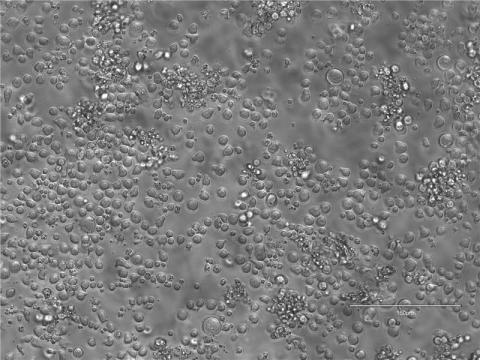
A technique developed under the coordination of researchers from the Centre for Genomic Regulation (CRG) and the Institute for Biomedical Research (IRB) in Barcelona has made it possible to track methylation patterns or “barcodes” in blood cells and construct their epigenetic family tree. This has enabled them to trace their evolution and changes with age, which could be useful for disease prevention and for the study or even development of specific therapies against ageing. The results are published in the journal Nature.
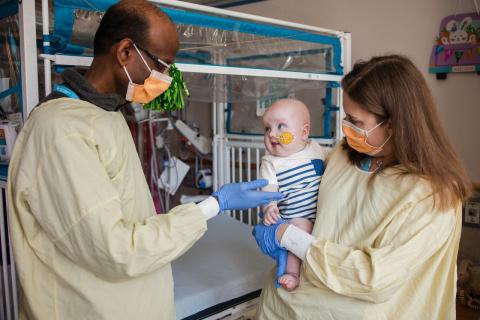
A team from the Children's Hospital of Philadelphia and Penn Medicine (United States) has successfully treated a baby diagnosed with a rare genetic disorder using personalised CRISPR gene editing therapy. The baby, known only by the initials KJ, was born with a rare metabolic disease known as severe carbamoyl phosphate synthetase 1 (CPS1) deficiency. After spending the first months of his life in hospital on a very restrictive diet, KJ received the first dose of his tailored therapy in February 2025, between six and seven months of age. The treatment, which is being used for the first time for this type of disorder, was administered safely, and the baby is now growing well and improving. The case is detailed in a study published by The New England Journal of Medicine (NEJM).
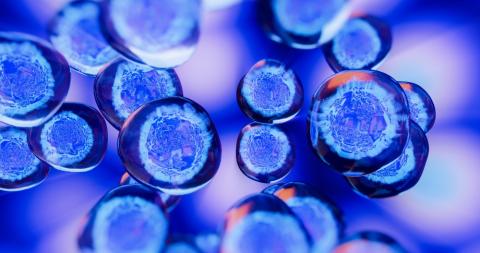
A research team has managed to ‘rejuvenate’ embryonic stem cells from mice to give them greater differentiation potential, according to an article published in the EMBO Journal. Changing the type of sugar these cells use to grow modifies their metabolism and, according to the researchers, could improve their therapeutic potential or their use in in vitro fertilisation treatments.
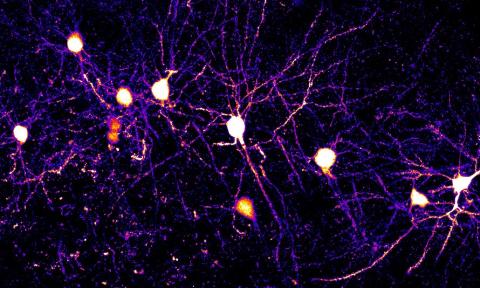
A new study sheds light on how the brain adjusts its ‘wiring’ during learning, concluding that different dendritic segments of the same neuron follow different rules for communicating through their connections - synapses. The findings challenge the idea that neurons follow a single learning strategy and offer a new perspective on how the brain learns and adapts its behaviour. The work, carried out in mice, is published in the journal Science.

The KATRIN (Karlsruhe Tritium Neutrino Experiment) team has published the most accurate measurement to date of the upper limit of the neutrino mass in the journal Science, establishing it at 0.45 electronvolts (eV), less than a millionth of the mass of an electron. The KATRIN experiment, launched in 2018 in Germany, will finalise its neutrino mass measurement campaign this year, having reached 1,000 days of data acquisition.

In marathon runners, the myelin content of specific regions of the brain is reversibly reduced, according to a study carried out in the Basque Country. This observation is consistent with animal evidence suggesting that myelin lipids - a substance that surrounds neurons - can act as energy reserves in extreme metabolic conditions, as detailed by the authors in Nature Metabolism. The analysis is based on magnetic resonance imaging of eight men and two women before and after running a marathon. According to the study, the myelin content was fully recovered two months after the race.
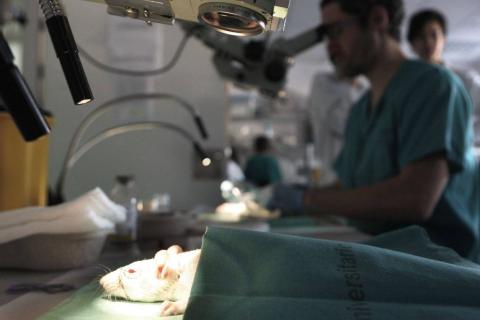
The seventh Annual Report of the COSCE Transparency Agreement, prepared by the European Animal Research Association, which analyses transparency in the use of animals for scientific experimentation in Spain in 2023, was presented today. According to the document, transparency is consolidated among the signatory institutions -168 in 2024- and all of them publish a statement on their websites on the use of animals. Public mention of the number and species used stands at 47%, compared to 38% the previous year.

According to a Lancet Public Health commission on commercial gambling, stricter regulations are needed on a global scale to reduce its impact on health and wellbeing worldwide. The authors argue that the harms caused by gambling are a threat to public health, exacerbated by the rapid expansion and digital transformation of the industry. These harms include physical and mental health problems, increased risk of suicide, gender-based violence and financial problems.

The Karolinska Institute has awarded the Nobel Prize in Medicine or Physiology to Victor Ambros and Gary Ruvkun for the discovery of microRNAs, small RNA fragments that do not contain instructions for making proteins but instead participate in the regulation of gene expression. Their role is fundamental in processes such as cell differentiation, and their alteration can influence diseases like cancer.