
University of Barcelona
If you are the contact person for this centre and you wish to make any changes, please contact us.
Doctor in Biology and research professor in the Department of Evolutionary Biology, Ecology, and Environmental Sciences at the University of Barcelona.
Ramón y Cajal researcher at the Institute of Neurosciences at the University of Barcelona
PhD candidate in the Department of Social Psychology and Quantitative Psychology at the Faculty of Psychology, University of Barcelona
ICREA Research Professor and Coordinator of the Regenerative Medicine Programme at the Bellvitge Biomedical Research Institute (IDIBELL), member of CIBER-BBN, Director of the Clinical Translation Programme in Regenerative Medicine in Catalonia, and Professor of Physiology at the University of Barcelona.
Professor of Preventive Medicine and Public Health at the University of Barcelona and member of the Spanish Society of Epidemiology
Associate professor at the University of Barcelona, ICREA Academia fellow, and member of the Scientists’ Coalition for an Effective Plastics Treaty.
Senior Consultant at the Department of Preventive Medicine and Epidemiology at Hospital Clínic in Barcelona, Professor of Public Health and Dean of the Faculty of Medicine and Health Sciences at the University of Barcelona
Professor of Microbiology, University of Barcelona
Professor of Cognitive Neuroscience
Brainlab, Department of Clinical Psychology and Psychobiology, University of Barcelona (UB).
UB Institute of Neuroscience
Sant Joan de Déu Research Institute

The Ministry of Health has announced that Spain will receive the MV Hondius in the Canary Islands “in accordance with international law and the spirit of humanitarianism”. The government is thus responding to a request from the World Health Organisation (WHO) and the European Union for the cruise ship, which is travelling from Argentina and has an outbreak of hantavirus on board, to dock in the Canary Islands, in the port of Granadilla, Tenerife. The European Centre for Disease Prevention and Control has assessed which passengers should be evacuated from the ship to Cape Verde, where it is currently located, and which will continue on to the Canary Islands. Once there, they will be examined and transferred to their home countries in accordance with safety protocols. The cruise ship is expected to arrive in the archipelago in three or four days.

The hallucinogen psilocybin, found in certain mushrooms, is being investigated as a treatment for conditions such as depression. A study published in Nature Communications shows that a single 25 mg dose of the compound can produce brain changes lasting up to a month after administration. These were measured using neuroimaging techniques in 28 healthy adults who had never taken psychedelics. In terms of psychological effects, participants showed increased cognitive flexibility, psychological insight, and well-being after one month.

A review published in The Lancet Psychiatry has examined the prevalence of major depressive disorder during pregnancy, the peripartum period—immediately before and after childbirth—and the postpartum period—up to twelve months after childbirth. The study, which used data from more than two million women and girls aged 10 to 59 from all regions of the world, showed that approximately one in 15 (6.8%) is affected by major depression during the year following childbirth and that the prevalence was highest during the first two weeks after childbirth (8.3%). The authors call for greater integration of screening, prevention, and treatment of this disorder during the peripartum period into current care models.
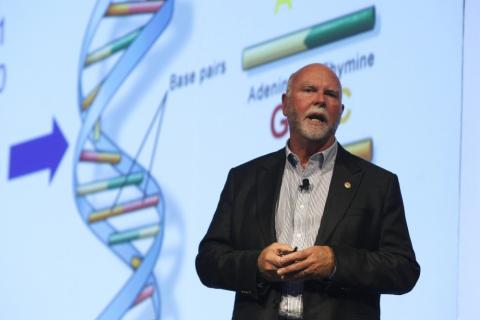
Craig Venter, the American biologist and entrepreneur who founded Celera Genomics to launch his own Human Genome Project in 1999 outside the public consortium, died Wednesday in San Diego at the age of 79, according to a statement from the J. Craig Venter Institute, which he led. Among other achievements, Venter completed the first full sequencing of a living organism’s genetic material and announced that he had succeeded in creating synthetic life.
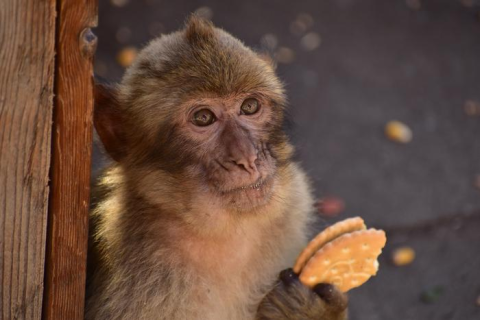
The deliberate consumption of soil—known as geophagy—is a common practice among animals, either to supplement their diet or as a protective mechanism against intoxication and other digestive issues. For the first time, a research team with Spanish participation has documented this behaviour in Barbary macaques in Gibraltar, particularly during the summer, when tourist numbers peak. This has led the authors of the study, published in the journal Scientific Reports, to hypothesise that the purpose of geophagy is to mitigate the digestive discomfort caused by food provided by visitors.

The latest forecasts from the European Centre for Medium-Range Weather Forecasts (ECMWF) suggest that there is a likelihood that the phenomenon known as El Niño will return this year and that it will do so with greater intensity. In Europe, for June through August, the forecast indicates a slight tendency toward below-average precipitation in the northeast of the continent. As for the Iberian Peninsula, temperatures are expected to exceed the top quintile of the seasonal average. Although it is not yet certain that this will occur, forecasts for the coming months will either confirm or rule it out.
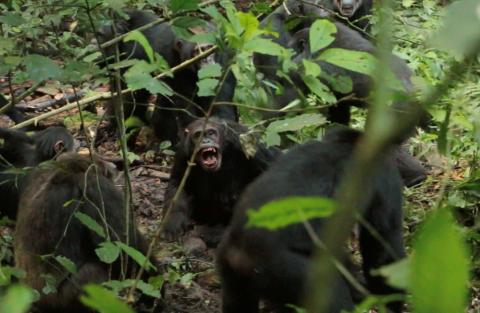
Permanent splits in chimpanzee groups are extremely rare—an event that occurs once every 500 years, according to genetic evidence. The journal Science reports on the split of the largest known group of wild chimpanzees following 30 years of observations. This involves the Ngogo chimpanzees in Kibale National Park (Uganda). The group shifted from cohesion to polarization in 2015 and eventually split into two distinct groups in 2018. From that point on, violence escalated, and members of one group killed at least seven males and 17 infants from the other. In the 1970s in Gombe (Tanzania), another case of this type was documented, but the chimpanzees had been fed by humans-
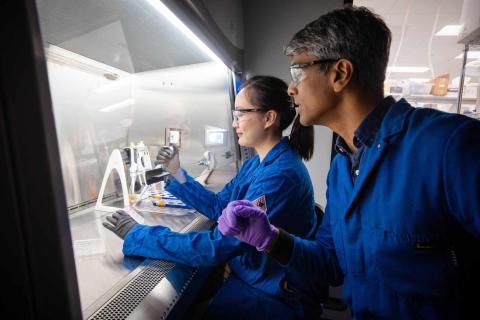
The so-called 'dark transcriptome' consists of non-coding RNA, i.e. RNA that does not provide instructions for building proteins. A study published in the journal Science Signaling used long non-coding RNAs (lncRNAs) and modified them to attenuate acute inflammation in mice and human cells. The authors are confident that this could open up a new field of therapeutic development.

A study published in The BMJ suggests that the incidence of autism spectrum disorder (ASD) is comparable between boys and girls. The study included a sample of more than 2.7 million people born in Sweden between 1985 and 2020 who were followed from birth to a maximum age of 37. More than 78,000 were diagnosed with ASD. It was observed that boys are usually diagnosed between the ages of 10 and 14, five years earlier than girls. By the age of 20, the proportion of diagnoses is almost equal between the sexes. Before the age of 10, the ratio is 3:1 in favour of boys.

A team in China has studied the ability of a test to detect the human papillomavirus (HPV)—responsible for the vast majority of cervical cancers—in menstrual blood from more than 3,000 women. The results indicate that the test is comparable to current screening performed in medical offices. According to the researchers, “Using menstrual blood for HPV testing is practical and non-invasive, allowing women to collect samples at home and thus potentially offering a practical way to expand access to screening.” The study is published in The BMJ.