
Complutense University of Madrid
If you are the contact person for this centre and you wish to make any changes, please contact us.
Lecturer of Palaeontology at the Complutense University of Madrid (UCM) and affiliated researcher at CENIEH
Assistant Professor in the department of Nursing at the Complutense University of Madrid and Director of the CEST Research Group on Emotional Competence, Health, and Well-being in the Workplace
Professor of Prehistory and member of the Institute for Feminist Research at the Complutense University of Madrid
Associate Professor at Camilo José Cela University, researcher at the HM Hospitales Health Research Institute (Madrid) and collaborating researcher in the Department of Personality, Evaluation and Clinical Psychology at the Complutense University of Madrid
Professor of Astrophysics and Director of the Space Astronomy Group at the Complutense University of Madrid
Acute Cardiac Care Unit Coordinator. Cardiovascular Institute. Hospital Clínico San Carlos. Madrid; Associate Professor of Medicine at Complutense University of Madrid; and President of the Association of Ischemic Heart Disease and Acute Cardiac Care of the Spanish Society of Cardiology
Accredited professor, lecturer at the Faculty of Psychology and director of the Research Group on Testimony Psychology at the Complutense University of Madrid
Professor of Biochemistry at the Complutense University of Madrid, president of the Spanish Society of Dietetics and Food Sciences (SEDCA) and treasurer of the Spanish Federation of Nutrition, Food and Dietetics Societies (FESNAD).
Lecturer in the Department of Theoretical Physics and member of the Dynamics of Disordered Systems group at the Complutense University of Madrid
Professor and Director of the Antibiotic Resistance Unit at the Complutense University of Madrid, WHO adviser on antibiotic resistance and One Health

On social network X (formerly Twitter), when users select the ‘for you’ option, the algorithm tends to steer them towards more conservative political options, according to research conducted with nearly 5,000 participants in the United States in 2023. The authors randomly assigned users to either an algorithmic or chronological feed for seven weeks. The switch from chronological to algorithmic feed increased engagement and shifted political opinion towards more conservative positions, especially on political priorities, perceptions of criminal investigations into Donald Trump, and opinions on the war in Ukraine. Conversely, switching from the algorithmic feed to the chronological feed had no comparable effects. ‘Initial exposure to X's algorithm has persistent effects on users' current political attitudes,’ say the authors of the study, published in Nature.

A team in China has studied the ability of a test to detect the human papillomavirus (HPV)—responsible for the vast majority of cervical cancers—in menstrual blood from more than 3,000 women. The results indicate that the test is comparable to current screening performed in medical offices. According to the researchers, “Using menstrual blood for HPV testing is practical and non-invasive, allowing women to collect samples at home and thus potentially offering a practical way to expand access to screening.” The study is published in The BMJ.
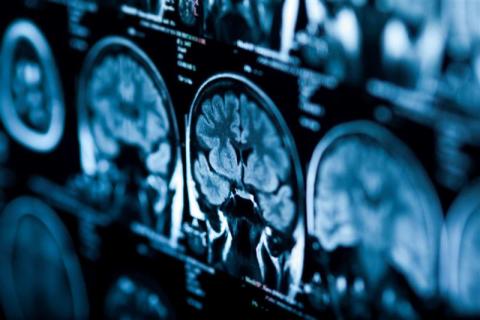
A study published in Nature suggests that a brain network that controls the execution of actions (SCAN), which was described in 2023, plays an important role in Parkinson's disease. Focusing treatments—such as transcranial stimulation—on the SCAN rather than other brain regions associated with movement could improve their effectiveness, according to the research.

A higher body mass index (BMI) correlates—regardless of age at menarche—with a lower risk of breast cancer, according to a meta-analysis based on genetic data from more than 56,000 women. The study, published in Science Advances, seeks to clarify previous seemingly contradictory findings: more body fat (measured by BMI) before puberty could have a protective effect against breast cancer; however, a higher BMI is also linked to earlier menarche, which is associated with an increased risk of developing this disease. The authors indicate that the prepubertal stage is a ‘critical window’ in which adiposity has the greatest influence on future breast cancer risk.

People with colour vision deficiency and bladder cancer have lower survival rates than patients with the same cancer who have not been diagnosed with this visual condition, according to an analysis of medical records between 2004 and 2025 comparing a group of 135 people with both diagnoses and another group of 135 with bladder cancer without visual impairment. In a study published in Nature Health, the authors suggest that this difference could be due to these patients not detecting the presence of blood in their urine, which delays the seeking of medical care and cancer diagnosis.

One in five people in Spain suffers from unwanted loneliness, but what exactly is it? What consequences can it have and who suffers from it most? Is it appropriate and realistic to talk about an epidemic of loneliness? What are the causes and possible solutions? What role do social networks play? We answer these and other questions about a central problem in our societies.

Restrictions on mobility and activity imposed during the covid-19 pandemic had an impact on the beaks of a species of bird, specifically the dark-eyed junco, which lived in urban areas of Los Angeles (USA). This is shown in a study published in the journal PNAS, which reveals how birds born during these lockdowns had beaks similar to their counterparts in the wild. With the return of human activity, the beak returned to its pre-pandemic shape. The authors argue that this change was mainly due to an adaptation to the food available, as the birds no longer had access to human food waste.
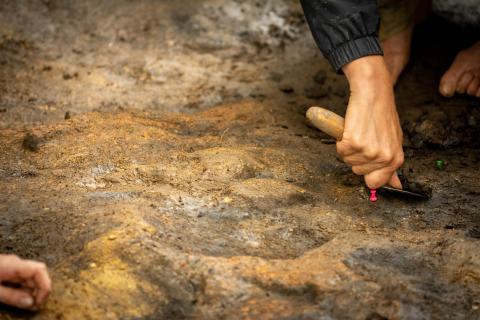
A research team led by the British Museum presents evidence in the journal Nature that humans were making fire – deliberately and not just taking advantage of natural fires – 400,000 years ago in Barnham (United Kingdom). The remains analysed, including burnt sediments, heat-damaged flint axes and pieces of pyrite, are much older than those recorded to date, which dated the deliberate use of fire to around 50,000 years ago in northern France.
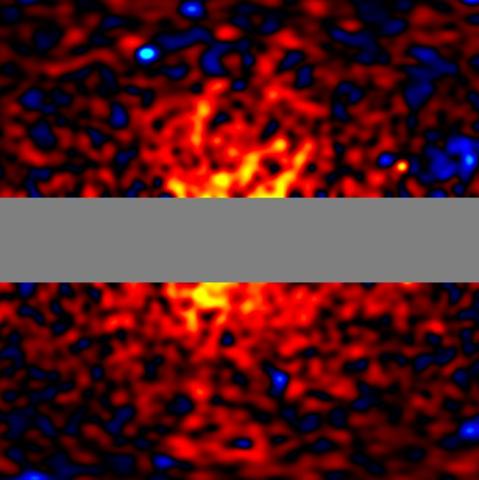
A century ago, astronomer Fritz Zwicky observed that galaxies were moving faster than their mass should allow, leading him to infer the presence of an invisible structure, dark matter. Since the particles that make up dark matter do not interact with electromagnetic force, they cannot be observed directly, as they do not absorb, reflect, or emit light. Now, NASA's Fermi space telescope has found specific gamma rays in the center of the Milky Way that are consistent with the decay of theoretical dark matter particles, although they could also come from other sources. “If this is correct, to my knowledge, it would be the first time that humanity has ‘seen’ dark matter,” said study author Tomonori Totani in a press release. The article is published in the Journal of Cosmology and Astroparticle Physics.

A new article published in eClinicalMedicine measures mental health problems in the Gaza Strip among the population over 40 years of age before and after the genocide committed by Israel. The study indicates that the proportion of these adults experiencing high levels of distress has tripled in the last five years, with a peak following the escalation of the massacre since October 2023. It was already known that chronic stress factors affecting victims pose a serious threat to mental health, but no longitudinal study had yet been conducted comparing distress in the same individuals before and after the genocide.