
Complutense University of Madrid
If you are the contact person for this centre and you wish to make any changes, please contact us.
Lecturer of Palaeontology at the Complutense University of Madrid (UCM) and affiliated researcher at CENIEH
Assistant Professor in the department of Nursing at the Complutense University of Madrid and Director of the CEST Research Group on Emotional Competence, Health, and Well-being in the Workplace
Professor of Prehistory and member of the Institute for Feminist Research at the Complutense University of Madrid
Associate Professor at Camilo José Cela University, researcher at the HM Hospitales Health Research Institute (Madrid) and collaborating researcher in the Department of Personality, Evaluation and Clinical Psychology at the Complutense University of Madrid
Professor of Astrophysics and Director of the Space Astronomy Group at the Complutense University of Madrid
Acute Cardiac Care Unit Coordinator. Cardiovascular Institute. Hospital Clínico San Carlos. Madrid; Associate Professor of Medicine at Complutense University of Madrid; and President of the Association of Ischemic Heart Disease and Acute Cardiac Care of the Spanish Society of Cardiology
Accredited professor, lecturer at the Faculty of Psychology and director of the Research Group on Testimony Psychology at the Complutense University of Madrid
Professor of Biochemistry at the Complutense University of Madrid, president of the Spanish Society of Dietetics and Food Sciences (SEDCA) and treasurer of the Spanish Federation of Nutrition, Food and Dietetics Societies (FESNAD).
Lecturer in the Department of Theoretical Physics and member of the Dynamics of Disordered Systems group at the Complutense University of Madrid
Professor and Director of the Antibiotic Resistance Unit at the Complutense University of Madrid, WHO adviser on antibiotic resistance and One Health
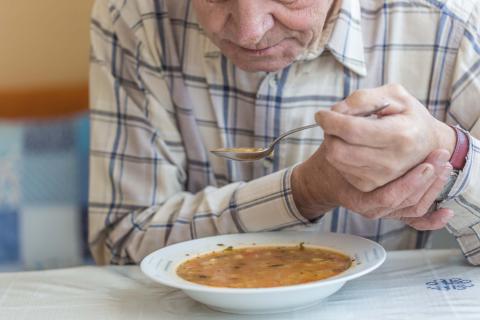
Various studies have shown that smokers have a lower risk of developing Parkinson’s disease, but the causes remain unknown. A study has analysed the role played by carbon monoxide — a toxic gas produced by the combustion of tobacco — in this association. To this end, the team conducted a twelve-year follow-up study of more than half a million adults in China. The results show that regular smoking was associated with an increased risk of lung cancer, ischaemic heart disease, stroke and all-cause mortality, but with a lower risk of Parkinson’s disease. Most strikingly, amongst people who had never smoked, higher levels of exhaled carbon monoxide—which the authors measured—were associated with a lower risk of Parkinson’s disease. According to the study, published in JAMA Neurology, these findings demonstrate a possible protective role of carbon monoxide in the disease, rather than smoking itself.

Summer holidays in Spanish schools are amongst the longest in Europe, and every year the debate resurfaces as to whether their length is appropriate or excessive. Do they affect the knowledge and skills acquired? Could they have an impact on well-being? Do they affect all children equally? How could the summer months be improved for children and teenagers?

OpenAI has stated in a press release that the internal version of its Astra AI model has found solutions to ten research problems in mathematics and computing, in areas such as geometry, group theory, operator algebras, quantum complexity, cryptography and combinatorics, amongst others. According to the company, the total number of tokens — basic units of information — required to solve these problems would cost around $2,000. OpenAI expresses “deep respect and understanding” for those concerned about the impact of AI on these disciplines, including the signatories of the Leiden Declaration on AI and Mathematics; and states that the attribution of results must honestly reflect how each one was obtained, whilst encouraging the mathematical community to review them. The company is publishing these results openly in a paper, accompanied by the model’s account of its reasoning process.
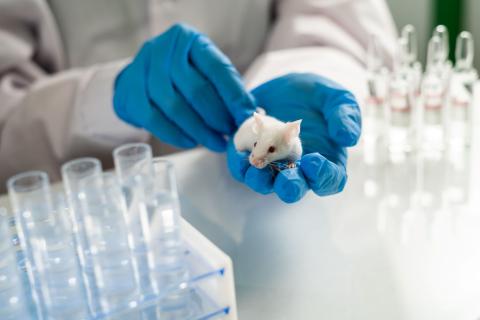
A team from the United States exposed pregnant mice to a mild inflammatory agent so that their offspring would develop brain and behavioural changes similar to those seen in autism spectrum disorder. When these offspring reached adulthood, the researchers administered a dose of rapamycin — an immunosuppressant — and found that several of these changes improved for a few hours, including cerebral hyperactivity, the risk of seizures, sensory hypersensitivity, repetitive behaviours and abnormal organisation of the brain’s functional network. The authors, whose work is published in Nature Communications, emphasise in a press release that these effects are temporary and that repeated administration loses its efficacy. Furthermore, they point out that rapamycin’s high potential for toxicity and the fact that the study was conducted on mice rule out its widespread use in humans.

Polycystic ovary syndrome (PCOS) has recently been renamed polyendocrine metabolic ovarian syndrome (PMOS), to emphasise its metabolic and endocrine dimensions, rather than viewing it solely as a gynaecological condition. A study involving more than 400,000 women has linked PPOS to an increased incidence of cardiovascular events, specifically atherosclerotic cardiovascular disease. This association was observed independently of traditional cardiovascular risk factors such as diabetes, dyslipidaemia, obesity, and hypertension, suggesting that these factors alone do not fully explain the relationship. The study included women aged 18–50 years with PMOS and drew data from the Optum Clinformatics Data Mart patient database. The findings were published in The Lancet Obstetrics, Gynaecology & Women’s Health.
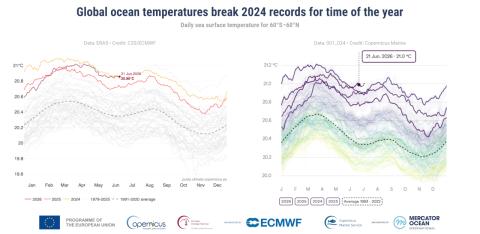
Two Copernicus services have independently confirmed that global sea surface temperatures have broken records for this time of year. Daily data from the Copernicus Climate Change Service exceeded the 2024 levels on 21 June, reaching 20.86 °C, higher than the 20.83 °C recorded in 2023 and 2024. Data from the Copernicus Marine Watch Service show temperatures of 21.0 °C on 21 June, beating the 2023 and 2024 records by 0.1 °C. This unprecedented warming is linked to the onset of El Niño (announced by the WMO and declared by NOAA on 11 June) and to record-breaking sea surface temperatures in the North Pacific; consequences are anticipated for weather patterns, the global climate and marine ecosystems.

A team of researchers analyzed data on mental health consultations among people aged 10 to 46 in Norway’s primary care system from 2010 to 2024. They observed significant increases in consultations for symptoms of anxiety and depression, particularly among young people and especially among women. However, the proportion of consultations coded as disorders increased only slightly or remained stable. The authors suggest that this discrepancy may be due to changes in help-seeking behavior when experiencing psychological distress and in diagnostic practices, rather than an increase in mental health problems. Furthermore, they note that the growing volume of consultations for symptoms poses a challenge for primary care physicians, one that could be addressed through psychoeducation or digital interventions. The article is published in the Journal of Epidemiology & Community Health, part of the BMJ Group.

Venezuela has been hit by a pair of earthquakes measuring 7.2 and 7.5 on the Richter scale, according to the U.S. Geological Survey (USGS). The quakes struck less than a minute apart and have severely affected the city of Caracas and surrounding areas. Interim President Delcy Rodríguez reported that the death toll has risen from 32 to 164 and the number of injured from 700 to 971. She also declared the state of La Guaira, north of Caracas, a “disaster area” and announced the mobilization of the country’s entire public and private healthcare network.
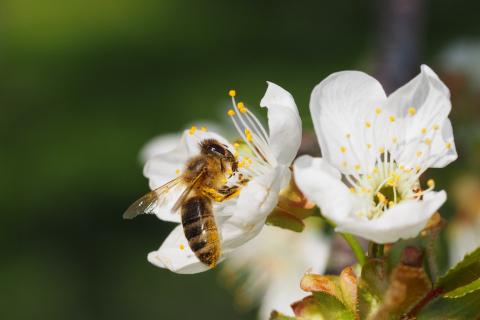
A meta-analysis published today in PNAS shows that, globally, the loss of agricultural production due to insufficient pollination has declined since the 1980s, primarily thanks to the use of honeybees. The research includes 165 studies published between 1950 and 2019, the results of which showed that fields without managed pollinators did not exhibit a clear reduction in this loss of productivity. According to the authors, this type of pollination has mitigated yield losses, but the heavy reliance on a single pollinator species—the common honeybee—poses risks to agriculture.

Formaldehyde is a preservative used on human tissue; inhaling it has harmful health effects and it is considered a human carcinogen. A study published in Occupational & Environmental Medicine shows that airborne concentrations of this compound in most pathological anatomy departments of the UK’s National Health Service (NHS) are rarely monitored and regularly exceed the occupational exposure limits set by the European Union (EU): seven out of 10 departments exceeded the eight-hour maximum exposure limit set by the EU.