
Complutense University of Madrid
If you are the contact person for this centre and you wish to make any changes, please contact us.
Lecturer of Palaeontology at the Complutense University of Madrid (UCM) and affiliated researcher at CENIEH
Assistant Professor in the department of Nursing at the Complutense University of Madrid and Director of the CEST Research Group on Emotional Competence, Health, and Well-being in the Workplace
Professor of Prehistory and member of the Institute for Feminist Research at the Complutense University of Madrid
Associate Professor at Camilo José Cela University, researcher at the HM Hospitales Health Research Institute (Madrid) and collaborating researcher in the Department of Personality, Evaluation and Clinical Psychology at the Complutense University of Madrid
Professor of Astrophysics and Director of the Space Astronomy Group at the Complutense University of Madrid
Acute Cardiac Care Unit Coordinator. Cardiovascular Institute. Hospital Clínico San Carlos. Madrid; Associate Professor of Medicine at Complutense University of Madrid; and President of the Association of Ischemic Heart Disease and Acute Cardiac Care of the Spanish Society of Cardiology
Accredited professor, lecturer at the Faculty of Psychology and director of the Research Group on Testimony Psychology at the Complutense University of Madrid
Professor of Biochemistry at the Complutense University of Madrid, president of the Spanish Society of Dietetics and Food Sciences (SEDCA) and treasurer of the Spanish Federation of Nutrition, Food and Dietetics Societies (FESNAD).
Lecturer in the Department of Theoretical Physics and member of the Dynamics of Disordered Systems group at the Complutense University of Madrid
Professor and Director of the Antibiotic Resistance Unit at the Complutense University of Madrid, WHO adviser on antibiotic resistance and One Health
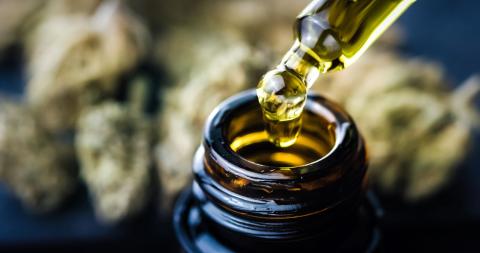
This week, Spain’s Ministry of Health launched a process to develop a Royal Decree on the medical use of cannabis, assuring that it will be "a rigorous measure based on the best scientific evidence available.” The goverment is conducting a public consultation until 4 March to gather the opinions of citizens, civil society organisations, professional associations and scientific societies. In this explainer, we attempt to answer the main questions that arise regarding the medical use of cannabis.
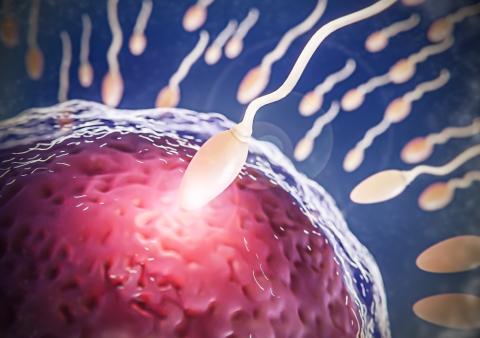
A team of researchers has demonstrated how a non-invasive ultrasound technique can increase the movement of human sperm in the laboratory by up to 266%. Using microfluidic droplets to evaluate individual sperm cells, which had not been done before, they found that ultrasound exposure induced movement in immobile sperm and improved swimming speeds in mobile ones. The work is published today in the journal Science Advances.

In an anonymous online survey of dog owners in Denmark, 38% of respondents said they administered cannabinoid products - such as cannabidiol drops - to their pets without a prescription, even though their use is not legal in animals. Reasons given included pain, behavioural problems and allergies in their dogs. Some 2,000 people responded to the survey, the results of which are published in the journal PLoS ONE.

Fifteen years ago, the European Space Agency's (ESA) Mars Express probe revealed the presence of large deep deposits on Mars, in an area called the Medusae Fossae Formation (MFF), located at its equator. Now, new data from the probe's MARSIS radar indicate that the deposits are deeper than previously thought - up to 3.7 kilometers thick - and include both ice-rich and dusty layers. The results are published in Geophysical Research Letters.
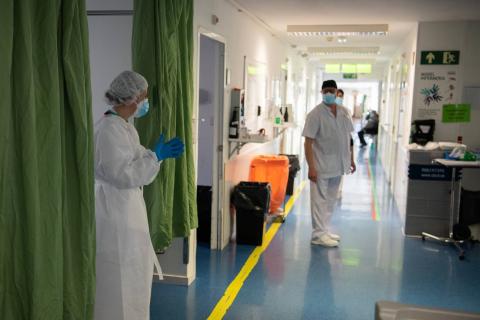
A study carried out in two hospitals in Denmark has compared the brain health of 120 patients admitted for covid over 18 months with that of other hospitalized patients with similar severity due to pneumonia, heart attack or need for intensive care, as well as with healthy people. The conclusions are that patients with covid worsened with respect to the latter, but did so in a similar way to other hospitalized persons. According to the authors, "although studies are needed to confirm these findings, brain health after covid-19 appears generally comparable to that of other diseases of similar severity."

Babies' brains specialise in their native language from pregnancy, according to a study carried out in France. The research team used encephalograms to measure the brain activity of 33 infants born to French-speaking mothers while listening to a story in French, English or Spanish. The results provide "the most compelling evidence to date that language experience already shapes the functional organization of the infant brain, even before birth," the authors write in Science Advances.
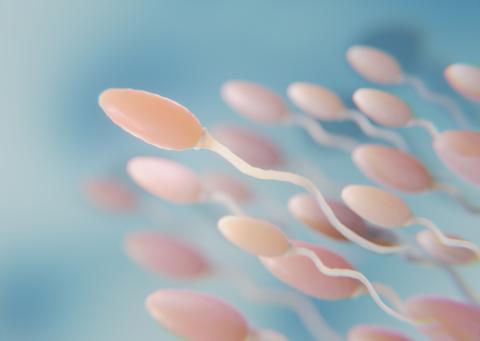
A review of 25 studies conducted over nearly 50 years has found an association between insecticide exposure and lower sperm concentration. According to the authors, "insecticides are a public health concern for all men, who are exposed mainly through consumption of contaminated food and water". The results are published in the journal Environmental Health Perspectives.
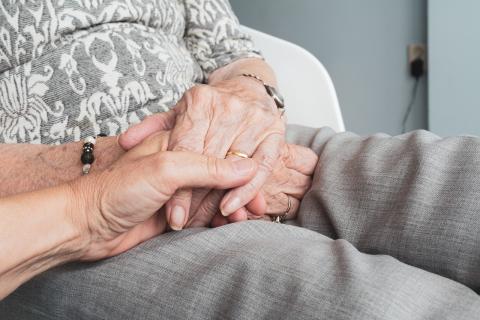
The absence of visits from friends and family is associated with a higher mortality rate, according to an analysis of data from more than 450,000 people followed for more than a decade in the UK. The study, published in BMC Medicine, focussed on five indicators of loneliness, and concluded that having no visits from family or friends was associated with higher all-cause mortality and cardiovascular disease mortality. According to the authors, this kind of study helps to identify at-risk populations and measures of social connectedness that could provide the most benefit.
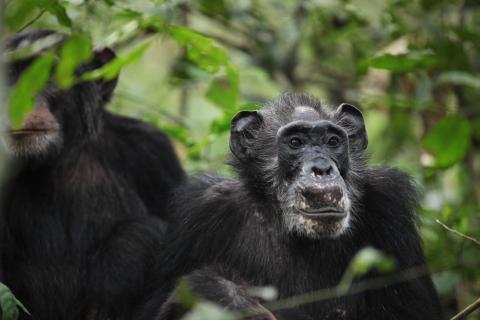
The vast majority of mammals remain fertile until the end of their lives. Humans and some species of whales deviate from that norm and do go through menopause. Now, research published in Science reveals that menopause exists in female chimpanzees, too, and that it lasts for a fifth of their adult lifespan. To reach these conclusions, the research team observed 185 female chimpanzees between 1995 and 2016 in Uganda's Kibale National Park and measured hormone levels in urine samples from specimens of various ages.

A meta-analysis, pooling the results of 40 previous studies - involving more than 310,000 children and adolescents in total - concludes that treatment rates for mental disorders in these age groups are "generally low, especially for depression and anxiety". The research, published in JAMA Network Open, shows that the treatment rate for any mental disorder is 38%, ranging from 31% for anxiety, 36% for depression, 49% for conduct disorders and 58% for attention deficit hyperactivity disorder (ADHD).