José A. Morales-García

José A. Morales-García

José A. Morales-García
Position

Scientific researcher in Parkinson's disease at the Complutense University of Madrid

Topics

Exhaled carbon monoxide has been linked to a lower risk of Parkinson’s disease

Various studies have shown that smokers have a lower risk of developing Parkinson’s disease, but the causes remain unknown. A study has analysed the role played by carbon monoxide — a toxic gas produced by the combustion of tobacco — in this association. To this end, the team conducted a twelve-year follow-up study of more than half a million adults in China. The results show that regular smoking was associated with an increased risk of lung cancer, ischaemic heart disease, stroke and all-cause mortality, but with a lower risk of Parkinson’s disease. Most strikingly, amongst people who had never smoked, higher levels of exhaled carbon monoxide—which the authors measured—were associated with a lower risk of Parkinson’s disease. According to the study, published in JAMA Neurology, these findings demonstrate a possible protective role of carbon monoxide in the disease, rather than smoking itself.

0

Researchers study the role of a new brain network in Parkinson's disease

A study published in Nature suggests that a brain network that controls the execution of actions (SCAN), which was described in 2023, plays an important role in Parkinson's disease. Focusing treatments—such as transcranial stimulation—on the SCAN rather than other brain regions associated with movement could improve their effectiveness, according to the research.

0

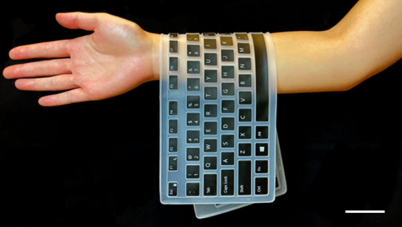
Smart' keyboard developed for early diagnosis of Parkinson's disease

An American team has developed a ‘smart’ computer keyboard that could be used for the early diagnosis of Parkinson's disease. The prototype is a flexible device, linked to a mobile application, whose keys detect slight variations in the pressure applied by the user, allowing for the quantitative analysis of motor symptoms. The study, published in Science Advances, presents the validation of the keyboard with three people with Parkinson's.

0

The number of people with Parkinson's disease will exceed 25 million worldwide by 2050

In 2050 there will be 25.2 million people with Parkinson's disease worldwide, which represents an increase of 112% from 2021, largely due to the ageing of the population, according to a modelling study published by The BMJ. The number of people living with this disease – prevalence across all ages – per 100,000 inhabitants is expected to increase by 76% – and by 55% when age differences are corrected.

0