
Complutense University of Madrid
If you are the contact person for this centre and you wish to make any changes, please contact us.
Lecturer of Palaeontology at the Complutense University of Madrid (UCM) and affiliated researcher at CENIEH
Assistant Professor in the department of Nursing at the Complutense University of Madrid and Director of the CEST Research Group on Emotional Competence, Health, and Well-being in the Workplace
Professor of Prehistory and member of the Institute for Feminist Research at the Complutense University of Madrid
Associate Professor at Camilo José Cela University, researcher at the HM Hospitales Health Research Institute (Madrid) and collaborating researcher in the Department of Personality, Evaluation and Clinical Psychology at the Complutense University of Madrid
Professor of Astrophysics and Director of the Space Astronomy Group at the Complutense University of Madrid
Acute Cardiac Care Unit Coordinator. Cardiovascular Institute. Hospital Clínico San Carlos. Madrid; Associate Professor of Medicine at Complutense University of Madrid; and President of the Association of Ischemic Heart Disease and Acute Cardiac Care of the Spanish Society of Cardiology
Accredited professor, lecturer at the Faculty of Psychology and director of the Research Group on Testimony Psychology at the Complutense University of Madrid
Professor of Biochemistry at the Complutense University of Madrid, president of the Spanish Society of Dietetics and Food Sciences (SEDCA) and treasurer of the Spanish Federation of Nutrition, Food and Dietetics Societies (FESNAD).
Lecturer in the Department of Theoretical Physics and member of the Dynamics of Disordered Systems group at the Complutense University of Madrid
Professor and Director of the Antibiotic Resistance Unit at the Complutense University of Madrid, WHO adviser on antibiotic resistance and One Health

From 2014 to 2023, one in six people in the world suffered from loneliness, according to a World Health Organisation report, which outlines the causes of this phenomenon and its multiple impacts: on physical and mental health and mortality, as well as on work and the economy. The report estimates that loneliness is linked to more than 871,000 deaths per year and highlights a higher incidence among young people and in low- and middle-income countries.
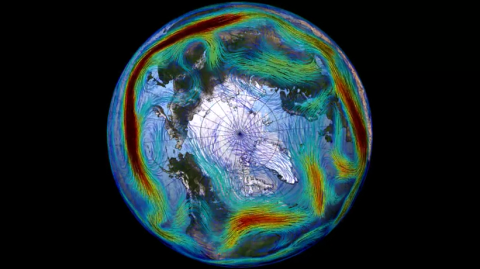
Over the last seven decades, the frequency of planetary wave resonance phenomena has tripled, according to a study published in PNAS. The authors argue that the risk of extreme weather events related to this phenomenon during the northern hemisphere summer could be higher than current model estimates.
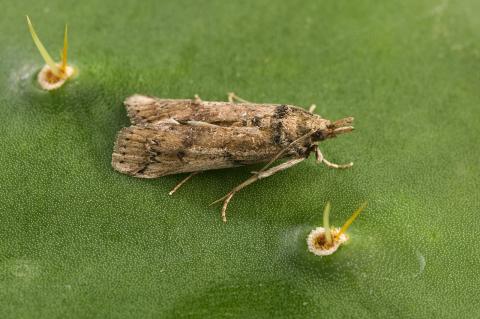
A study published in Nature Ecology & Evolution concludes that the global economic cost of invasive species may be, in the case of some of them, more than 1,600% higher than previously estimated. By region, the highest costs were recorded in Europe, and by species, invasive plants generated the greatest impacts. According to the authors, these results - based on data from 162 species - could help countries to plan cost-effective management.
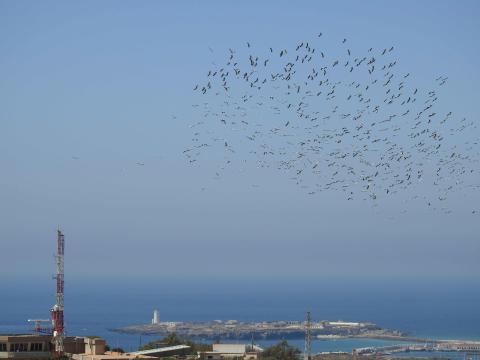
Migratory birds are particularly affected by the climatic, ecological and urban changes resulting from the constantly changing world in which we live. Their survival is at risk, as are the ecosystems in which they live. We analyse the threats they face on a cyclical basis during their migratory routes and why it is important to protect them.

A survey conducted in the United States by the Harvard Opinion Research Program shows that more than four in ten American adults (44%) say that changes in federal leadership will cause them to lose confidence in the recommendations of public health agencies, compared to 28% who say they will trust them more. The survey, which included a sample of more than 3,300 participants aged 18 and older, also revealed that other health issues have strong support among Democrats and Republicans, such as chronic disease prevention, pandemic protection, and reducing maternal and infant mortality.
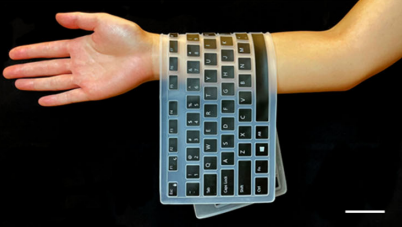
An American team has developed a ‘smart’ computer keyboard that could be used for the early diagnosis of Parkinson's disease. The prototype is a flexible device, linked to a mobile application, whose keys detect slight variations in the pressure applied by the user, allowing for the quantitative analysis of motor symptoms. The study, published in Science Advances, presents the validation of the keyboard with three people with Parkinson's.
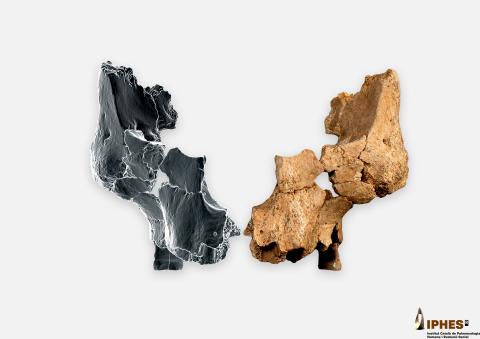
A fragment of a human face discovered in 2022 at the Sima del Elefante site in the Sierra de Atapuerca (Burgos) and dated to between 1.1 and 1.4 million years ago represents the oldest known face in Western Europe. The fossil, nicknamed ‘Pink’, does not belong to Homo antecessor, but has been provisionally catalogued as Homo affinis erectus. The find, which is published in the journal Nature, could indicate that Western Europe was populated by at least two species of hominids during the Early Pleistocene: Homo affinis erectus and, later, Homo antecessor.
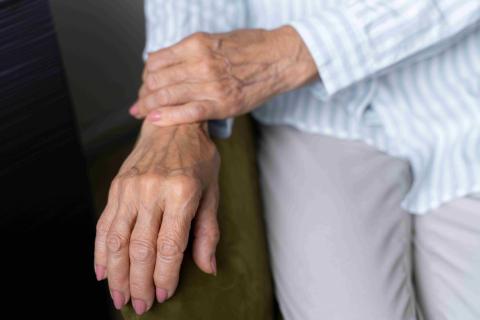
In 2050 there will be 25.2 million people with Parkinson's disease worldwide, which represents an increase of 112% from 2021, largely due to the ageing of the population, according to a modelling study published by The BMJ. The number of people living with this disease – prevalence across all ages – per 100,000 inhabitants is expected to increase by 76% – and by 55% when age differences are corrected.

A study led by researchers in Canada has analysed the relationship between perimenopausal symptoms and later cognitive and behavioural problems in nearly 900 women. Their findings are that those with more symptoms were more at risk of cognitive problems and dementia later in life. The results are published in the journal Plos One.
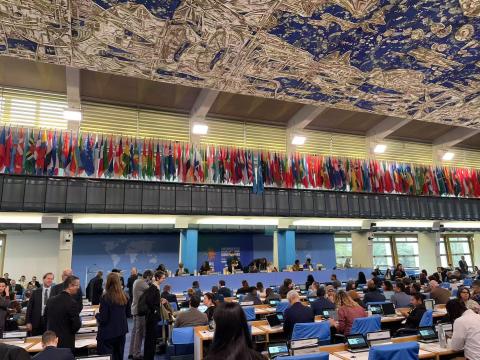
The 16th meeting of the United Nations Conference on Biodiversity (COP16) in Rome has concluded with an agreement to adopt the first global plan for financing nature conservation, after three days of meetings. This meeting meant resuming the negotiations that began last October in Cali (Colombia), where the parties failed to reach an agreement on how to finance the Kunming-Montreal Global Biodiversity Framework reached at COP15, which aims to protect a third of the land and oceans by 2030.