
Complutense University of Madrid
If you are the contact person for this centre and you wish to make any changes, please contact us.
Lecturer of Palaeontology at the Complutense University of Madrid (UCM) and affiliated researcher at CENIEH
Assistant Professor in the department of Nursing at the Complutense University of Madrid and Director of the CEST Research Group on Emotional Competence, Health, and Well-being in the Workplace
Professor of Prehistory and member of the Institute for Feminist Research at the Complutense University of Madrid
Associate Professor at Camilo José Cela University, researcher at the HM Hospitales Health Research Institute (Madrid) and collaborating researcher in the Department of Personality, Evaluation and Clinical Psychology at the Complutense University of Madrid
Professor of Astrophysics and Director of the Space Astronomy Group at the Complutense University of Madrid
Acute Cardiac Care Unit Coordinator. Cardiovascular Institute. Hospital Clínico San Carlos. Madrid; Associate Professor of Medicine at Complutense University of Madrid; and President of the Association of Ischemic Heart Disease and Acute Cardiac Care of the Spanish Society of Cardiology
Accredited professor, lecturer at the Faculty of Psychology and director of the Research Group on Testimony Psychology at the Complutense University of Madrid
Professor of Biochemistry at the Complutense University of Madrid, president of the Spanish Society of Dietetics and Food Sciences (SEDCA) and treasurer of the Spanish Federation of Nutrition, Food and Dietetics Societies (FESNAD).
Lecturer in the Department of Theoretical Physics and member of the Dynamics of Disordered Systems group at the Complutense University of Madrid
Professor and Director of the Antibiotic Resistance Unit at the Complutense University of Madrid, WHO adviser on antibiotic resistance and One Health
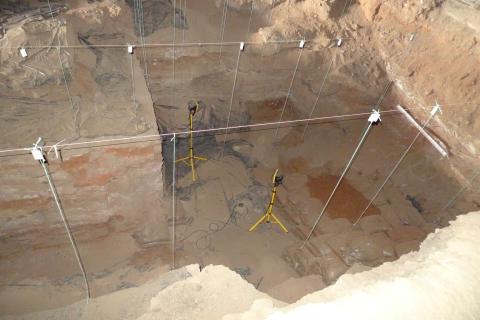
An international team led by the National Museum of Natural Sciences (MNCN-CSIC) and the University of Toronto (Canada) has discovered that Homo erectus were already using fire on a regular basis 1.07 million years ago and 1.79 million years ago at the Wonderwerk Cave (South Africa). Previous evidence had placed more regular and controlled use of fire one million years ago in Africa at that same site. The team, whose study is published in PLoS ONE, used a novel non-invasive technique based on luminescence.

A team from China used data from over 17,000 people in the UK Biobank to analyze the relationship between physical activity and cardiovascular risk. Their results indicate that the current minimum recommendation of 150 minutes of moderate-to-vigorous physical activity per week was associated with an 8-9% risk reduction. However, increasing the time to 560-610 minutes was linked to a decrease of more than 30%. According to the authors, who published the study in the British Journal of Sports Medicine, the current recommendations offer universal but modest protection, and optimal benefits would be obtained with substantially higher levels of activity.
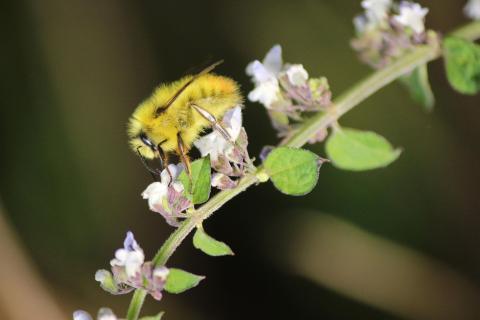
Decades ago, concerns began to be raised about the decline in honeybee populations. Although their situation has improved, the same cannot be said for other pollinating insects. Together, they enable the reproduction of nearly 90% of flowering plants and directly contribute to three out of every four crops that feed the world. We examine the causes of this decline, their current situation, and the measures being taken to protect them.
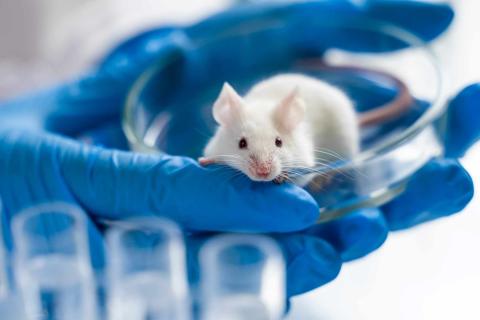
A team from the United States analyzed 611 samples from 341 model mouse strains stored at the Mutant Mouse Resource and Research Centers (MMRRC), a research resource network supported by the National Institutes of Health (NIH). By comparing the identity of each strain with its actual genetic profile, they found that approximately half of the samples showed discrepancies. Although the expected engineered mutation was generally present and many inconsistencies were relatively minor, some had the potential to compromise the validity and reproducibility of the experiments by introducing hidden genetic variables that could alter biological outcomes. The findings are published in Science.
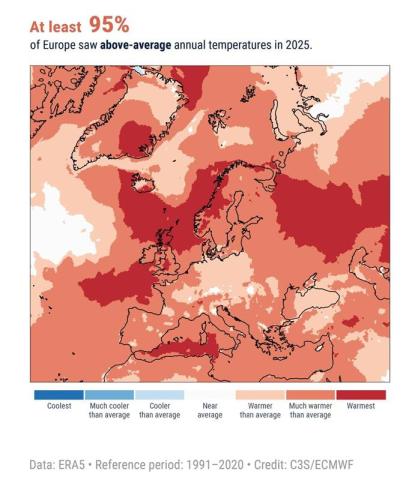
Rapid warming in Europe is reducing snow and ice cover, while very high air temperatures, drought, heatwaves, and record ocean temperatures are affecting regions from the Arctic to the Mediterranean. These are the main findings of the State of the Climate in Europe (ESOTC) 2025 report, prepared by the European Centre for Medium-Range Weather Forecasts (ECMWF), which operates the Copernicus Climate Change Service, and by the World Meteorological Organization (WMO). The data show that 95% of the continent recorded above-average annual temperatures last year, and river flows were below average for 11 months.
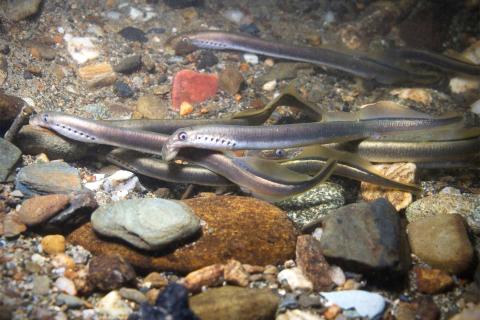
Worldwide, 349 species of migratory freshwater fish are at risk and meet the criteria for inclusion in the Appendices of the United Nations Convention on the Conservation of Migratory Species of Wild Animals (CMS), a global treaty designed to protect migratory animals. These fish are among the vertebrates most threatened by factors such as changes in river flow, habitat degradation, exploitation and pollution, the report warns. Among the priority species are 50 species from Europe, including the following freshwater fish from Spain: Alosa alosa (shad), Lampetra planeri (brook lamprey) and Salmo salar (Atlantic salmon).
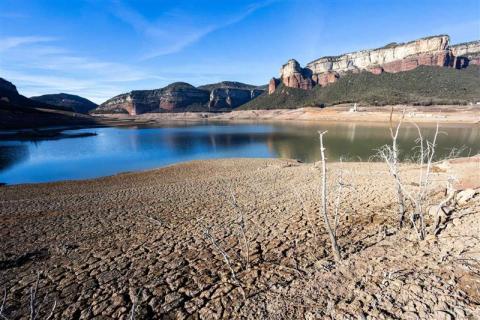
Drought is linked to the growth of antibiotic-resistant bacteria in the soil, according to a study published in Nature Microbiology. Using data from hospitals in 116 countries, the study observes a link between local aridity and the prevalence of antibiotic-resistant bacteria, although the research does not prove a causal relationship between the two phenomena.

The German mathematician Gerd Faltings has won the Abel Prize, awarded by the Norwegian Academy of Science and Letters. Faltings, director emeritus of the Max Planck Institute for Mathematics, became a celebrity at the age of 29 for proving a conjecture that earned him the Fields Medal in 1986. His contributions have revolutionised arithmetic geometry, a branch of mathematics at the intersection of the two oldest: number theory and geometry.
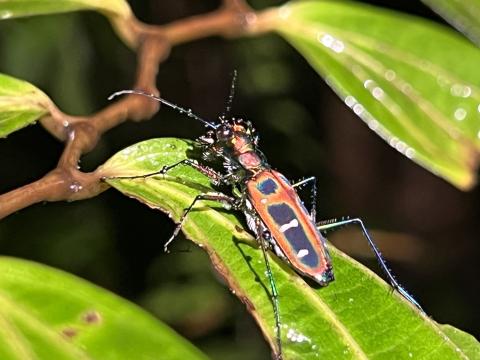
Global biodiversity is threatened by human impact, which has already led to the extinction of hundreds of species. However, the known tree of life continues to expand with the discovery of numerous clades (groups of organisms that share a common ancestor and all its descendants), according to a international study pubished in PNAS. According to their estimates, made between 2015 and 2020, more than 700 new genera, more than 20 new families, and more than three new orders are described each year, all based on newly discovered species. According to the authors, many new clades remain undiscovered, and describing them before they become extinct should be a priority for research and conservation.
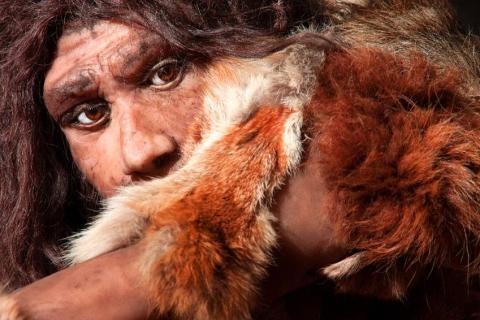
When Neanderthals and modern humans had offspring together, little Neanderthal DNA from the X chromosome entered the human gene pool. A study published in the journal Science traced ancient gene flow and found a relative excess of 62% modern human ancestry on Neanderthal X chromosomes. This suggests that the couples who had children were mostly Neanderthal men and modern human women, although the authors cannot rule out the possibility that demographic processes played a significant role.