Gene therapy is effective long-term in children with a serious rare disease
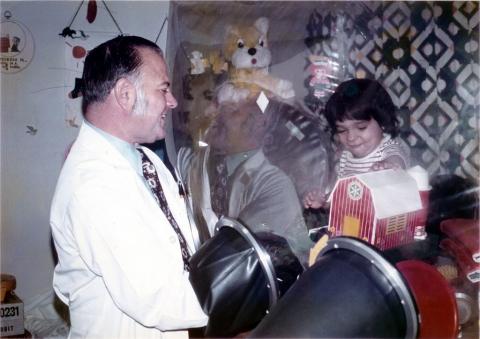
Severe combined immunodeficiency due to ADA enzyme deficiency is a rare disease that, without treatment, usually causes death within the first two years of life. These "bubble children" are currently treated with a bone marrow transplant or with injections that aim to restore, to the extent possible, the function of this enzyme. Now, an international team presents the results of a gene therapy administered to 62 children with the disease between 2012 and 2019. The therapy was effective in 95% of cases and did not cause serious complications, according to the authors, whose work is published in the journal NEJM.

Granado - ADA
Luis Ignacio González Granado
Specialist in immunodeficiencies and Associate Professor of Paediatrics at the Complutense University of Madrid
This is a study of extraordinary relevance and high methodological quality. It demonstrates that gene therapy with a lentiviral vector for adenosine deaminase deficiency (ADA-SCID) is effective (95% of patients) and safe, with low toxicity compared to the current alternative, hematopoietic transplantation. The stability of the vector copy number (VCN) in white blood cells suggests disease correction in stem cells, a key marker of cure. This is the largest published series with extended follow-up (more than five years), requiring, in most cases, a single infusion.
It confirms and expands previous short-term results, showing sustained T, B, and NK cell reconstitution for more than seven years, immunoglobulin independence in 98% of patients, and good vaccine responses, also allowing the discontinuation of anti-infective prophylaxis.
In terms of safety, it clearly improves on treatment with gamma-retroviral vectors. Lentiviral vectors are gaining ground precisely because of their lower risk of insertional mutagenesis, which leads to the development of leukemia in patients with older gamma-retroviral vectors.
The use of cryopreserved products, in addition to fresh ones, allows for centralized manufacturing and infusion at other centers, avoiding travel to the few institutions with production capacity and compliance with regulatory requirements.
Another key advantage is that, if gene therapy should exceptionally fail, the patient is still a candidate for an allogeneic transplant; conversely, a prior transplant precludes access to gene therapy.
The only limitations are three, and they are not exclusive to this therapy, but to gene therapies in general: first, the need for long-term follow-up for every patient who has received cell therapy. Next, the cost and logistical complexity of the treatment (in terms of manufacturing and financing) in a strained healthcare system. Finally, the latency to immune reconstitution of the patient (six to twelve months), the period during which the risk of infection and daily life restrictions persist. It is imperative to develop strategies to accelerate this recovery.
My conclusion is that this is a highly relevant study in a disease as rare as severe combined immunodeficiencies (the so-called "bubble boy" syndrome). This study consolidates lentiviral gene therapy (via single infusion) as a priority and safe curative option for ADA-SCID, with a direct impact on treatment guidelines. Regulatory agencies should prioritize its implementation where feasible, ensuring cost sustainability and long-term safety.
Conflicts of interest: "I have collaborated with some of the authors in the past, but I was not involved in this study."
África - ADA
África González-Fernández
Professor of Immunology at the University of Vigo, researcher at CINBIO, and member of the RAFG
I find this interesting. It's true that the authors had previously published a study with 50 patients, and now they've increased the number to 62 and extended the study period. They had already demonstrated the efficacy of gene therapy.
A deficiency in the enzyme aminodeaminase (ADA) causes severe combined immunodeficiency, affecting both T and B lymphocytes. This is due to the toxic accumulation of compounds that should be modified by this enzyme, and when it's absent or defective, it can't perform its function.
Children with this defect are "bubble babies," as they can only survive in sterile spaces and often die of infections at an early age.
The solution to their problem is very complex:
- Bone marrow transplant from a healthy person. In this case, the idea is to administer cells that carry the correct gene. It is a procedure that carries risks, requires immunosuppressive treatment, and is at risk of infection, as well as the possibility of graft-versus-host disease (GVHD) as it is a transplant from another individual (allogeneic).
- Continuous administration of the ADA enzyme is not always effective, and adequate levels are not achieved for a fully effective immune system.
- By using modified viruses, the gene that codes for this protein is introduced. The patient's own cells are used, modified ex vivo, and reintroduced. This is what these authors have done.
Gene therapy has been attempted for many years, initially with adenoviruses or lenti-adenovirus hybrids, but some problems have been seen, such as cases of leukemia due to integration into DNA, activating oncogenes.
These researchers have developed gene therapy with a self-inactivating lentiviral vector, which contains a shortened elongation factor promoter that directs the expression of the ADA transgene.
They performed gene therapy on 62 patients, with a long follow-up period (some more than seven years). They found good acceptance of the treatment, and no serious side effects were detected, nor were any development of leukemias.
The vector copies, their maintenance over time, immune reconstitution, and side effects were systematically analyzed. It is a very comprehensive study.
The implications are that this type of viral vector could be used for this gene therapy for ADA deficiency, and for others in the future. Given its few side effects and the fact that no leukemias were detected, it appears to be a fairly safe therapy compared to previous therapies using adenovirus or gamma lentivirus.
[Regarding possible limitations] They studied two cohorts, one in the US and one in England, which increases the robustness of the study, as it was conducted in two locations. There are also differences regarding the cells used as the starting material, with bone marrow being the majority in the American cohort and peripheral blood stem cells in the English cohort. However, no significant differences were observed between the two cohorts.
In collaboration with other groups, it would have been desirable to have a direct comparison with patients who have received other types of gene therapy and to compare long-term side effects, maintenance, and reconstitution of the immune system.
Hoyos - ADA
Marcos López Hoyos
Scientific Director of the Valdecilla Health Research Institute (IDIVAL), Head of the Immunology Department, and Professor of Immunology at the University of Cantabria-Marqués de Valdecilla University Hospital
This is a long-term follow-up article (minimum five years) of a series of patients (one cohort from California and another from the United Kingdom). It provides evidence of the long-term safety of gene therapy and is therefore highly relevant. ADA-SCID was the first immunodeficiency described where gene therapy was established. This work provides data on the high long-term safety and efficacy of this type of approach and is applicable to many other genetic diseases.
Current treatment is based on bone marrow transplantation from a haploidentical (HLA-identical) donor and the use of pegylated ADA enzyme replacement. This treatment does not reach the levels demonstrated in [this study] in the presented series, with 100% survival and 95% freedom from clinical events after a long follow-up period. They show how immune reconstitution is excellent, even with a good response to vaccines and the discontinuation of immunoglobulin replacement therapy. Patients undergo myeloablative treatment similar to other bone marrow transplants, but at much lower doses and, therefore, with fewer post-treatment problems. Furthermore, significantly, the patient's own cells for gene therapy were just as effective fresh as frozen, which facilitates manipulation with lentiviruses, as is the case at other facilities without the need for patient travel.
I see no major limitations, except for one aspect. Most of the patients in the California series were diagnosed with newborn screening using TREC (T-cell receptor excision circle) amplification, while in the United Kingdom they were diagnosed after birth. Although no differences were seen in post-transplant outcomes, there is no doubt that newborn screening allows these patients to be identified at birth and to establish targeted gene therapy as planned.
Soler - ADA
Pere Soler Palacín
Head of the Paediatric Infectious Pathology and Immunodeficiency Unit of the Vall d'Hebron Children's Hospital in Barcelona.
This is an excellent article in terms of patient numbers and follow-up. Furthermore, all aspects of clinical and immunological efficacy and safety have been well assessed.
It complements the current knowledge we have regarding lentivirus-based gene therapy in severe combined immunodeficiency due to ADA deficiency.
Its main implication is to place gene therapy as the first line of treatment ahead of stem cell transplantation in this condition, as previously proposed due to its excellent results.
There are no major limitations, although the risk of oncogenicity due to clonal activation should continue to be assessed with even longer follow-up. This long-term safety point is very important and I believe it is not sufficiently addressed in the press release.
Óscar de la Calle - terapia génica enfermedad rara EN
Óscar de la Calle-Martín
Specialist in Immunology at the Hospital de Sant Pau in Barcelona and secretary of the Spanish Society of Immunology
Study analysis: 62 patients with ADA-SCID [severe combined immunodeficiency due to ADA enzyme deficiency] treated between 2012–2019 in the US and UK with a mean follow-up of 7.5 years (474 patient-years).
Main results:
- Efficacy: 100% overall survival and 95% event-free survival (59/62) in the long term. (‘Event’ = death, restart of enzyme replacement therapy [ERT], rescue with allogeneic haematopoietic stem cell transplantation [HSCT], or repeat gene therapy).
- Safety: no leukoproliferation or dominant clonality; polyclonal integration up to 120 months. No competent lentivirus. Mild/moderate unrelated late adverse events.
Strengths:
- Large, multicentre cohort for an ultra-rare disease, with very long follow-up (≥5 years all; mean 7.5 years).
- Consistency between fresh vs. cryopreserved product and between cell sources (bone marrow vs. mobilised peripheral blood), indicating broad operability.
- Reassuring genotoxic profile compared to historical first-generation γ-retroviral vectors, where the presence of insertion-associated T-cell leukaemias near the LMO2 oncogene was documented.
Weaknesses of the study and aspects to be interpreted with caution:
- Non-randomised design and no comparison control group (e.g. allogeneic HSCT with less harmful conditioning). Possible selection bias (US with neonatal screening; UK without screening at the time), although this may rather enrich the interpretation.
- Early failure in 3/62 (≈5%) requiring ERT/HSCT; no clear predictors reported. However, this is a very low failure rate, so it can be considered a first-line treatment.
- Heterogeneity in cell source and formulation which, although pragmatic, complicates fine causal inference (e.g. higher CD34+ doses in the UK).
- Rare late events: although not observed, the number of patients is still too limited to rule out very rare genotoxicity risks beyond 10–15 years.
- Translation/commercialisation: the study itself highlights limited commercial viability (costs, population size) and the need for alternative access models.
In how many immunodeficiencies are there successful trials?
- If we understand “successful” to mean sustained clinical and immune correction with modern vectors and no serious signs of genotoxicity in the medium term, at least four IEIs [innate immune errors] with solid results can be considered today:
- ADA-SCID: this study confirms sustained long-term efficacy and safety with LV-SIN (OS 100%, EFS 95%).
- X-SCID (IL2RG): trials with optimised lentivirus show rapid and robust T-cell reconstitution and 100% survival in paediatric series; the evidence has matured since 2019 and remains positive.
- Artemis deficiency SCID (DCLRE1C): convincing immune correction and low toxicity; extended follow-up maintains favourable signs.
- Wiskott-Aldrich syndrome (WAS): prolonged follow-up confirms sustained clinical benefit.
What it means for practice: for ADA-SCID, this gene therapy is positioned as a potentially curative therapy with a lower busulfan burden than haematopoietic progenitor transplantation, avoiding alloreactivity and with robust functional evidence.
It should be noted that the first trials were conducted in the US (ADA-SCID) and France (X-SCID) and both were successful, although the retroviral vectors used caused several problems (T-cell leukaemia). Much safer vectors, based on lentiviruses, are currently used. However, the only treatment approved by the EMA (Strimvelis) uses these older types of vectors.
It is important to note that the latest series published for ADA-SCID, X-SCID, Artemis-SCID and WAS show no significant risks and should be considered safe and reliable therapies.
Unfortunately, there is no centre in Spain that administers these treatments, and when they are needed because there is no suitable donor for a bone marrow transplant, patients have to be sent to the United Kingdom or Italy. This is particularly unfortunate given that this is a state policy and that it should be the responsibility of the Ministry of Health to implement it through an appropriate hospital unit or at the Carlos III Health Institute. In fact, there is a group actively working at CIEMAT, led by Dr Bueren, who not only has extensive experience in gene therapy research, but has also contributed to a recent article published in NEJM this year.
The implementation of gene therapy and making it accessible to our paediatric patients, with the essential addition of including these diseases in the heel prick test (neonatal screening), which is something that is only done in Catalan children, should be priorities throughout Spain, as already stated in the National Strategy on Rare Diseases.
Booth et al.
- Research article
- Peer reviewed
- Non-randomized
- People