Health Institute Carlos III
If you are the contact person for this centre and you wish to make any changes, please contact us.
Director of the National Centre for Tropical Medicine (CNMT) at the Carlos III Health Institute
PhD in Pharmacy, Professor of Human Physiology at the University of Navarra, member of the CIBER Physiopathology of Obesity, Carlos III Health Institute and IDISNA (Navarra)
Head of the Influenza and other Respiratory Virus Surveillance Group of the National Epidemiology Centre.
Researcher at the Reference and Research Laboratory in Mycology, National Microbiology Centre, Instituto de Salud Carlos III
Senior Scientist at the Health Institute Carlos III
HIV, STI and hepatitis B and C Surveillance Unit. National Centre of Epidemiology, Health Institute Carlos III
Researcher in social epidemiology, public health and biostatistics
Researcher with a PhD employed at the National Epidemiology Centre of the Carlos III Health Institute (ISCIII)
Senior scientist at the Carlos III Health Institute
Senior Scientist at the Special Pathogens Research and Reference Laboratory of the National Microbiology Centre of the Carlos III Health Institute
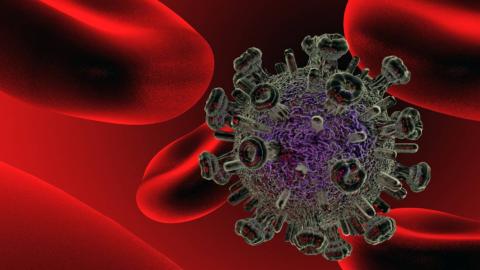
The Science group is simultaneously publishing four papers (two in the journal Science, one in Science Immunology and one in Science Translational Medicine) that include advances in a sequential vaccination strategy for an effective HIV vaccine. The methods employed aim to obtain broad-spectrum neutralising antibodies and one of the proposals is already in clinical trials.

Twenty-three per cent of the world's population over the age of 69 will be living with acute heat exposure by 2050, compared to 14 per cent in 2020, according to a study published in Nature Communications. The research highlights southern Europe, parts of North and South America, Southeast Asia and all of Australia as areas of ‘increasing stress’, where higher heat exposure overlaps with an increasingly ageing population. The effects will be most severe in Asia and Africa, according to the study.
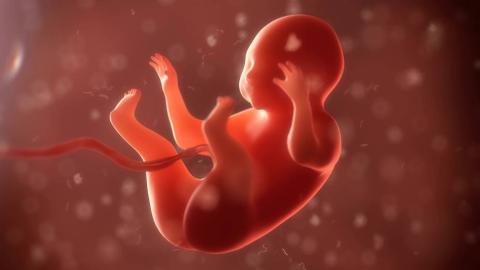
A multidisciplinary team of researchers has succeeded in developing different types of organoids from cells obtained from amniotic fluid. According to the authors, this breakthrough could help to better understand the later stages of development during pregnancy and to advance research into congenital anomalies. The study is published in the journal Nature Medicine.
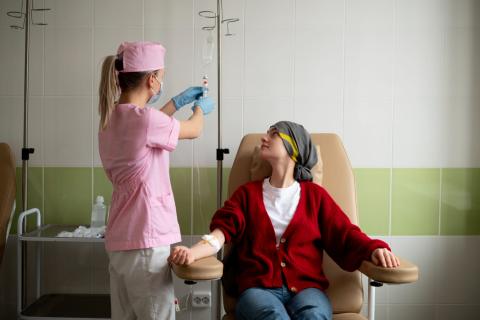
By 2050, there will be more than 35 million new cases of cancer worldwide, an increase of 77% from the 20 million cases reported in 2022. These are projections made by the WHO's International Agency for Research on Cancer (IARC), which has published the latest estimates of the global burden of cancer. Using data from 185 countries, IARC estimates that in 2022 lung cancer was the most common cancer worldwide, with female breast cancer in second place, followed by colorectal, prostate and stomach cancer. The authors stress the urgent need to address inequalities around these diseases.
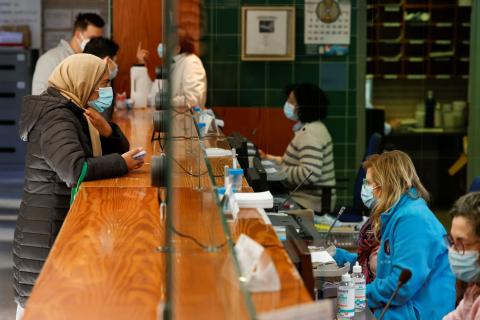
The influenza epidemic could have reached its peak of activity in Primary Care in the last week of 2023, while hospitalization due to influenza continues to rise, according to the latest weekly SiVIRA report published by the Instituto de Salud Carlos III. Thus, during the first week of 2024 there has been a decrease in the primary care rate for influenza: 387 cases per 100,000 inhabitants compared to 430 cases the previous week. This is the first decrease in incidence in four weeks.

Intimate partner violence is associated with an increased risk of depression and miscarriage, according to a systematic review of the scientific literature published since 1970. Sexual abuse in childhood is associated with an increased risk of alcohol use disorder and self-harm, says the study published in Nature Medicine. According to its authors, this analysis of 229 previous studies reveals that intimate partner violence and childhood sexual abuse have a more extensive impact on health than previously described.

Synthetic embryos, artificial placentas, genome editing... Advances in biology and medicine keep bringing up thorny ethical questions. Here's an overview of Spain’s many bioethics committees, which can be useful resources for journalists.

The Karolinska Institute has awarded the Nobel Prize in Medicine or Physiology to Katalin Karikó and Drew Weissman for their groundbreaking discoveries, which have radically changed our understanding of how mRNA interacts with our immune system, and made it possible to develop vaccines at unprecedented speed during the covid-19 pandemic.

On the eve of an episode of unusually high temperatures for this time of year, it is time to take stock of the summer we have experienced, characterised by a succession of extreme weather phenomena in the form of heat waves, drought and torrential rains. The seriousness and complexity of these problems and their repercussions in many areas, especially on health, make it urgent to set up the Health and Climate Change Observatory approved last July, with a stable and independent structure.
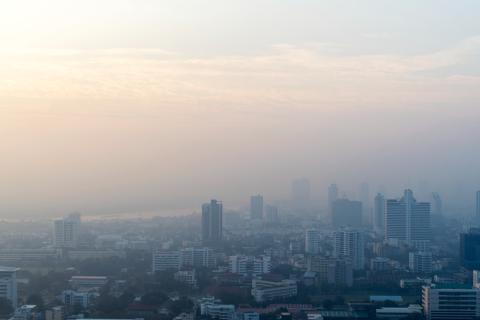
Chronic exposure to various air pollutants has been linked to an increased risk of stroke, but the short-term effects have been less well studied. A review of 110 papers and more than 18 million stroke cases shows that recent exposure - in the five days prior to stroke - also increases the likelihood of stroke. The results are published in the journal Neurology.