Health Institute Carlos III
If you are the contact person for this centre and you wish to make any changes, please contact us.
Director of the National Centre for Tropical Medicine (CNMT) at the Carlos III Health Institute
PhD in Pharmacy, Professor of Human Physiology at the University of Navarra, member of the CIBER Physiopathology of Obesity, Carlos III Health Institute and IDISNA (Navarra)
Head of the Influenza and other Respiratory Virus Surveillance Group of the National Epidemiology Centre.
Researcher at the Reference and Research Laboratory in Mycology, National Microbiology Centre, Instituto de Salud Carlos III
Senior Scientist at the Health Institute Carlos III
HIV, STI and hepatitis B and C Surveillance Unit. National Centre of Epidemiology, Health Institute Carlos III
Researcher in social epidemiology, public health and biostatistics
Researcher with a PhD employed at the National Epidemiology Centre of the Carlos III Health Institute (ISCIII)
Senior scientist at the Carlos III Health Institute
Senior Scientist at the Special Pathogens Research and Reference Laboratory of the National Microbiology Centre of the Carlos III Health Institute
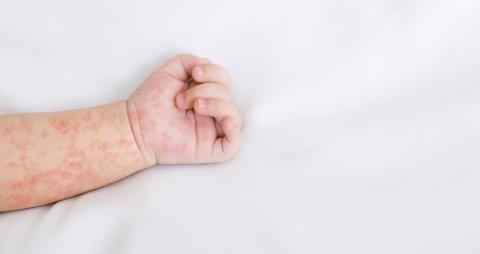
Measles cases in Europe and Central Asia fell in 2025 compared with 2024, according to preliminary data reported by 53 countries in the World Health Organization (WHO) European Region. This decline aligns with the preliminary figures published this week by the European Centre for Disease Prevention and Control (ECDC). According to the WHO, countries in Europe and Central Asia reported 33,998 measles cases in 2025, representing a decrease of nearly 75 % compared with the 127,412 cases recorded in 2024. In Spain, however, the number of cases has increased, as shown by data from the Carlos III Health Institute. A few weeks ago, the WHO announced that Spain had lost its measles-free status.

A study published in The BMJ suggests that the incidence of autism spectrum disorder (ASD) is comparable between boys and girls. The study included a sample of more than 2.7 million people born in Sweden between 1985 and 2020 who were followed from birth to a maximum age of 37. More than 78,000 were diagnosed with ASD. It was observed that boys are usually diagnosed between the ages of 10 and 14, five years earlier than girls. By the age of 20, the proportion of diagnoses is almost equal between the sexes. Before the age of 10, the ratio is 3:1 in favour of boys.

In 2022, approximately four out of every 10 new cancer cases worldwide were due to modifiable risk factors, primarily tobacco or alcohol consumption and infections, including those caused by the human papillomavirus or H. pylori bacteria. These are some of the conclusions of a global study led by the World Health Organisation (WHO) and its International Agency for Research on Cancer (IARC), published in Nature Medicine. In Spain, 41.8% of cancer cases in men are attributed to modifiable external factors, compared to 26.1% in women, with smoking remaining the main factor (28.5% and 9.9%, respectively). The analysis is based on data from 185 countries.
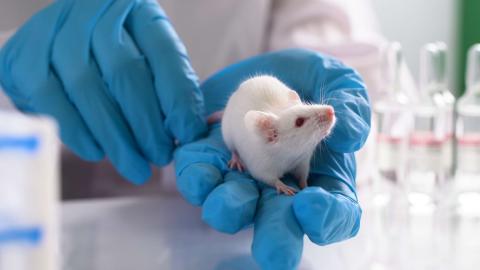
A study published in PLOS Biology analysed whether supplementation with zinc, serine and branched-chain amino acids —valine, isoleucine and leucine— improves autism-related symptoms in three mouse models. These nutrients are believed to regulate synaptic formation and activity. The results show that the combination of the three nutrients, at low doses for seven days, improved affected brain traits —such as hyperactivity and hyperconnectivity of the amygdala— and the social behaviour of the animals. Individual supplementation did not show such improvements.

Viruses that cause avian influenza are capable of replicating at temperatures higher than a typical fever, according to a study in in vitro models and mice. ‘Fever-resistant replication could help explain why avian viruses and pandemic influenza viruses with avian PB1 cause more severe disease in humans,’ the authors write in the journal Science.
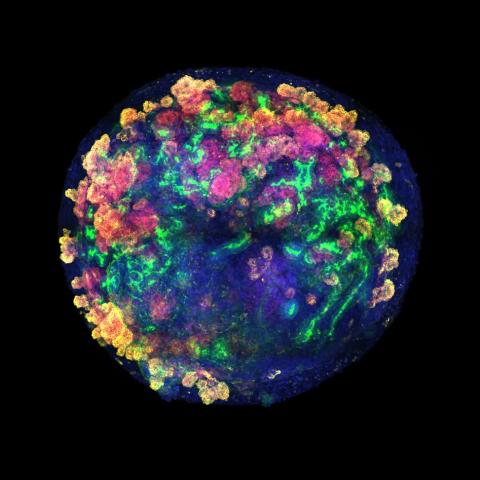
An international team, including several Spanish groups and coordinated by the Institute for Bioengineering of Catalonia (IBEC), has developed a pioneering technology that allows for the creation of multiple human kidney organoids, their combination with pig kidneys outside the body, and their successful transplantation back into the same animal. The method could contribute to improving future research and, according to the authors, allows us to envision a future clinical scenario in which organs destined for transplantation can be treated and conditioned before implantation. The work is published in Nature Biomedical Engineering.

A team has analysed estimated data on exposure to pollution during and after pregnancy and its possible link to a diagnosis of autism in more than two million births in Canada between 2002 and 2022. Their findings are that greater exposure to small PM2.5 particles containing sulphate or ammonium is associated with a higher likelihood of receiving a diagnosis of autism in the first five years of life. A slightly increased proportion was also observed with greater exposure to ozone during certain weeks of pregnancy and in the first year of life. The results are published in the journal JAMA Network Open.

A team from China has reported the results of the first liver transplant from a pig to a living human. Earlier this year, a procedure that served as a proof of concept was published, but it was performed on a brain-dead person. In this case, after modifying 10 genes in the porcine liver, an auxiliary transplant—not removing the entire organ—was performed on a 71-year-old patient with cirrhosis and liver cancer. It worked well for the first month, but on day 38, the graft had to be removed due to the development of complications, and the patient died on day 171. According to the researchers, who published the case in the Journal of Hepatology, this is "a fundamental step that demonstrates both the promise and the obstacles that remain to be overcome".
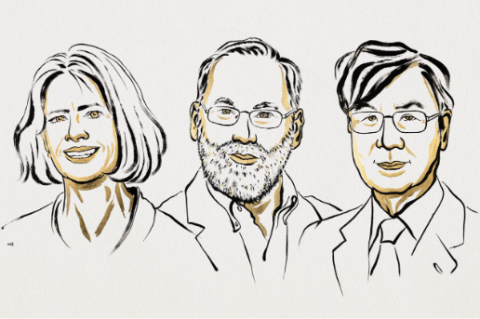
The Karolinska Institute has awarded the Nobel Prize in Medicine or Physiology to Mary E. Brunkow, Fred Ramsdell and Shimon Sakaguchi for describing how the immune system is regulated so as not to harm us. His groundbreaking discoveries on peripheral immune tolerance have spurred the development of new treatments for cancer and autoimmune diseases.

A new school year has begun, and pollution, which exceeds recommended limits in many urban centres, will once again affect children and their families. What consequences could this have on health? How does climate change affect it? What solutions can be implemented? SMC Spain organised an informative session with Julio Díaz and Cristina Linares to answer these questions.