
Barcelona Supercomputing Center (BSC)
If you are the contact person for this centre and you wish to make any changes, please contact us.
Expert researcher in quantum computing at the Barcelona Supercomputing Center and coordinator of Quantum Spain
ICREA professor and director of Life Sciences at the Barcelona National Supercomputing Centre (BSC).
Researcher at the Department of Earth Sciences at the Barcelona Supercomputing Center
Head of the Data Analysis and Visualization group of the Barcelona Supercomputing Center (BSC-CNS)
ICREA Professor, Director of the Earth Sciences Department at the Barcelona Supercomputing Center
Postdoctoral researcher in the Atmospheric Composition Group, Department of Earth Sciences at the Barcelona Supercomputing Center - National Supercomputing Centre (BSC-CNS)
ICREA Research Professor, Climate Variability and Change Group Co-Leader
Co-leader of the Barcelona Supercomputing Center's Climate Change and Prediction Group
Established Researcher, Climate Variability and Change Group, Barcelona Supercomputing Center
Researcher in the Department of Earth Sciences - Climate Variability and Change at the Barcelona Supercomputing Centre (BSC)

At the current level of emissions, there is a 50% chance that global temperatures will exceed the 1.5°C target consistently over seven years. This is one of the forecasts in the Global Carbon Budget 2023 report, which estimates that CO2 emissions from fossil fuels will reach record highs in 2023, reaching 36.8 billion tonnes, 1.1 % more than in 2022. The report, published in the journal Earth System Science Data, shows that emissions have decreased in the EU as a whole and in the United States, while they continue to increase in India and China.
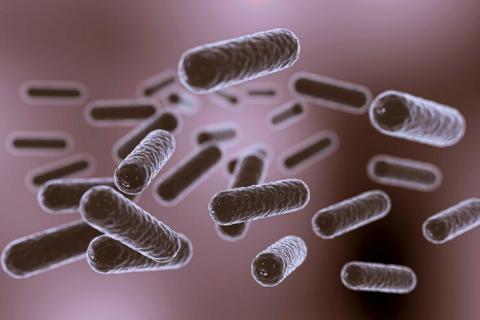
The risk of developing resistant bacteria is higher in some people, such as those who have to take long-term antibiotics after organ transplantation. To try to reduce them, a phase 1 clinical trial has performed a fecal transplant on 10 people who had previously received a kidney transplant and had resistant bacteria. The fecal transplants accelerated decolonization, shortened the time it took to test negative for multidrug-resistant organisms, and, according to the authors, may also "reduce the recurrence of infections." The results are published in the journal Science Translational Medicine.

Speech deepfakes are synthetic voices produced by machine learning models that can resemble real human voices. Research published in PLoS ONE involving half a thousand participants shows that they were able to correctly identify that they were not real voices 73% of the time. The results of the study—conducted in English and Mandarin—showed only a slight improvement in those people who were specifically trained to spot these deepfakes.
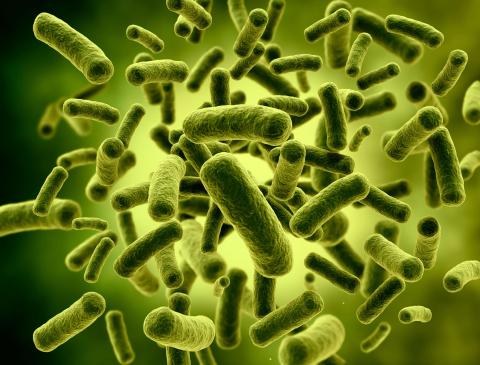
An opinion piece signed by researchers from the Universities of Aberdeen and Nottingham (UK) has outlined some of the inaccuracies, exaggerations and misconceptions they say are taking place around research on the human microbiome. Some of these are curiosities, like the false belief that we have ten bacteria for every human cell. Others are more relevant, such as the fact that many specific associations between the microbiome and disease have not been confirmed in follow-up studies. According to the authors, it is important to raise awareness about myths and misconceptions to avoid unproductive research projects and preserve public confidence in microbiome science. The article is published in the journal Nature Microbiology.

An attribution study by World Weather Attribution (WWA) concludes that the heatwaves in Europe and North America this July would have been "almost impossible" without climate change. Over the past few weeks, southern Europe, parts of the United States, Mexico and China have experienced severe heatwaves with temperatures exceeding 45 °C. The WWA report notes that in China the heatwave was at least 50 times more likely due to the climate crisis.
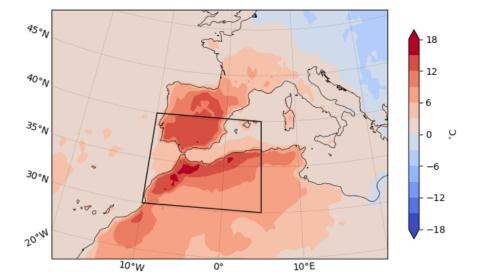
Climate change made the late April episode of record temperatures in the Iberian Peninsula, Morocco and Algeria 100 times more likely to occur, with temperatures up to 3.5°C higher than they would have been without the climate crisis. This is one of the conclusions of an attribution study conducted by World Weather Attribution.
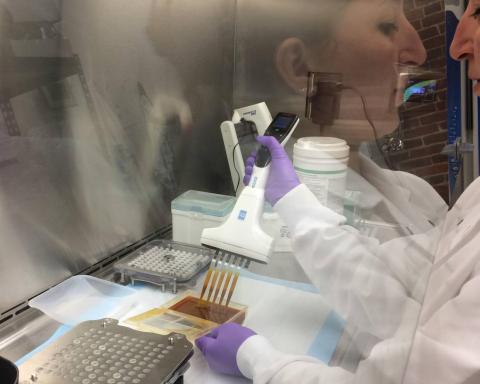
Faecal microbiota transplantation can be administered by oral capsules, colonoscopy or rectal enema, among other routes. Two meta-analyses evaluate its benefits and side effects for treating two types of disease. The first focuses on recurrent infections with Clostridioides difficile, a bacterium that can cause very severe diarrhoea; it includes six studies in Europe and North America involving 320 adults and concludes that in immunocompetent people, faecal transplantation is more effective than antibiotics. The second focuses on irritable bowel diseases, such as ulcerative colitis and Crohn's disease; it includes 12 studies with 550 participants and has less clear results.
Almost a decade after the previous edition, the Intergovernmental Panel on Climate Change (IPCC) has presented the synthesis report of its sixth assessment cycle (AR6) on Monday in Switzerland. "This synthesis report underlines the urgency of taking more ambitious action and demonstrates that, if we act now, we can still secure a sustainable and liveable future for all," said IPCC chair Hoesung Lee.
The document includes the main findings of the three Working Group reports of 2021 and 2022 (Physical basis, Impacts, adaptation and vulnerability and Mitigation of climate change) and the three special reports of 2018 and 2019 (Global warming of 1.5°C, Climate change and land, Ocean and cryosphere in a changing climate). With this document, which is primarily addressed to policy makers, the IPCC closes its sixth assessment cycle.
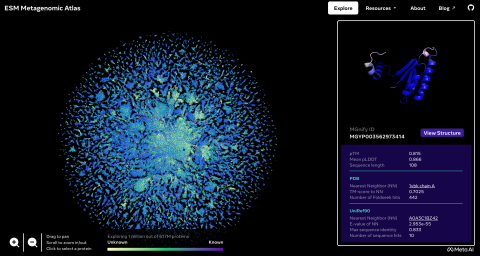
Meta has applied language modelling to predict the structure of a large collection of proteins. The model, called ESMFold, is being presented this week in the journal Science after being published on the bioRxiv preprint article server in December 2022. EMSFold is faster than similar models such as AlphaFold, developed by Google's DeepMind and EMBL's European Bioinformatics Institute. The sequences of more than 617 million proteins - of which more than a third are predicted with a high degree of confidence - are published in open access in the ESM Metagenomic Atlas.

A study published in the journal PLOS Digital Health has analysed ChatGPT's performance on the US Medical Licensing Exams (USMLE). The results indicate that it could pass or come close to passing the exam.