
Barcelona Supercomputing Center (BSC)
If you are the contact person for this centre and you wish to make any changes, please contact us.
Expert researcher in quantum computing at the Barcelona Supercomputing Center and coordinator of Quantum Spain
ICREA professor and director of Life Sciences at the Barcelona National Supercomputing Centre (BSC).
Researcher at the Department of Earth Sciences at the Barcelona Supercomputing Center
Head of the Data Analysis and Visualization group of the Barcelona Supercomputing Center (BSC-CNS)
ICREA Professor, Director of the Earth Sciences Department at the Barcelona Supercomputing Center
Postdoctoral researcher in the Atmospheric Composition Group, Department of Earth Sciences at the Barcelona Supercomputing Center - National Supercomputing Centre (BSC-CNS)
ICREA Research Professor, Climate Variability and Change Group Co-Leader
Co-leader of the Barcelona Supercomputing Center's Climate Change and Prediction Group
Established Researcher, Climate Variability and Change Group, Barcelona Supercomputing Center
Researcher in the Department of Earth Sciences - Climate Variability and Change at the Barcelona Supercomputing Centre (BSC)

A team of researchers in South Korea has analysed the oral and faecal microbiomes of just over 507 volunteers and has concluded that, in patients with gastric and colorectal cancer, there is a greater transfer of microbes from the mouth to the gut. Furthermore, not only does this transfer differ between tumour types, but, according to their findings, an analysis based on oral samples is capable of detecting colorectal cancer with greater sensitivity than the standard faecal occult blood test. However, “before it can be used in practice, clinical trials would need to be carried out in real-world screening populations”, the authors explain. The study is published in the journal Cell Host & Microbe.
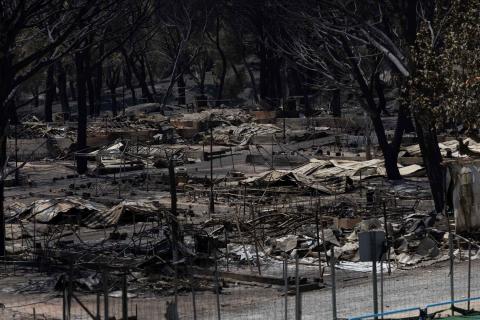
Human-induced climate change has made the ‘extreme’ weather conditions that fuelled the recent wildfires at least twice as likely in France and 20 times as likely in Spain, according to a new analysis by World Weather Attribution (WWA). The team analysed historical weather observations and used the Daily Severity Index (DSR), which incorporates heat, drought and wind conditions and reflects the difficulty of extinguishing a fire. The researchers examined the seven-day period with the highest DSR in south-western France and central Spain, where the fires occurred, and compared it with simulations of a pre-industrial climate. According to the study, under current climate conditions, events of this intensity are projected to occur once every 20 years in south-western France and once every six years in central Spain.

Nature has published two independent studies demonstrating the ability of large language models based on artificial intelligence (AI) to support different stages of patient management in controlled settings. The first study analysed MIRA, an AI agent that operates within electronic health records, which achieved a diagnostic accuracy of nearly 88%, compared with 78% for a panel of physicians. The second study evaluated AMIE, a conversational clinical reasoning model, against 21 primary care physicians across 100 multi-visit scenarios. AMIE achieved performance comparable to, and in some cases better than, that of physicians in terms of treatment accuracy, test ordering, and adherence to clinical guidelines. The models are based on simulations or retrospective data, which limits the strength of the conclusions that can be drawn. The findings are consistent with another model published in Science last April.
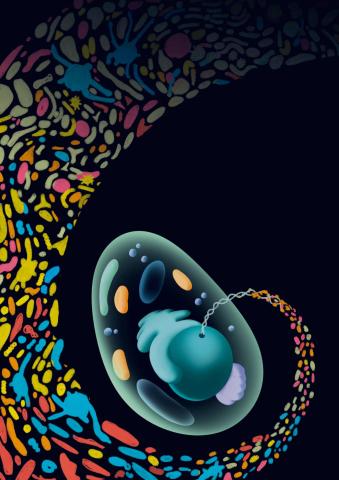
The origin and the process by which eukaryotic cells—the cells that make up animals, plants and fungi—first emerged remains one of the great unanswered questions in biology. The prevailing explanation, put forward by biologist Lynn Margulis, identified the union between an archaeon and a bacterium as the turning point. Now, a study carried out by IRB Barcelona and the Barcelona Supercomputing Center re-examines and expands on the current theory. The findings, published in the journal *Nature*, suggest that the process was longer and more complex than previously thought. At least two other different bacteria contributed to the development of eukaryotic cells, and giant viruses appear to have acted as vehicles for gene transfer. To explain the study, the Science Media Centre Spain organised a briefing with Toni Gabaldón, the lead researcher on the paper.

A new United Nations (UN) report assesses the annual environmental costs of artificial intelligence (AI). According to the report, by 2030, if data centers were a country, their electricity consumption would be on par with that of France. As for carbon dioxide emissions, these could reach 400 million tons of CO₂ equivalent, comparable to the total emissions of the United Kingdom. The 9.3 trillion liters of water they use would cover the drinking water needs of the planet’s 8.1 billion people for 1.6 years. The report notes that the generation of high-resolution videos is at the top of AI’s energy consumption. Furthermore, it highlights the growing digital divide and environmental injustice between the nations that control AI systems and those that bear their environmental costs, particularly in the Global South.
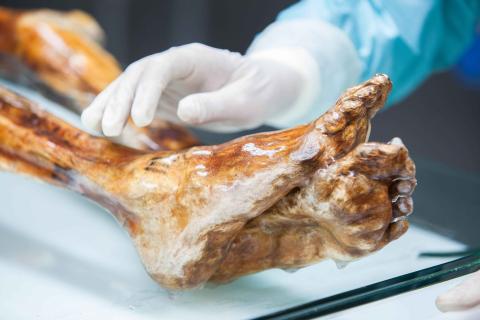
The so-called ‘Iceman’, Ötzi, who lived approximately 5,300 years ago, was discovered in 1991 in the Ötztal Alps, on the border between Austria and Italy. His mummified remains were preserved at -6°C in a museum to replicate the conditions in which they were found. Now, a team from Italy has discovered that he contains communities of both ancient and modern microorganisms, some of which may be metabolically active or capable of replicating under the current preservation conditions, although, for the moment, no damage has been detected. According to the researchers, this demonstrates that “the ‘Iceman’ is not a static relic, but a dynamic biological interface.” The results are published in Microbiome.

Countries’ current climate commitments fall short of the targets needed to limit global warming to 1.5 °C this century, with a shortfall of more than 5 billion tonnes of CO₂ per year by 2050. This is one of the conclusions of the third edition of the report The State of Carbon Dioxide Removal. To offset this shortfall, the report estimates that carbon dioxide removal would need to grow at a rate comparable to that of the fastest clean energy transitions, such as solar power or electric vehicles. The report highlights that the world removes around 2.2 billion tonnes of CO₂ from the atmosphere each year, almost entirely through land-based actions such as forest restoration. New technologies that use machinery or minerals to store carbon account for just 0.1% of total removal.
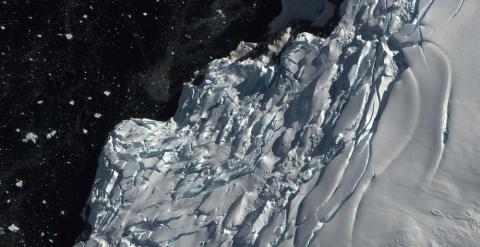
The transition zone between land and sea in glaciers is an indicator of their stability. An analysis of satellite measurements from 1992 to 2025 has shown that 77% of Antarctica’s coastline has experienced no change. The 23% that did see a reduction in area was concentrated in regions where deep troughs allow access to warmer waters and where the bed slopes inland. These include the Antarctic Peninsula, Wilkes and George V Lands, and West Antarctica, where retreat of this transition line ranged between 10 and 40 km. A total of 12,800 km² of ice has been lost —an area roughly equivalent to almost half the size of Galicia— most of it in West Antarctica. The results are published in the journal PNAS.
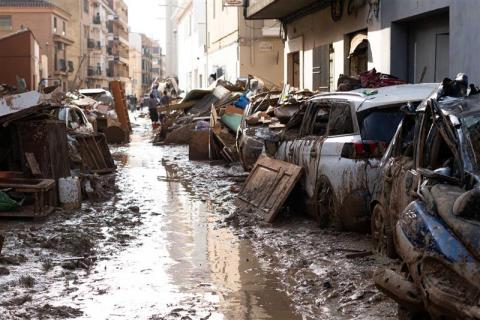
Human-induced climate change amplified the intensity and extent of the rainfall that affected Valencia during the October 2024 dana, according to a new attribution study involving several Spanish research centres. Using climate simulations, the study, published in Nature Communications, shows that present-day global warming conditions increased precipitation intensity by 21 %, expanded the area receiving more than 180 millimetres of rain by 56 %, and raised the total rainfall volume in the Júcar River basin by 19 % compared to a pre-industrial scenario. The authors highlight “the urgent need for effective adaptation strategies and improved urban planning to reduce the growing risks associated with extreme hydrometeorological events in a rapidly warming world.”
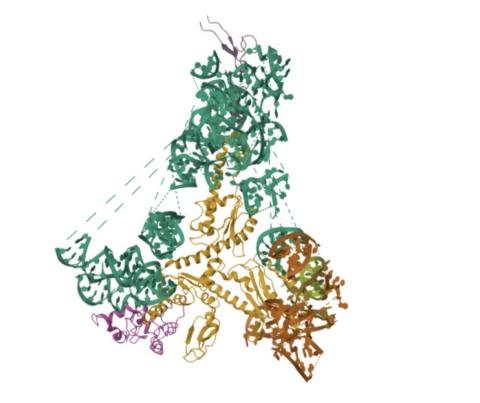
A team from the Center for Genomic Regulation in Barcelona and Harvard Medical School (United States) has created an artificial intelligence (AI) model to support the diagnosis of rare diseases in patients with unique genetic mutations. Called popEVE, the tool performs better than AlphaMissense—another model developed by Google DeepMind—according to an article published in Nature Genetics.