climate change

climate change

climate change

The frequency of certain fires in cities will increase in the coming decades

According to a modelling study published in Nature Cities, the frequency of some types of fires in cities is expected to increase in the coming decades as a result of climate change. This increase would be seen in vehicle fires and in those that occur outdoors. The conclusions are based on data from more than 2,800 cities in 20 countries and could be useful for future urban planning and emergency response strategies.

0

A collapse of the AMOC in this century is unlikely, says modelling study

The Atlantic Ocean's main current system - the AMOC - could weaken without collapsing this century, according to modeling published in Nature. This finding contradicts earlier studies that predicted the collapse of the AMOC around 2050. The research uses models that include extreme changes in greenhouse gas concentrations and freshwater levels in the North Atlantic. This system of ocean currents is involved in regulating global temperatures.

0

Assessing the impact of the 1.5°C rise in 2024 on the Paris Agreement goals

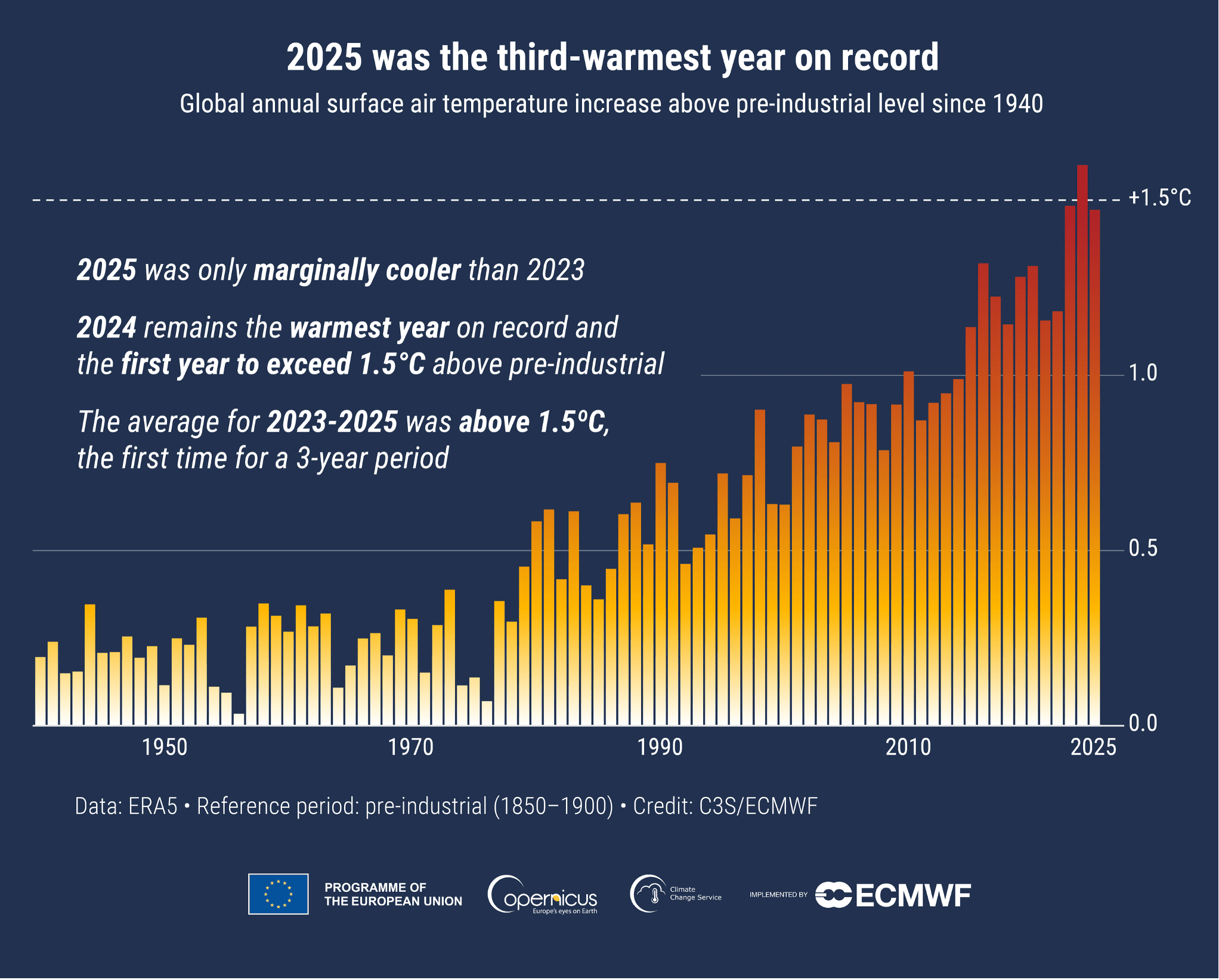
Two papers published in Nature Climate Change analyse the possibility of exceeding the Paris Agreement targets of limiting warming to 1.5°C above pre-industrial temperatures. Both papers suggest that having exceeded this warming threshold by 2024 could indicate that we have entered a period of several decades with average global warming of 1.5 °C. According to the authors, rigorous climate mitigation efforts are needed to keep the Paris Agreement targets within reach.

0

Exposure to cold and heat could affect adolescents' mental health

Exposure to cold and heat could affect adolescents' mental health, according to a study published in JAMA Network Open. The research, led by the Barcelona Institute for Global Health (ISGlobal), was conducted with nearly 5,000 adolescents from the Netherlands (3,934) and Spain (885). The results showed how exposure to environmental temperatures influences psychiatric symptoms such as anxiety, depression, and attention problems.

0

Temperature-related deaths could rise by 50% in Europe by the end of the century

An international team has analysed temperature and mortality data from 854 urban areas in Europe, and estimated that temperature-related deaths could increase by 50 % by the end of the century - which would mean up to 2.3 million more deaths - if no climate change mitigation measures are taken. This percentage is even higher in southern parts of the continent, such as Spain. The results are published in the journal Nature Medicine.

0

Change in building materials could store billions of tonnes of carbon

US researchers have estimated that replacing conventional building materials in new infrastructure with CO2 capturing alternatives - such as mixing carbon aggregates into concrete or using bio-based materials in bricks - could store billions of tonnes of carbon dioxide per year. According to the study, published in the journal Science, the move could help meet greenhouse gas emission reduction targets.

0

Two IPBES reports propose global changes to tackle current environmental crises

Meeting in the city of Windoek (Namibia), the plenary of the IPBES - Intergovernmental Science-Policy Platform on Biodiversity and Ecosystem Services - has ratified two new reports: the Nexus Assessment and the Transformative Change Assessment. Three of their authors explained the main findings and the changes they propose at a briefing organised by SMC Spain.

0

Population in drylands could double by 2100 under worst-case climate change scenario

More than three-quarters of the earth's land surface experienced drier climates between 1990 and 2020 compared to the previous three decades, according to a new report by the United Nations Convention to Combat Desertification. Over the past 30 years, 40.6 percent of the global landmass, excluding Antarctica, is classified as drylands, three percentage points more than the previous three decades. The report, which is being presented at the COP16 on desertification being held in Riyadh, Saudi Arabia, also shows that 2.3 billion people were living in drylands in 2020, a population that could rise to 5 billion by 2100 under a worst-case climate change scenario.

0