Scientists

Scientists

For science to make the news in a rigorous and attractive way, good sources are needed. Because access to scientific knowledge is a citizen's right.

¿Qué me ofrece?

Help science make headlines with rigour and context. We’ll ask you for feedback on current events in your field and you can participate in the briefings we’ll organise. Need to prepare for an interview? Use our resources on science communication.

Icono
Cómo trabajamos

We’re on the lookout for controversial information about science and we will contact you for your analysis in your area. Do you want to be part of our sources? Contact us. We will not pass your contact details on to anyone else. You can find out more about how we work here.   

Título qué me ofrece
What we offer you
Título cómo trabajamos
How we work

A study in Nature led by Spanish researchers achieves a breakthrough in explaining autism

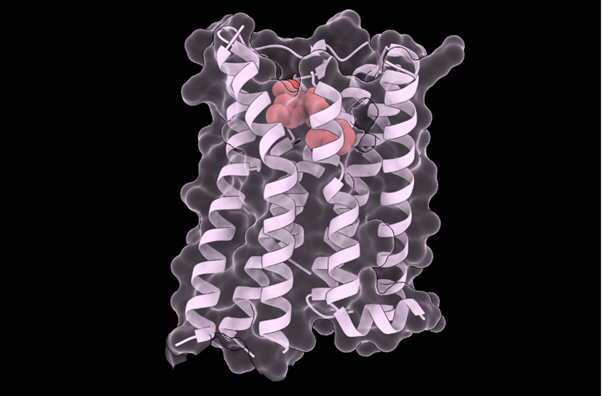
Most cases of autism have no known cause. Now, a study led at IRB Barcelona has discovered a mechanism that could explain a good part of these situations. The loss of a few amino acids in a crucial protein would affect the activity of hundreds of genes and the development of neurons. To explain the study, which is published in the journal Nature and which could open the door to future treatments, the Science Media Centre Spain organized an informative session with Raúl Méndez and Xavier Salvatella, the two scientists who have led the research. 

0

First Arctic ice-free day could happen before 2030

In three to six years, the first ice-free day in the Arctic could occur if a series of extreme weather events - such as an unusually warm autumn, winter and spring in the region - occur, according to a study comparing various models and scenarios in Nature Communications. An ice-free day refers to a day with Arctic Ocean ice coverage of less than 1 million square kilometres; the average coverage was 6.85 million square kilometres between 1979 and 1992.

0

Deep brain stimulation improves walking after spinal cord injury

According to a study published in Nature Medicine, deep brain stimulation of the lateral hypothalamus improves walking and promotes recovery in humans and rodents with spinal cord injuries. In humans, the authors tested this technique on two patients who relied on assistive devices and had difficulty walking; both showed improved performance in the ten-meter and six-minute walking tests. Combined with rehabilitation, the patients experienced recovery that persisted even after the deep brain stimulation was turned off.

0

Spanish centres make progress in transparency in animal experimentation, according to COSCE report

The seventh Annual Report of the COSCE Transparency Agreement, prepared by the European Animal Research Association, which analyses transparency in the use of animals for scientific experimentation in Spain in 2023, was presented today. According to the document, transparency is consolidated among the signatory institutions -168 in 2024- and all of them publish a statement on their websites on the use of animals. Public mention of the number and species used stands at 47%, compared to 38% the previous year.

0

Last round of plastics treaty talks ends without agreement

The fifth session of the United Nations Intergovernmental Negotiating Committee to develop an international legally binding instrument on plastic pollution (INC-5) ended without a treaty in Busan, South Korea, in the early hours of the morning. The more than 100 countries participating in what was to be the final round of negotiations have agreed to continue negotiating, reports Reuters.

0

Paediatric HIV, a major challenge on World AIDS Day

In the context of World AIDS Day, which is celebrated on 1 December, it is essential to reflect on one of the most urgent challenges in the fight against this disease: HIV in the paediatric population. A project led by the Complutense University of Madrid seeks to reduce paediatric mortality by training research leaders in sub-Saharan Africa and applying technology and innovation.

1

Outrage facilitates the spread of misinformation on social networks

According to a study published in Science, social media content containing misinformation provokes more moral outrage than content containing accurate information, and this outrage facilitates the spread of misinformation. In addition, the results also showed that people are more likely to share this outrage-provoking misinformation without reading it first. 

0

Footprints of coexistence of different hominids described in Kenya 1.5 million years ago

At least two hominin species - Homoerectus and Paranthropus boisei- coexisted in Kenya's Turkana Basin around 1.5 million years ago, a study published in Science confirms. The authors describe the first physical evidence of this coexistence in the form of footprints, found at several sites in the area.

0

Most sites in North America that will host the 2026 World Cup are at high risk of extreme heat

Ten of the 16 stadiums that will host the 2026 FIFA Men's World Cup in Mexico, the United States and Canada are at ‘very high’ risk of extreme heat stress conditions, according to a study published in Scientific Reports. Using data from the Copernicus Climate Change Service, the analysis concludes that the risk will be highest at stadiums in Arlington, Houston (USA) and Monterrey (Mexico).

0