
National Biotechnology Centre (CNB-CSIC)
If you are the contact person for this centre and you wish to make any changes, please contact us.
Co-director of the Microbiome Analysis Laboratory and Research Professor
Co-director of the coronavirus group at the National Biotechnology Centre (CNB-CSIC)
Research professor at the National Biotechnology Centre (CNB-CSIC) and at the CIBERER-ISCIII
CNB-CSIC Scientific Researcher at the CiMUS of the University of Santiago de Compostela, IDIS. Laboratory of Cell Senescence, Cancer and Aging
Virologist at the National Center for Biotechnology (CNB-CSIC)
Head of the Cerebral Cortex Development research group at the National Center for Biotechnology (CNB-CSIC)
Researcher at the National Biotechnology Centre (CNB-CSIC)
Researcher specialized in ecology and evolution of antibiotic resistance.
Virologist at the National Biotechnology Centre (CNB-CSIC)
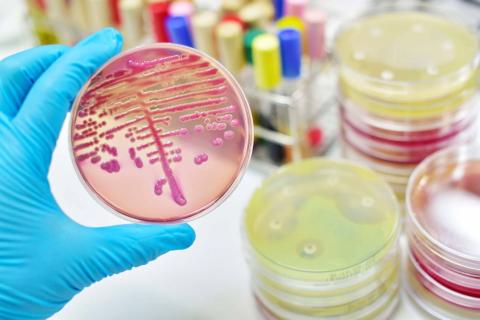
Cresomycin, a new synthetic molecule, exhibits robust efficacy against multiple evolutionarily divergent forms of antimicrobial resistance (AMR), according to a study published today in Science. By structurally analyzing how antibiotics bind to ribosomes of various bacterial species, researchers developed a new antibiotic molecule that adopts the exact conformation necessary for ribosomal binding.
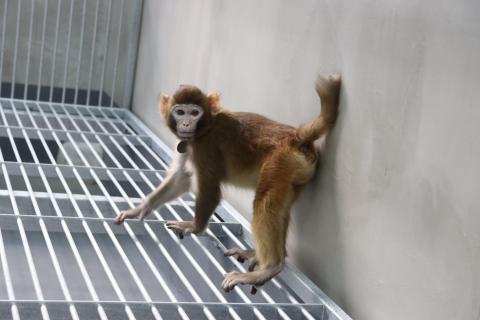
A team of Chinese researchers report today in the journal Nature Communications the successful cloning of a rhesus monkey, with a healthy placenta, which survived for more than two years. According to the authors, this could improve the efficiency of the monkey cloning process, which so far is very low. Previously, different teams have cloned more mammalian species, including 'Dolly the sheep' and another species of macaque (Macaca fascicularis).
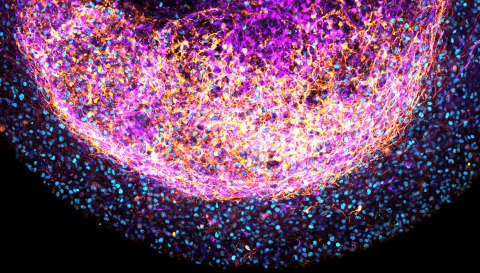
A team led by the Princess Máxima Pediatric Oncology Center and the Hubrecht Institute (The Netherlands) has generated small 3D brain models--known as organoids--from human fetal brain tissue. Until now, these brain organoids-which attempt to resemble real organs on a miniature scale-were grown in the laboratory using pluripotent or embryonic stem cells. The new technique, published in the journal Cell, allows regions of brain tissue to self-organize into three-dimensional brain structures. The authors used these organoids and the CRISPR-Cas9 tool to simulate the development of one type of brain tumor, glioblastoma, and see how it responded to different drugs.
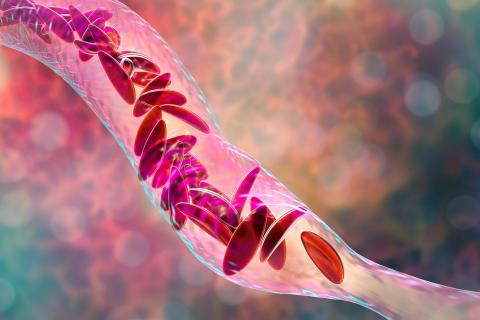
The European Medicines Agency (EMA) has recommended approval of the first drug in the European Union to use the CRISPR/Cas9 gene-editing technique. The drug, Casgevy, is indicated for the treatment of two rare inherited diseases, beta thalassaemia and sickle cell disease (sickle cell anaemia), caused by genetic mutations that affect the production or function of haemoglobin, the oxygen-carrying protein in red blood cells. Both conditions are debilitating and potentially fatal. The EMA opinion will be sent to the European Commission for a decision on an EU-wide marketing authorisation.
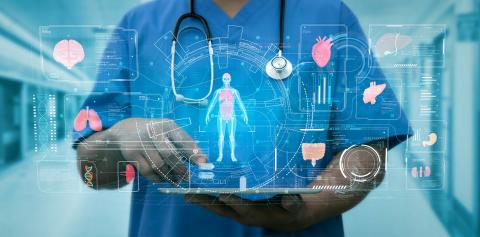
A study of more than 5,000 patients has developed a method to predict the biological age of our organs. They have analysed more than 4,000 proteins present in the blood and used machine learning models adapted to 11 different organs. According to the authors, almost 20 % of the population has accelerated organ ageing, which in many cases is associated with an increased risk of mortality of between 20 and 50 %. The results are published in the journal Nature.

Since mid-October, northern China has reported an increase in influenza-like illness compared to the same period in the previous three years. On 21 November, the media and the ProMED system reported outbreaks of pneumonia of undiagnosed cause in children in northern China. According to the World Health Organization (WHO), it is unclear whether these are related to the overall increase in respiratory infections previously reported by the Chinese authorities or are separate episodes. In a statement, the WHO has officially requested detailed information from China on this increase in respiratory illnesses and outbreaks of childhood pneumonia.
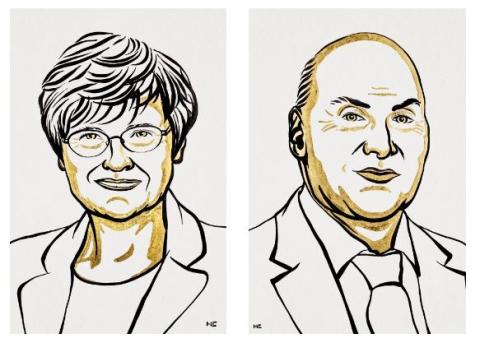
The Karolinska Institute has awarded the Nobel Prize in Medicine or Physiology to Katalin Karikó and Drew Weissman for their groundbreaking discoveries, which have radically changed our understanding of how mRNA interacts with our immune system, and made it possible to develop vaccines at unprecedented speed during the covid-19 pandemic.
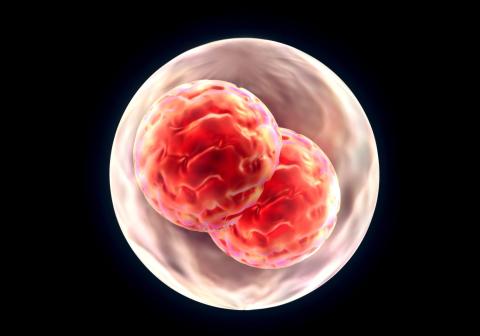
Berna Sozen's lab at Yale University has announced a new milestone in the competition to create synthetic embryos: their human pluripotent stem cells self-organise into structures that mimic embryonic development on days 9-14 after fertilisation and include extra-embryonic tissues. Their achievement is published in Nature at the same time as another similar study, that of Magdalena Zernicka-Goetz, who a fortnight ago previewed her stem cell-derived human embryo model to The Guardian, sparking a controversy with Jacob Hanna, author of a preprint showing that she had achieved true synthetic embryos.
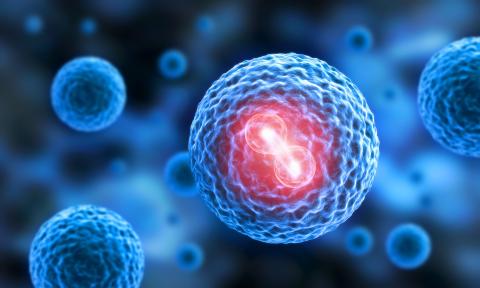
The latest episode of competition between research groups working on the same topic, a very common situation in science, should not distract us from the actual achievement: synthetic human embryos, in the laboratory, made from stem cells, up to a post-implantation stage. Now, we must decide what status or condition we will grant to these synthetic embryos. Once again, science is leaping forward and testing the limits of the laws, posing new ethical challenges for us to solve.
An international team has discovered a new type of molecular fossil in sedimentary rocks from the mid-Proterozoic - which spans from 2.5 billion to 542 million years ago. Protosteroids, a type of lipids found in abundance in those rocks, indicate that eukaryotes were a dominant life form in aquatic environments between 1.6 billion and 800 million years ago, the authors explain in Nature. The finding would confirm the theory of Nobel laureate Konrad Bloch, who predicted the existence of these primordial molecules.