
National Biotechnology Centre (CNB-CSIC)
If you are the contact person for this centre and you wish to make any changes, please contact us.
Co-director of the Microbiome Analysis Laboratory and Research Professor
Co-director of the coronavirus group at the National Biotechnology Centre (CNB-CSIC)
Research professor at the National Biotechnology Centre (CNB-CSIC) and at the CIBERER-ISCIII
CNB-CSIC Scientific Researcher at the CiMUS of the University of Santiago de Compostela, IDIS. Laboratory of Cell Senescence, Cancer and Aging
Virologist at the National Center for Biotechnology (CNB-CSIC)
Head of the Cerebral Cortex Development research group at the National Center for Biotechnology (CNB-CSIC)
Researcher at the National Biotechnology Centre (CNB-CSIC)
Researcher specialized in ecology and evolution of antibiotic resistance.
Virologist at the National Biotechnology Centre (CNB-CSIC)
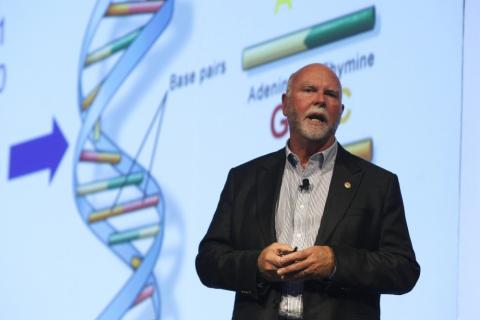
Craig Venter, the American biologist and entrepreneur who founded Celera Genomics to launch his own Human Genome Project in 1999 outside the public consortium, died Wednesday in San Diego at the age of 79, according to a statement from the J. Craig Venter Institute, which he led. Among other achievements, Venter completed the first full sequencing of a living organism’s genetic material and announced that he had succeeded in creating synthetic life.

A study published in Science analyzed more than 100,000 human neocortical cells from weeks 13 to 23 of gestation, when cortical neurons are generated. The samples came from 26 donors, some with and others without Down syndrome. Using single-cell genomics, they observed how trisomy 21 disrupts the developmental sequence of various types of neurons, which could explain subsequent differences in cognition. A second study in the same journal, which examines the postnatal brains of children with Down syndrome, finds that many of these changes persist into childhood. The authors note that their study will not have short-term clinical applications, but they hope it can be used to develop specific drugs or create gene therapies.
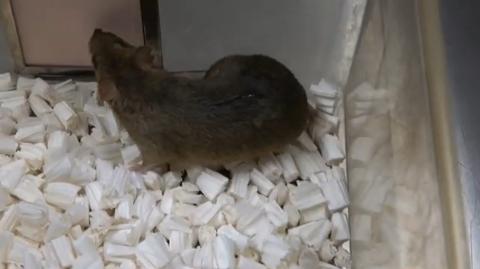
Repeated cloning cannot be sustained indefinitely in mammals, according to the findings of a twenty-year study on mice conducted in Japan. Serial cloning of mice led to an accumulation of lethal DNA mutations that affected birth rates from the 27th generation onwards, with the 58th generation being the last, according to the article published in Nature Communications, showing that sexual reproduction is necessary to prevent large-scale genetic mutations.
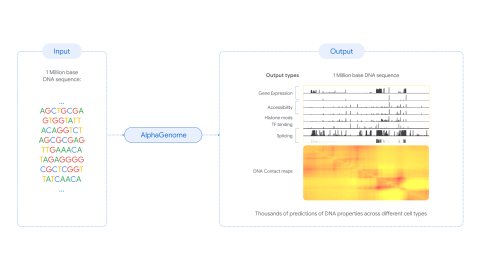
AlphaGenome is a deep learning model developed by Google DeepMind capable of predicting the function of DNA sequences up to one million base pairs long. An evaluation of the tool shows that it matches or improves upon the predictive ability of existing models in 25 of the 26 tests performed. According to the authors, who are part of Google DeepMind itself, AlphaGenome can help scientists "better understand genome function, the biology of diseases, and ultimately drive new biological discoveries and the development of new treatments." The results are published in Nature.

When a rhinovirus, the most common cause of the common cold, infects the lining of our nasal passages, cells work together to fight it off by activating an arsenal of antiviral defences. An article published in the journal Cell Press Blue demonstrates how they do this and suggests that it is the body's defences, rather than the virus itself, that determine whether we catch a cold or not, as well as the severity of the symptoms.
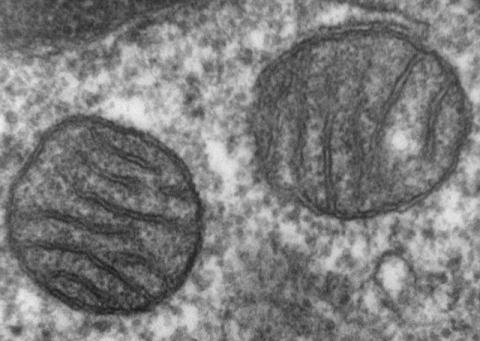
In 2015, the United Kingdom became the first country to pass legislation allowing the use of mitochondrial donation technology, pronuclear transfer. The technique is designed to limit, through in vitro fertilization, the transmission of mitochondrial DNA diseases in babies born to women who are at high risk, and for which there is no cure. Two studies published in the New England Journal of Medicine (NEJM) describe the results of the first treatments performed to date, from which eight babies have been born by mitochondrial donation, with reduced risk of disease.
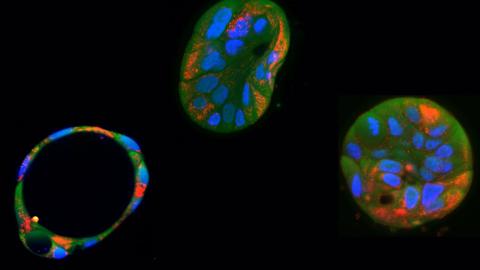
A team from the Netherlands has successfully edited pathogenic mutations in mitochondrial DNA in human cells, changes in DNA that cause disease, according to research published in PLoS Biology. The authors used a genetic tool known as a base editor. Until now, techniques derived from CRISPR have made it possible to correct mutations in nuclear DNA, and new techniques are being developed that allow mitochondrial DNA to be edited.

Several studies have suggested that taurine concentrations in the blood decrease with age and that supplementation with this amino acid could delay ageing. Now, a study carried out in the USA with Spanish participation, including data from humans, monkeys and mice, shows that this decline is not systematic and that it depends more on individual factors than on ageing, so taurine is not a reliable marker of ageing. The results are published in the journal Science.
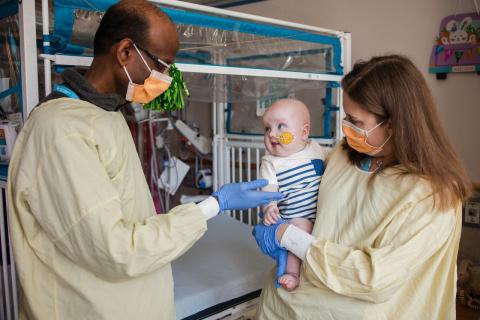
A team from the Children's Hospital of Philadelphia and Penn Medicine (United States) has successfully treated a baby diagnosed with a rare genetic disorder using personalised CRISPR gene editing therapy. The baby, known only by the initials KJ, was born with a rare metabolic disease known as severe carbamoyl phosphate synthetase 1 (CPS1) deficiency. After spending the first months of his life in hospital on a very restrictive diet, KJ received the first dose of his tailored therapy in February 2025, between six and seven months of age. The treatment, which is being used for the first time for this type of disorder, was administered safely, and the baby is now growing well and improving. The case is detailed in a study published by The New England Journal of Medicine (NEJM).

23% of people infected with SARS-CoV-2 between 2021 and 2023 developed long covid and more than half of them had persistent symptoms for two years. These are the main conclusions of a study led by ISGlobal that followed more than 2,700 people in Catalonia. The results are published in the journal BMC Medicine.