genetics

genetics

genetics

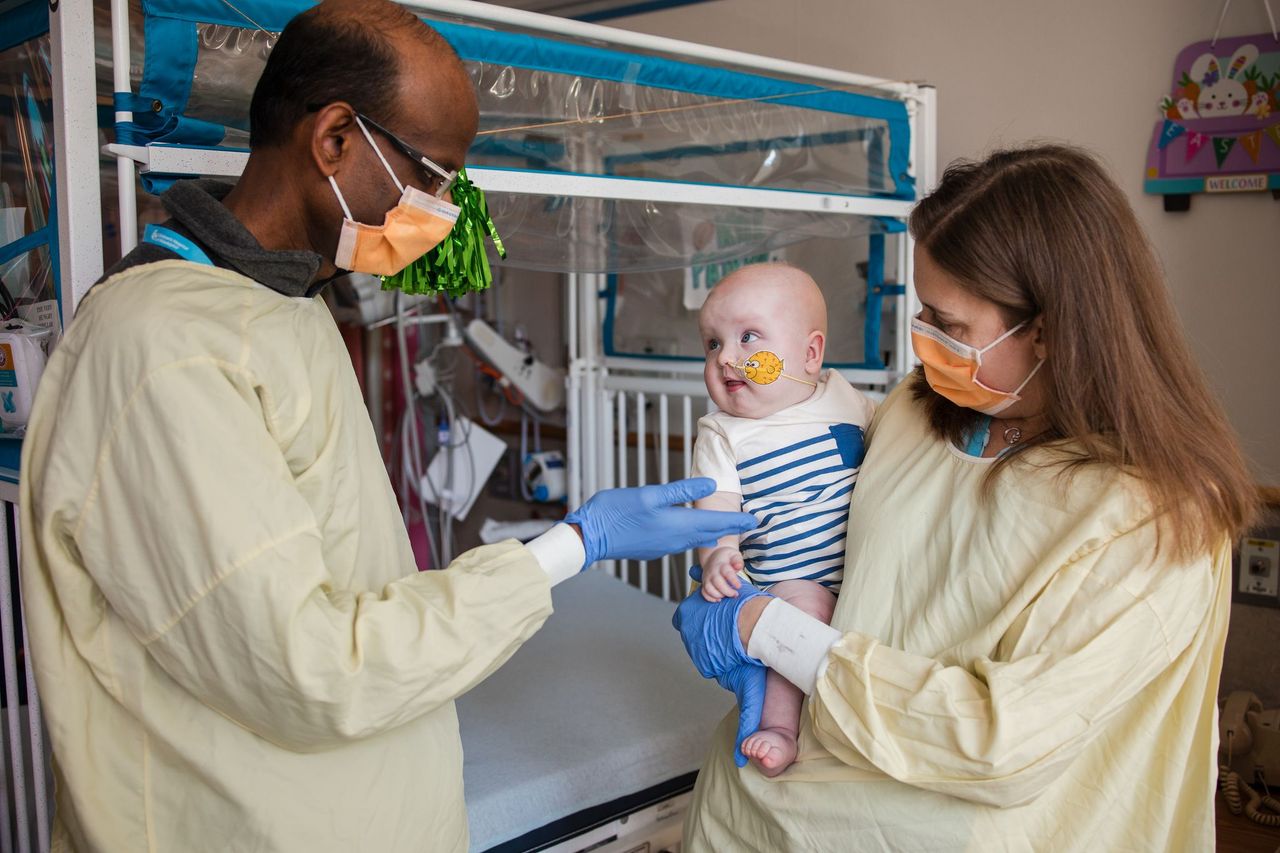
Newborn genetic screening outperforms standard screening in detecting more serious diseases, preliminary study finds

Early results from a study of newborn screening methods show that DNA analysis detects many more serious preventable or treatable diseases than standard newborn screening. The study, published today in the journal JAMA, is one of the first large-scale studies in the world to use genome sequencing as a method of newborn screening and is the first to publish preliminary results. 

0

Nobel Prize in Medicine or Physiology awarded to Ambros and Ruvkun for the discovery of microRNAs and their role in gene regulation

The Karolinska Institute has awarded the Nobel Prize in Medicine or Physiology to Victor Ambros and Gary Ruvkun for the discovery of microRNAs, small RNA fragments that do not contain instructions for making proteins but instead participate in the regulation of gene expression. Their role is fundamental in processes such as cell differentiation, and their alteration can influence diseases like cancer.

0

Alterations in DNA packaging could explain a higher risk of leukemia in children with Down syndrome

Newborns with Down syndrome, as they grow, face a higher risk of developing leukemia compared to those without the syndrome. An international team has sequenced the genes of more than 1.1 million cells from fetuses with and without Down syndrome, and it has discovered that the extra chromosome 21 they have alters the way DNA is packaged inside cells. According to the authors, whose research is published in Nature, this difference affects the regulation of certain genes and may contribute to the development of leukemia.

0

AstraZeneca's new AI tool could predict more than a thousand diseases before diagnosis

A study published today in Nature Genetics examines AstraZeneca's new tool, MILTON, which uses artificial intelligence to detect biomarkers and predict diseases before they are diagnosed. According to this analysis, the tool could potentially predict over a thousand diseases and may even be more effective than the currently available polygenic risk scores.

0

Peer genes in youth influence future risk of addiction and psychiatric disorders, study finds

A team of researchers has analysed data from more than 650,000 residents in Sweden and concluded that the genetic predisposition of peers - especially in high school - influences one's risk of developing anxiety, depression or drug abuse in the future. According to the authors, who publish the results in the American Journal of Psychiatry, this relationship appears "even after controlling statistically for whether peers were affected or not". 

0

Short-term vegan diet associated with benefits in biological ageing

Eating a vegan diet for eight weeks is associated with reductions in biological age estimates based on levels of DNA methylation, a type of chemical modification of DNA that alters the expression of genes, but not the DNA itself. This is the main conclusion of a study published in BMC Medicine in which 21 pairs of twins participated in a clinical trial. Of each pair, one person followed an omnivorous diet and the other a vegan - and lower calorie - diet during that period.

0

Mammoth DNA recovered for the first time with its chromosome structure

An international team of scientists, including researchers from the CRG and the CNAG (Barcelona), have managed to recover DNA remains from a female woolly mammoth that died in Siberia 52,000 years ago. The novelty is that, for the first time, the remains conserve the three-dimensional structure in the form of chromosomes, which makes it possible to investigate the genes that were active. According to one of the authors of the study, the results of which are published in the journal Cell, this type of discovery "changes the rules of the game, because knowing the shape of the chromosomes of an organism allows us to assemble the entire DNA sequence of extinct creatures and obtain information that was not possible before".

0

A technique that silences prions in the brains of mice could be used to treat prion diseases and other neurodegenerative pathologies

In a new study in mice published in Science, researchers present CHARM, an epigenetic editor that can be used to silence prion protein throughout the brain. The tool offers a path to effective first-line treatment for patients with fatal prion diseases, as well as other neurodegenerative diseases caused by the toxic accumulation of unwanted proteins. 

0

A new genome editing technique using 'RNA bridges'

Two articles published in Nature describe a new genome editing technique that enables the insertion, inversion, or deletion of long DNA sequences at specific positions in the genome. This is a one-step approach that could offer a simpler method for genome editing in the future. The authors describe a technique to create reprogrammable recombinases—key enzymes in genetic recombination. These enzymes are guided by RNA, which acts as a bridge, directing the recombinase to target sites and facilitating predetermined editing.

0