Reactions

Reactions

Reactions

When science hits the headlines, we seek the views of expert sources who assess the news rigorously and quickly, according to the available evidence.

A device improves vision in people with age-related macular degeneration

Age-related macular degeneration (AMD) is the leading cause of irreversible blindness and there is no treatment that can restore vision. Now, an international team has tested a device that combines a small wireless chip implanted in the back of the eye with high-tech glasses. The scientists have managed to partially restore vision in people with an advanced form of the disease. Specifically, 26 of the 32 people who completed the trial had clinically significant improvement and were able to read. The results are published in the journal NEJM.

0

They are organising the first scientific conference with AI systems as authors and reviewers

A research group at Stanford University (United States) has organised the first academic conference in which artificial intelligence (AI) tools serve as both authors and reviewers of scientific articles. Called Agents4Science 2025, the conference will take place on 22 October.

0

Extreme droughts slow the carbon storage capacity of scrublands and grasslands

Some ecosystems are able to adapt to moderate droughts, even if they last for several years. However, in scrublands and grasslands, when the phenomenon is extreme and prolonged, their capacity to store carbon plummets. This is the main conclusion of an international study that has assessed the effects of the duration and severity of droughts on the productivity of 74 grassland and pasture ecosystems on six continents. According to the authors, the most vulnerable areas are arid and semi-arid regions, such as those in the Mediterranean region and the southwestern United States. The study, published in Science, involves CREAF, CSIC and IICG-URJC, among other centres.

0

The proportion of people with genetic variants associated with cancer may be higher than expected, according to a study

Although most cancer cases are considered sporadic, some are defined as hereditary, as certain individuals carry variants in their DNA that increase their risk. A team in the United States has analysed the genetic information of more than 400,000 people and concluded that the proportion of those with known risk variants is slightly higher than 5%. This figure is higher than expected: nearly double for variants of the BRCA1 or BRCA2 genes and between 10 and 20 times higher for variants related to thyroid cancer. The results are published in the journal JAMA in research letter format.

0

Gene therapy is effective long-term in children with a serious rare disease

Severe combined immunodeficiency due to ADA enzyme deficiency is a rare disease that, without treatment, usually causes death within the first two years of life. These "bubble children" are currently treated with a bone marrow transplant or with injections that aim to restore, to the extent possible, the function of this enzyme. Now, an international team presents the results of a gene therapy administered to 62 children with the disease between 2012 and 2019. The therapy was effective in 95% of cases and did not cause serious complications, according to the authors, whose work is published in the journal NEJM

0

Two areas of the brain 'disconnect' in women with post-traumatic stress following sexual assault

In women suffering from post-traumatic stress disorder (PTSD) after experiencing sexual assault, the connectivity between two areas of the brain within the fronto-limbic system is altered, according to a study presented at the European College of Neuropsychopharmacology conference held in Amsterdam (Netherlands). The study, led by a researcher at Hospital Clínic in Barcelona, compared brain images of 40 women with PTSD following a recent sexual assault and 45 control cases. In 22 of these 40 women, communication between the amygdala—which helps process emotions such as fear—and the prefrontal cortex—which helps regulate those emotions—had almost completely disappeared.

0

Only 54% of electronic waste is collected correctly in Europe

In 2050, the total volume of waste electrical and electronic equipment in Europe will reach between 12.5 and 19 million tonnes, compared to 10.7 million tonnes – around 20 kilograms per person – in 2022, according to the report 2050 Critical Raw Materials Outlook for Waste Electrical and Electronic Equipment. Of this volume, only 54% was collected and treated correctly in 2022. Furthermore, of the one million metric tonnes of critical raw materials such as copper, aluminium and silicon present in this waste, less than half was successfully recovered, according to the report's estimates.

0

Laboratory embryo models developed that produce blood cells

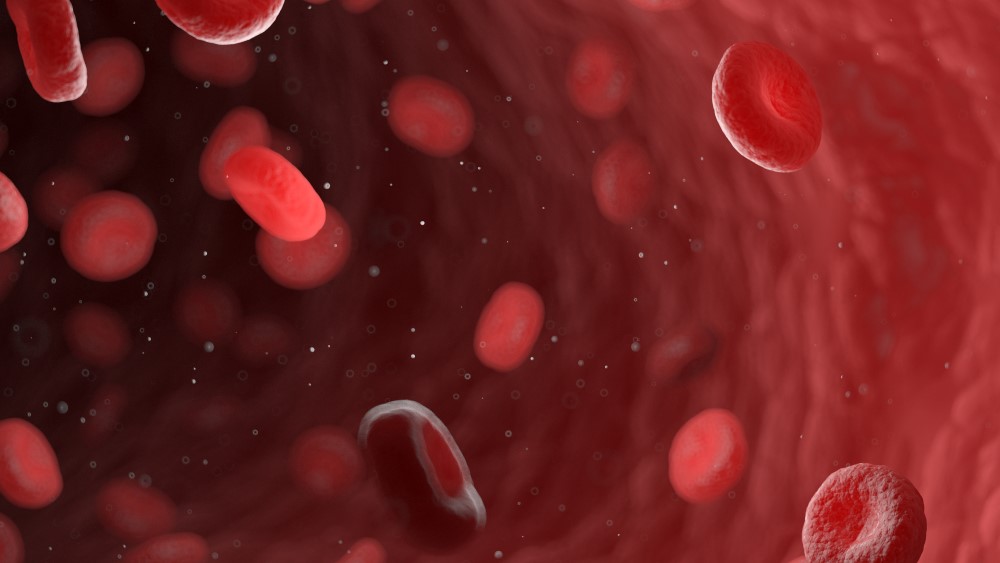
A team led by the University of Cambridge (UK) has used human stem cells to produce three-dimensional embryo-like structures that replicate certain aspects of early development, including, they say, the production of blood stem cells. They have called these structures “hematoids” and, according to the university press release, “they offer great potential for better understanding blood formation during the earliest stages of human development, for simulating disorders such as leukemia, and for producing long-lived blood stem cells for transplantation.” The results are published in the journal Cell Reports. 

0

A WHO report warns that one in six confirmed bacterial infections in 2023 was resistant to antibiotics

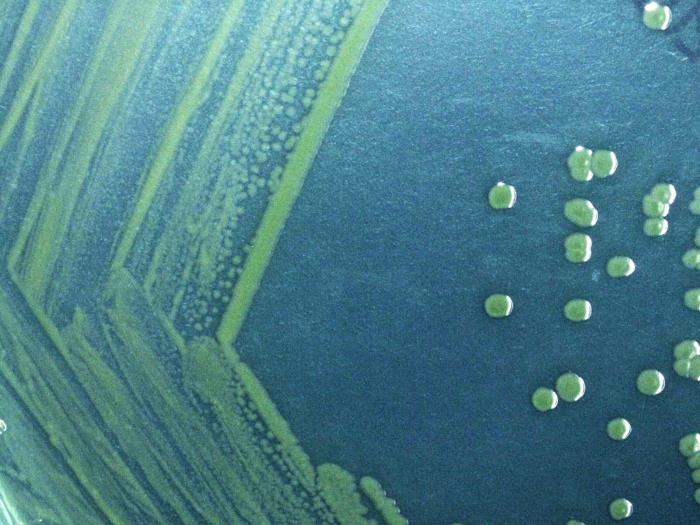
In 2023, one in six laboratory-confirmed bacterial infections were found to be resistant to antimicrobials, according to a report published by the World Health Organisation (WHO). Between 2018 and 2023, resistance increased in more than 40% of monitored antibiotics, which ‘is limiting empirical treatment options and driving a shift from oral to intravenous treatments, including greater reliance on second-line and last-resort antibiotics,’ the report warns. For example, globally, nearly 45% of Escherichia coli bacteria are resistant to third-generation cephalosporins, a proportion that varies from 20% in Europe to more than 70% in Africa.

0

Warm-water coral reefs pass their point of no return

Extensive warm-water coral reefs are facing widespread mortality and, unless global warming is reversed, will be lost, warns the report Global Tipping Points 2025. This is the first tipping point reached by the Earth system, the first in a series of tipping points that will cause ‘catastrophic’ damage—melting ice sheets, death of the Amazon rainforest, and collapse of vital ocean currents—unless humanity takes urgent action. The report also identifies positive tipping points that have been crossed on a global scale, for example in the area of solar energy and the adoption of electric vehicles.

0