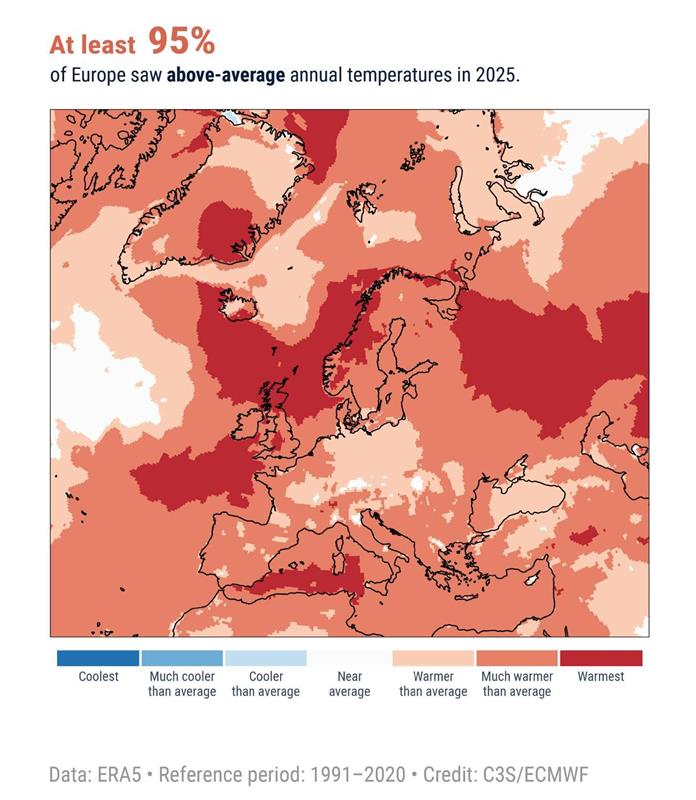
95% of Europe experienced above-average annual temperatures in 2025
Rapid warming in Europe is reducing snow and ice cover, while very high air temperatures, drought, heatwaves, and record ocean temperatures are affecting regions from the Arctic to the Mediterranean. These are the main findings of the State of the Climate in Europe (ESOTC) 2025 report, prepared by the European Centre for Medium-Range Weather Forecasts (ECMWF), which operates the Copernicus Climate Change Service, and by the World Meteorological Organization (WMO). The data show that 95% of the continent recorded above-average annual temperatures last year, and river flows were below average for 11 months.
María José Sanz - clima europa
María José Sanz
Scientific Director of the BC3 Basque Centre for Climate Change
The report “The State of the Climate in Europe 2025” is a comprehensive, high-quality study that continues to improve over time. The executive summary accurately and transparently reflects the detailed conclusions of the full report, without exaggeration. The conclusions are based on solid, top-tier data from the Copernicus Climate Change Service and the World Meteorological Organization (WMO). This work aligns perfectly with existing evidence and specifically supports future IPCC assessment reports.
It confirms established scientific trends that Europe is the fastest-warming continent, at a rate twice the global average. It carefully considers the factors that specifically affect this regional warming trend, such as how reduced air pollution, changes in atmospheric circulation, and decreased snow albedo amplify heat in Europe. While limitations are acknowledged, it is also explicitly noted that some statistics on disaster impacts, such as the number of casualties, are preliminary and likely underestimated.
The implications of this report are profound, emphasizing the serious threats to human health from unprecedented heat stress. Importantly, the findings also highlight vulnerabilities in the economy, as renewable energy generation depends heavily on changing weather patterns.
In summary, the report represents a key contribution supporting the evidence that climate change is a reality and underscores the need for solid, regular, and continuous data to inform EU policies on both climate adaptation and mitigation.
Froila - clima europa
Froila M. Palmeiro
Researcher at the Institute of Geosciences, IGEO (CSIC-UCM)
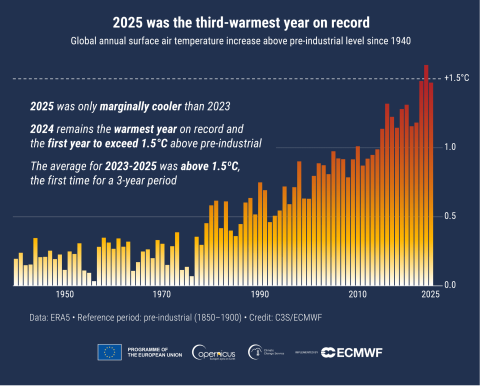
The report on the state of the climate in Europe in 2025 warns that our continent is warming twice as fast as the global average. At this rate, we will reach the 1.5 °C limit set in the Paris Agreement by the end of this decade, with direct consequences for biodiversity and climate security.
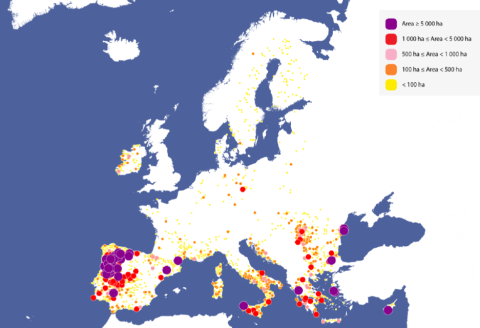
In 2025, half of the world’s population experienced more days with heat index values above 32 °C than in a typical year. In southern and eastern Spain, this excess of extreme heat lasted 50 additional days compared to normal, highlighting the vulnerability of the Iberian Peninsula. In Spain, the fifth wettest spring on record helped ease the drought that began in 2022, but it also promoted massive vegetation growth that could later become fuel for summer wildfires. Notably, Spain’s forest emissions accounted, in August alone, for half of the European total, which reached levels nearly five times higher than the historical average.
The report emphasizes that warming affects not only the atmosphere but also lakes and oceans. In fact, sea surface temperatures in Europe have reached a record high for the fourth consecutive year. Meanwhile, as mountain glaciers continue to retreat, the annual maximum Arctic sea ice extent—typically reached in March—fell to a historic low last year.
The report also highlights major regional contrasts in Europe in terms of precipitation and water instability. Short-duration extreme rainfall events are now more frequent and intense due to a warmer atmosphere capable of holding more moisture, increasing the risk of flash flooding and aligning with warnings from the latest IPCC report.
As for renewable energy, nearly half of Europe’s energy demand is already met by these sources. This is partly due to the boom in solar photovoltaic energy, which has multiplied its production over the past twenty years thanks to an increase in sunny, less cloudy days, especially in central Europe.
The report also warns about the threat posed by extreme warming to Mediterranean marine biodiversity, where annual heatwaves have reduced Posidonia oceanica seagrass meadows by 34%, which are vital for the stability of the Mediterranean ecosystem. In fact, their recovery is included in the EU Biodiversity Strategy for 2030, as these meadows act as carbon sinks and protect coastlines from storms. Their protection is fostering greater species richness, more complex marine communities, and habitats that serve as natural nurseries for fish.