Frontline medical workers detail the severity of injuries among the population of Gaza caused by the Israeli invasion
Through surveys of 78 healthcare workers in Gaza between August 2024 and February 2025, an international team has documented patterns of injuries among the civilian population during Israel's ongoing invasion. The most common traumatic injuries were burns, followed by injuries to the lower and upper limbs. Explosion damage accounted for most of the weapon-related trauma, which particularly affected the head, while gunshot wounds were mainly located in the lower limbs. The study is published in The BMJ.
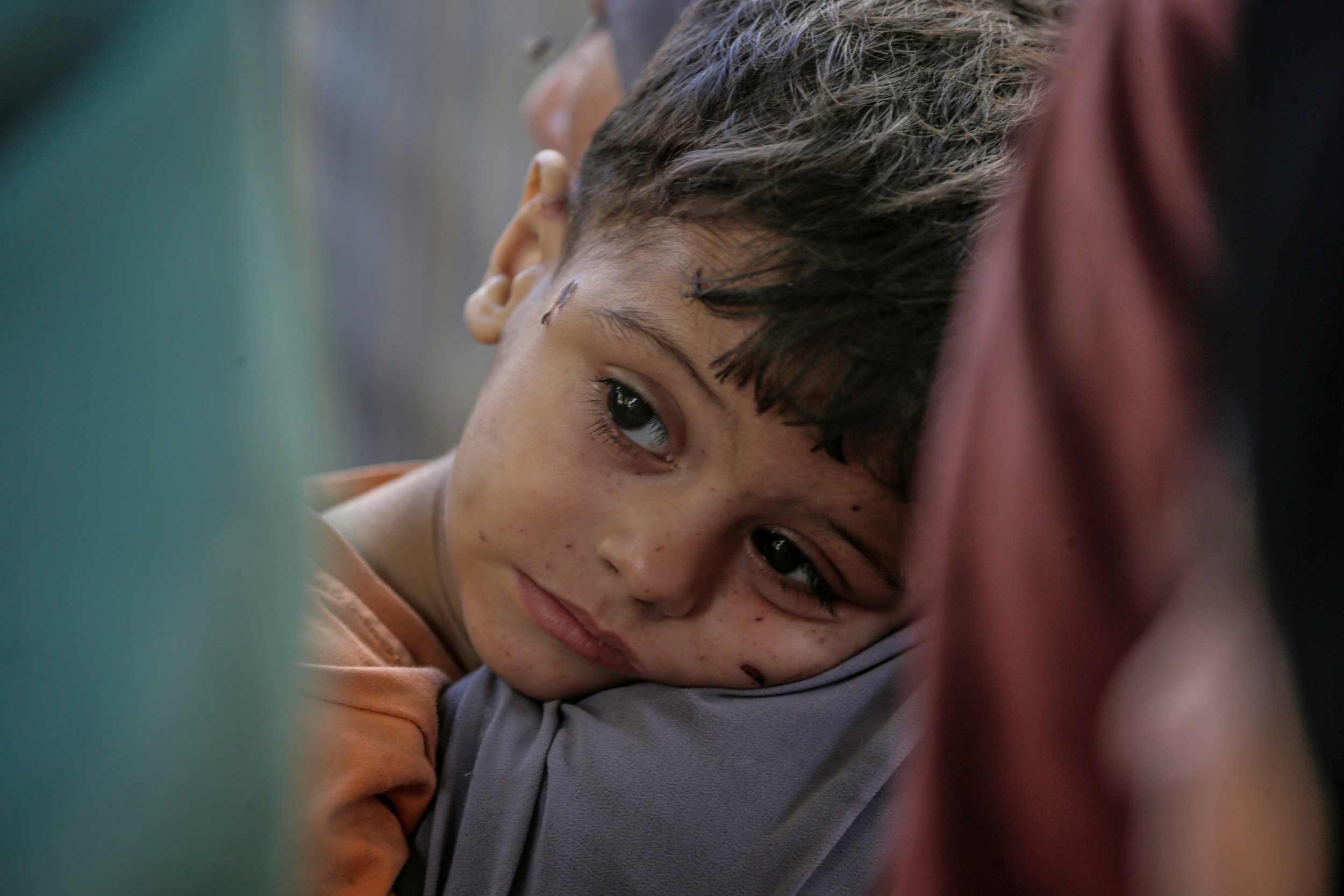
Image of a child at Al Shifa Hospital in Gaza, 3 September 2025. EFE/EPA/MOHAMMED SABER.
Salvador Peiró - lesiones civiles Gaza EN
Salvador Peiró
Epidemiologist, researcher in the Health Services and Pharmacoepidemiology Research Area of the Foundation for the Promotion of Health and Biomedical Research of the Valencian Community (FISABIO) and Director of Gaceta Sanitaria, the scientific journal of the Spanish Society of Public Health and Health Administration (SESPAS)
The manuscript published in the BMJ is exceptionally valuable in documenting a pattern of traumatic injuries in the civilian population that is unprecedented in recent armed conflicts. The authors rigorously employ an ingenious methodology to obtain information on injuries and their location in a context where primary data are extremely scarce, both because of the Israeli blockade and the destruction of health information systems and medical records.
The method used (surveying only international health workers who have recently left the conflict zone, counting only cases that survived long enough to reach hospital) probably underestimates the number of cases, but more than 23,000 traumatic injuries, nearly 7,000 directly linked to weapons, with a predominance of multiple traumas, deep burns, head injuries and amputations, are more than enough to show the magnitude of the damage to the civilian population and the inadequacy of health services under siege.
The figures shown go beyond a health record. Tens of thousands of people with trauma and wounds, burns that penetrate bone and muscle, children with open skull fractures or shattered limbs, etc. These are not the figures one would expect from a “conventional” conflict, or even from recent conflicts (Iraq, Afghanistan, Syria) that seemed particularly cruel. They show an unprecedented scenario in which high-energy, area-effect munitions (thermobaric bombs, incendiary bombs, cluster munitions) have been used in densely populated urban environments. And this is where, despite the academic tone that the article attempts to maintain, the mere description of the injuries and their types becomes an indictment and an expression of outrage.
Pedro Arcos - lesiones civiles Gaza EN
Pedro Ignacio Arcos González
Epidemiologist and Director of the Emergency and Disaster Research Unit at the University of Oviedo
The study is highly relevant because it is well known how difficult it is to obtain reliable data on complex emergencies directly from sources on the ground. Furthermore, the diversity of sources and documents produced locally and used in the study shows in great detail the tremendous impact of the Israeli attacks, as well as their pattern of injury on the population of Gaza.
It is also important that high-quality research and journals such as the BMJ are involved in publishing and discussing this genocide from an academic and scientific perspective.
Juan Alguacil - lesiones civiles Gaza EN
Juan Alguacil
Physician and Professor of Public Health at the University of Huelva
Beyond its significant scientific value, the study takes on special relevance in the current context of allegations of genocide. The Israeli army appears to have targeted the health system itself as a recurring objective in Gaza, based on the hundreds of documented attacks on health facilities, ambulances and personnel (which have resulted in the deaths of more than 1,500 Palestinian health workers), which, in addition to drastically reducing Gaza's clinical care capacity, have been responsible for the destruction of both printed and digital records that could be used as evidence of the massacre.
This study provides data to give an idea of the magnitude and type of injuries that the civilian population continues to suffer (let us not forget) in the face of the inaction of the civilised international community.
Although the methodological limitations are evident, in such a violent war scenario, which shows no respect for the community or healthcare infrastructure, there do not seem to be many alternatives for obtaining useful information on the types and patterns of injuries that would enable us to prepare for adapting the humanitarian response in future armed conflicts. In addition to guaranteeing healthcare, the presence of structured clinical surveillance systems must be ensured in conflicts.
Isabel Portillo - lesiones civiles Gaza EN
Isabel Portillo
Screening Coordinator at Osakidetza -Basque Health Service, researcher in the Cancer Biomarkers group at the Biobizkaia Health Research Institute, and secretary of the Board of Directors of the Spanish Epidemiology Society
Is the study of good quality?
‘It is of high quality, conducted with great scientific rigour and methodology. It is difficult to conduct any other type of study in a war situation. Furthermore, this is not a conventional war, as both the injuries and their characteristics mainly affect civilians, which is very different from what is found in other (mainly military) conflicts.’
The press release highlights that this is the first study to provide such detailed data. What is its value?
‘This study is in line with those being published by the United Nations, OCHA, UNICEF, UNRWA, WHO and recognised NGOs such as OXFAM, MSF and Amnesty International.’
What are its limitations?
‘The working conditions in both hospitals and aid organisations do not allow for conventional quantitative studies, which is why a Delphi study has been used, in accordance with the Helsinki criteria and rigorous methodology. There are no conflicts of interest and no Palestinian health workers have participated in order to avoid possible bias.’
What implications might the data offer?
"A very relevant insight into the characteristics of the conflict that are important for understanding its (still limited) scope and consequences. It is important to note that it refers primarily to injuries to survivors. The consequences of infections, malnutrition, and people with chronic and vulnerable illnesses have yet to be detailed. It is already estimated that there could be more than 680,000 deaths, as announced by the UN rapporteur on the Palestinian territories, Francesca Albanese."
Rafael Castro - lesiones civiles Gaza EN
Rafael Castro Delgado
Doctor of Medicine, Full Professor of Emergency Medicine at the University of Oviedo, emergency physician (SAMU-Asturias), researcher at the Asturias Health Research Institute, coordinator of the Pre-hospital Care and Disaster Research Group, and director of the Pre-hospital Care Research Network and advisor to WHO technical working groups related to emergencies and disasters
This article has added value because it is peer-reviewed and provides real, detailed clinical information from professionals on the front line of the Gaza conflict, with a large amount of data.
It is not a population-based or representative study and may be subject to some recall and reporting bias, as in extreme emergency situations, data may be incomplete or inaccurate, which means that it does not have the robustness of an epidemiological study with population-based data. Even so, the quality is good for the context (active conflict and lack of surveillance systems) as the information it provides is unique and difficult to obtain in a context where access to health data is very limited; in this case, the article is highly relevant.
It describes severe injury patterns, with a direct comparison by professionals experienced in other conflicts. It therefore provides evidence for planning humanitarian and health responses, including surgery, intensive care, mental health and rehabilitation. In addition, it is noteworthy that it documents other health problems beyond war wounds, such as malnutrition, sepsis, chronic diseases and psychological trauma, offering a comprehensive view of the health crisis.
The article can serve as a basis for international humanitarian and emergency aid agencies to design response strategies, as it provides a detailed map of health needs in a high-intensity conflict, something that is rarely achieved during the active phase of a war.
Limitations, already acknowledged by the authors themselves, include the secondary data source, possible but minimised duplication of cases, not being representative of the whole of Gaza, as it only includes hospitals where international teams worked, and reflecting a specific period (August 2024 – February 2025).
This study may have significant implications in several areas:
- Humanitarian and health planning, as it allows for the identification of the most urgently needed resources.
- Documentation and human rights, as it provides scientific evidence that can be used to inform international organisations such as the WHO or the UN and contribute to reports on human rights violations and war crimes.
- Long-term public health, as it points out that the conflict has generated an enormous burden of disability, especially amputations, severe burns and psychological trauma, and can therefore guide the design of rehabilitation and health reconstruction programmes for the affected population.
- Development of surveillance systems in conflicts, as the authors themselves highlight the need for resilient health surveillance systems, even in war contexts, to obtain reliable real-time data and improve response.
Omar El-Taji et al.
- Research article
- Survey
- Peer reviewed