Spanish Society of Epidemiology
If you are the contact person for this centre and you wish to make any changes, please contact us.
Professor of Preventive Medicine and Public Health at the University of Barcelona and member of the Spanish Society of Epidemiology
Secretary of the Spanish Society of Epidemiology
Screening Coordinator at Osakidetza -Basque Health Service, researcher in the Cancer Biomarkers group at the Biobizkaia Health Research Institute, and secretary of the Board of Directors of the Spanish Epidemiology Society
Co-coordinator of the working group on Nutrition of the Spanish Society of Epidemiology (SEE), Professor of Preventive Medicine and Public Health at the University of Navarra, and member of CIBERobn
President of the Spanish Society of Epidemiology
Professor of Preventive Medicine and Public Health at the University of Valencia and outgoing president of the Spanish Society of Epidemiology (SEE).
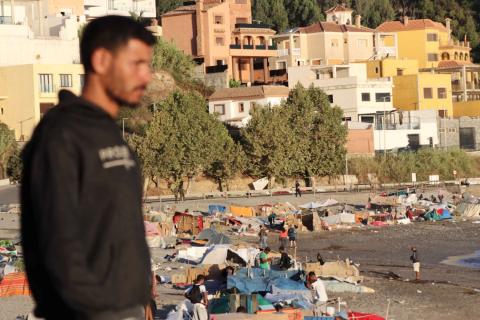
The arrival of thousands of migrants in Ceuta at the end of July has led to the emergence of messages portraying these people as a health threat. However, the scientific evidence points to exactly the opposite: those arriving in our country are, generally speaking, in good health, and it is they – not the local population – who are at greatest risk of falling ill, due to the conditions in which they are forced to live. In the face of fear and misinformation, the best defence is transparent, data-driven information.

The Ministry of Health has announced that Spain will receive the MV Hondius in the Canary Islands “in accordance with international law and the spirit of humanitarianism”. The government is thus responding to a request from the World Health Organisation (WHO) and the European Union for the cruise ship, which is travelling from Argentina and has an outbreak of hantavirus on board, to dock in the Canary Islands, in the port of Granadilla, Tenerife. The European Centre for Disease Prevention and Control has assessed which passengers should be evacuated from the ship to Cape Verde, where it is currently located, and which will continue on to the Canary Islands. Once there, they will be examined and transferred to their home countries in accordance with safety protocols. The cruise ship is expected to arrive in the archipelago in three or four days.

Adopting a healthy diet at age 45 can add between two and three years to life expectancy in men, and between 1.5 and 2.3 years in women, according to a study based on data from more than 103,000 people in the United Kingdom. The positive impact is greater for men who follow a diabetes risk reduction diet (DRRD) and for women who follow a Mediterranean-style diet (AMED), says the article published in Science Advances.
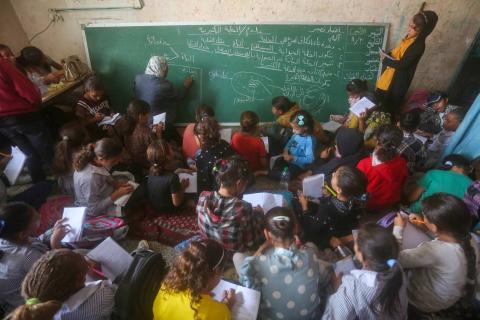
An international report led by the University of Cambridge (United Kingdom) warns that there is a serious risk of a ‘lost’ generation emerging in Gaza, due to the combination of educational, physical and psychological impacts after more than two years of the Israeli invasion. As of 1 October 2025, the UN Office for the Coordination of Humanitarian Affairs (OCHA) reported the deaths of 18,069 students and 780 education personnel in Gaza, with 26,391 students and 3,211 teachers injured. The study estimates that children in Gaza will have lost the equivalent of five years of education due to repeated school closures since 2020, first due to COVID-19 and then due to the Israeli invasion.

Three articles with Spanish participation, published in The Lancet, review the evidence that ultra-processed foods are worsening diet quality and displacing the consumption of fresh and minimally processed foods. Furthermore, they warn that their consumption is linked to a higher risk of multiple chronic diseases. According to the authors, who also review the associated policies and commercial factors, only a coordinated global response can combat the strategy of the companies that market these products.
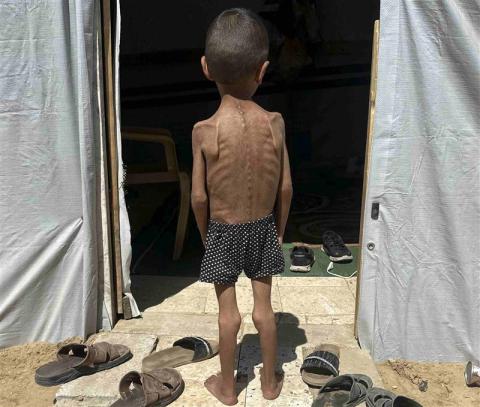
More than 54,600 children under the age of five in Gaza are in need of medical care for acute malnutrition, according to estimates from a study published in The Lancet, which shows that the prevalence of malnutrition decreases during a ceasefire and increases during Israeli blockades of access to food, water, or medicine. For example, after four months of severe aid restrictions—between September 2024 and January 2025—malnutrition increased from 8.8% to 14.3%, with a higher incidence in Rafah and among children between 24 and 59 months of age. The study, conducted by UNRWA, is based on data from more than 219,000 children between the ages of six and 59 months from various locations in the Gaza Strip, collected between January 2024 and August 2025.
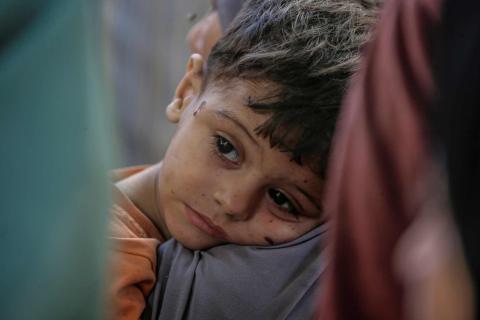
Through surveys of 78 healthcare workers in Gaza between August 2024 and February 2025, an international team has documented patterns of injuries among the civilian population during Israel's ongoing invasion. The most common traumatic injuries were burns, followed by injuries to the lower and upper limbs. Explosion damage accounted for most of the weapon-related trauma, which particularly affected the head, while gunshot wounds were mainly located in the lower limbs. The study is published in The BMJ.
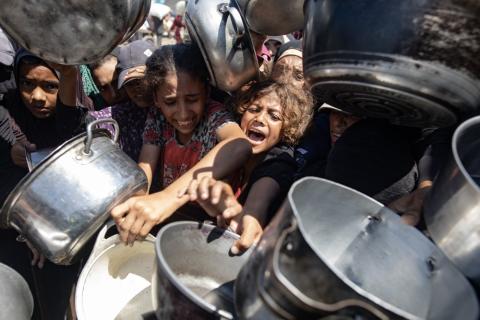
On 22 August, the UN officially declared famine in Gaza, defined as an extreme situation of food insecurity in which there is insufficient access to food to survive, leading to high rates of malnutrition, disease and mortality. The Spanish Society of Epidemiology explains how this situation is technically assessed, as well as the implications of the declaration.

Consumption of ultra-processed food is associated with an increased likelihood of having prodromal signs of Parkinson's disease - symptoms that precede the disease - says a study published in Neurology. The analysis is based on data from more than 42,000 healthcare professionals in the US, followed for up to 26 years.
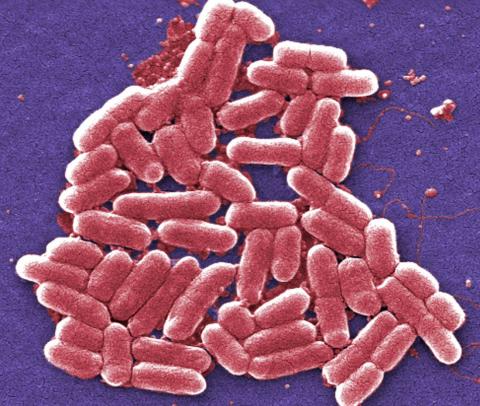
A study published today in Nature with the participation of the CNIO points to the bacterial toxin colibactin, produced by some strains of Escherichia coli, as a possible culprit in the increase in early-onset colorectal cancer. The study shows that exposure to the toxin during early childhood leaves a genetic signature in colon cells and demonstrates a substantial increase in these mutations in cases of colorectal cancer in people under 50.