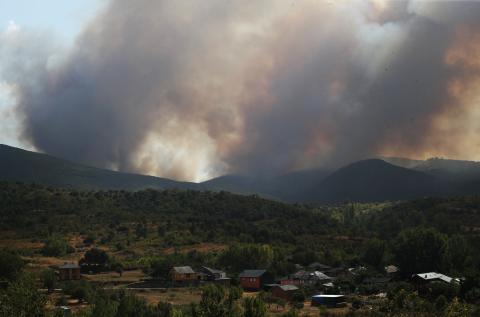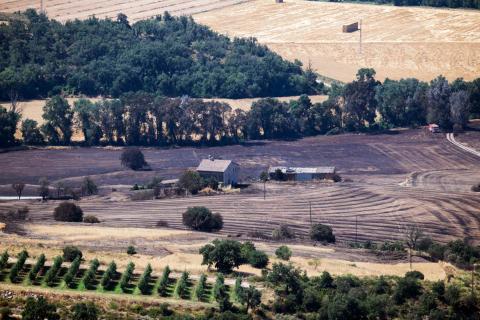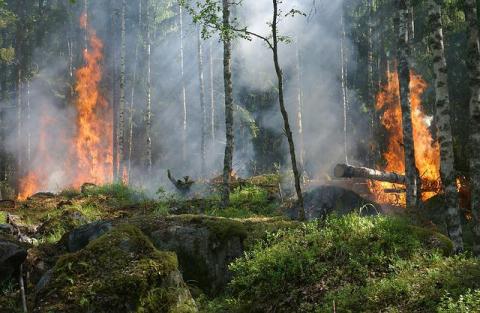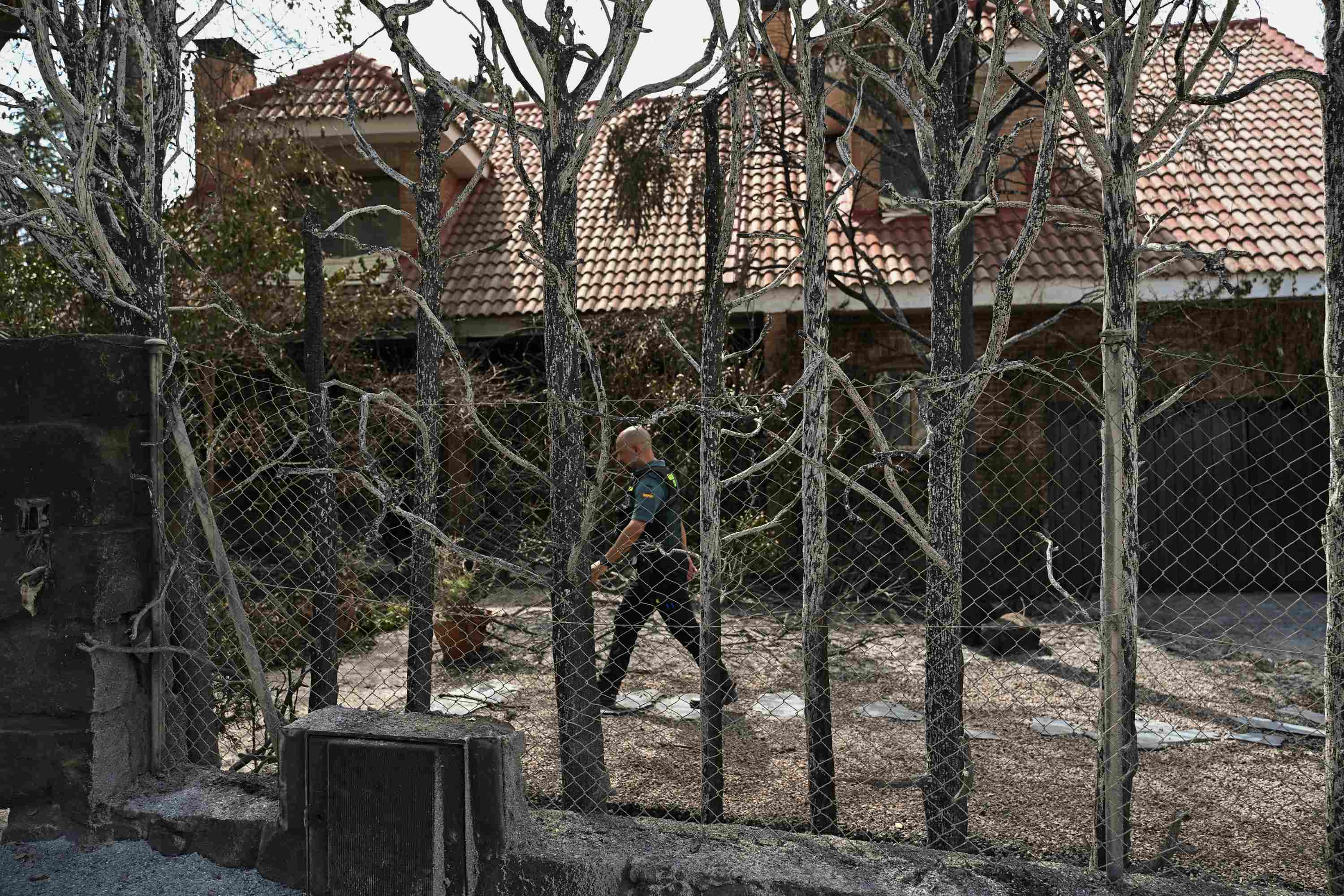
Each summer, societies across diverse regions, fromthe Mediterranean to the Boreal region, —face, in a way, a disaster which, with the increase in the frequency and intensity of heatwaves and droughts in a context of climate change, causes a growing impact every year. However, despite its social and environmental relevance, public discussion quickly fades once the fire season is over, failing to reach a consensus needed to drive meaningful policy change.
The recent report Changing Wildfires - Policy Options for a Fire-literate and Fire-adapted Europe, from the European Academies' Science Advisory Council (EASAC) reportsthat Europe experiences 60,000 fires annually, resulting in €2,000 million in economic losses and burning an area twice the size of Luxembourg. While there has been a downward trend in the number of fires and the area burned in Europe, that is presented as a success of current policies, this masks the fact that high-intensity fires are becoming increasingly frequent and, more importantly, became uncontrollable and cause greater environmental and social impact.
Europe experiences 60,000 fires annually, resulting in €2,000 million in economic losses and burning an area twice the size of Luxembourg
The report's primary conclusion is that current national and European Union policies, which prioritise fire suppression, have failed. In fact, this approach has exacerbated the problem, making it unmanageable. This failure stems from a fundamental misunderstanding of wildfire risk. Instead of recognizing it as an integrated disaster risk, policies focus on managing the response to individual fires and identifying arsonists. This neglect of a comprehensive wildfire and disaster risk policy is the core issue.
To address this new context and the increasing risk of extreme wildfires, the report proposes eight key policy options:
- Adopt an integrated approach that moves beyond a primary focus onpublic policies based primarily on fire suppression, and adopt policies that genuinely integrate proactive and reactive measures, considering associated and secondary hazards of wilffires, such as pollution affecting human health, and aligning with climate change mitigation strategies.
- Adopt a landscape approach to reduce both hazard and vulnerability, rather than planning exclusively in terms of forest management. Intensive monocultures and unmanaged landscapes, wherespecies and land uses evolve without intervention, increase wildfire hazard. Instead, creating multifunctional landscapes, with mixed land uses enhances fire resistance and offers multiplebenefits for agriculture, forestry and biodiversity conservation. Creating mosaic landscapes and restoring degraded ecosystems with native species break fuel continuity and reduceoverall risk.
- Reduce urban sprawl and promote more compact urban forms in fire-prone areas. This not only reduces the exposure of the urban-rural interface to wildfires but also contributes to cut carbon emissions. At the same time, urban planning needs to integrate wildfire risk management. This means encouraging fire-resistant construction and landscaping in the urban fringe.Adopt nature-based solutions —such as extensive grazing or prescribed burning— that reduce the vulnerability of ecosystems, of forest and agricultural production areas and boost the local economy, contributing to the sustainable restoration of areas affected by fire, and help mitigate secondary effects such as erosion, biodiversity loss, the collapse of local economies, and depopulation.
- Sectoral public policies must be harmonized to reduce wildfire risk. Currently, some policies—particularly in areas like agriculture, forestry, and urban planning—have unintended consequences that can actually increase the vulnerability of ecosystems, communities, and farming systems. To address this, policies need to be reviewed with a focus on wildfire risk and strategically assessed to create synergies and avoid conflicts.
- Harmonise sectoral public policies to reduce wildfire risk . Currently, some policies have unintended consequences, increasing the risk of wildfire and the vulnerability of ecosystems, local and suburban communities, and farming systems in rural areas. To address this, policies need to be reviewed with a focus on wildfire risk, using strategic environmental assessment of plans and programmes.
- Recognise the ecological and cultural role of fire, as the zero fire policy has resulted in the accumulation of biomass in fire-adapted ecosystems which, under favourable environmental conditions, becomes fuel. On the other hand, local communities and societies in the past have traditionally used fire in farming and forestry. The use of fire under controlled conditions has been weakened both by depopulation and by restrictions on its use. Prescribed burning with the active participation of local communities reduces fuel in these ecosystems.
- Promote education, awareness of wildfire risk, and interdisciplinary training that bridges engineering, natural sciences and social sciences. Traditional education often lacks this integrated approach.. Wildfire risk management is not just forest management, as this hazard affects other land uses, including agricultural, urban, tourist, and industrial areas. as well as critical infrastructure . The effectiveness of policies depends fundamentally on the recovery of local knowledge about fire and fostering risk awareness across all generations and sectors. Fire literacy is essential for the effective adoption of policies that are not apparently directly related to fire management.
- Involve landowners and land managers in sustainable landscape management, by diversifying their practices. This includes providing incentives to reduce biomass density and forest structure diversity in forestry, promoting extensive grazing and working with the insurance sector to encourage the adoption of these sustainable management practices.
Wildfire risk reduction can no longer be based on seasonal management of isolated events, reactive responses during fire season, or a narrow focus on forestry policy. Past suppression-focused strategies have proven ineffective in a complex environment where climate change, rural depopulation, and rapid land use changes all interact.
The report's central proposal is for society to learn to live with fire again and adapt to this new reality.
In contrast, fire risk reduction requires an integrated, multi-sectoral policy with landscape management at its core. This means regulating the structure of biomass — which has the potential to become fuel — and actively involving local communities. As the primary stakeholders, who constantly interact with the land, their participation is essential. The report's central proposal is for society to learn to live with fire again and adapt to this new reality.