University of Valencia
If you are the contact person for this centre and you wish to make any changes, please contact us.
Chief of the Oncology Department at the University General Hospital of Valencia
President of the Spanish Multidisciplinary Melanoma Group
Professor of the Department of Statistics and Operations Research at the University of Valencia
Professor of Genetics at the University of Valencia and researcher of the Genomics and Health Area at the Foundation for the Promotion of Health and Biomedical Research of the Valencian Community (Fisabio)
Professor of Obstetrics and Gynaecology in the Department of Paediatrics, Obstetrics and Gynaecology
Professor of Theoretical Physics at the Institute of Corpuscular Physics (IFIC), University of Valencia - CSIC
Group Leader of the Functional Inorganic Materials Team (FuniMAT) at the Institute of Molecular Science (ICMol) and senior lecturer in the Department of Inorganic Chemistry at the University of Valencia.
Professor of Journalism and POLIBIENESTAR researcher at the University of Valencia
Researcher at the Climate, Atmosphere and Oceans Laboratory (Climatoc-Lab) at the Desertification Research Centre (CIDE, CSIC-UV-GVA)
Educational sociologist and lecturer in Sociology of Education at the University of Valencia

Summer holidays in Spanish schools are amongst the longest in Europe, and every year the debate resurfaces as to whether their length is appropriate or excessive. Do they affect the knowledge and skills acquired? Could they have an impact on well-being? Do they affect all children equally? How could the summer months be improved for children and teenagers?
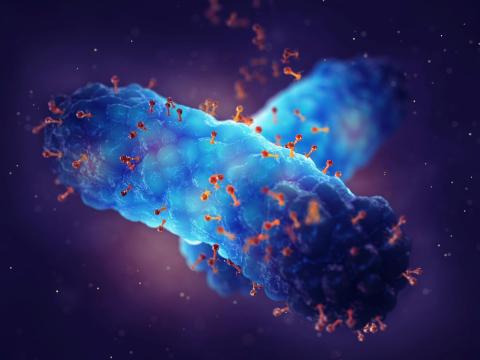
A team of researchers has designed complete and functional genomes for bacteriophages — viruses that feed on bacteria — from scratch using generative artificial intelligence (AI), and has tested them against bacteria that had developed resistance to this type of virus. The study, published in the journal Science, represents a step forward towards generative systems capable of designing complete biological systems. The authors also state that it raises important questions regarding biosafety and biosecurity.
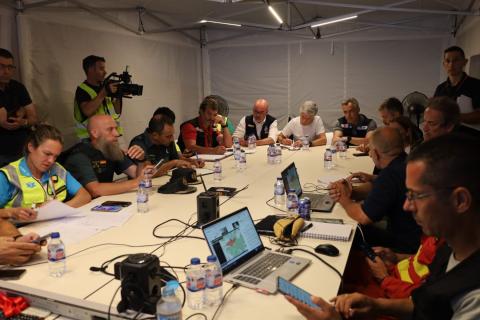
Early this morning, the Minister of Interior, Fernando Grande-Marlaska, declared a state of emergency of national interest in the Community of Madrid and the province of Ávila due to the forest fires in Villa del Prado, San Martín de Valdeiglesias and Burgohondo. According to Carlos Novillo, the Regional Minister for the Environment, Agriculture and the Interior of the Community of Madrid, the fires were beyond the capacity of the fire services to extinguish and posed a serious threat to the population. The Madrid 112 Security and Emergency Agency has reported that, although the night-time firefighting efforts have been effective, the fires have still not been contained or brought under control. More than 10,000 people remain evacuated.

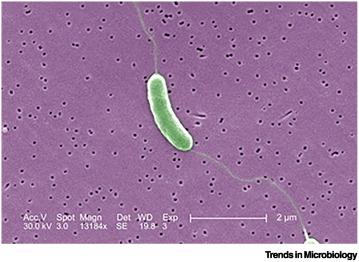
Rising sea temperatures are promoting the spread of Vibrio vulnificus, the marine bacterium nicknamed the “carnivore,” which can cause serious infections. Last summer, the European Center for Disease Prevention and Control (ECDC) warned of an increased risk during the summer months, especially in the Baltic Sea. This bacterium has also been identified along the Spanish coast, but experts explain that swimming in the Mediterranean is safe for the general public, as the bacterium thrives in waters with lower salinity. Even so, they recommend that vulnerable individuals remain vigilant and avoid swimming if they have open wounds.

According to an observational study, from which no causal relationship can be inferred, each additional hour per day of sedentary behaviour is associated with a 10% increase in the risk of death from cancer. The association depends not only on total sedentary time, but also on how it is accumulated: if that hour of inactivity is interrupted, the risk is reduced by 19%. In addition, replacing one hour of sedentary behaviour with light physical activity reduces the risk by 12%. The study, published in PLOS Medicine, included nearly 91,300 participants from the UK Biobank who were monitored for seven days using an accelerometer and followed for a median of 12.38 years.
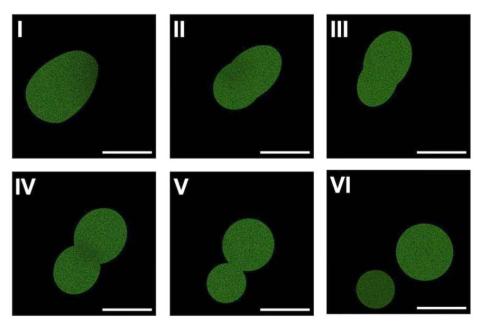
The team led by scientist Kate Adamala of the University of Minnesota has released the news—under an embargo—to several media outlets regarding the creation of a synthetic cell capable of feeding, growing, and replicating, which they have named Spudcell. Their work, which, according to Science News, was rejected by the journal Cell, is published on the team’s website, pending peer review.

An international team has analyzed data collected between 1990 and 2024 from nearly one million people in seven countries regarding their body mass index, cholesterol levels, and blood pressure. The results indicate that, in adults over 40, these levels have been converging, becoming quite similar overall in obese and non-obese individuals, possibly due to the widespread use of treatments. Despite these findings, the authors note that there are other risks associated with obesity not included in the study, such as diabetes, kidney disease, and cancer, among others. The work is published in The Lancet.
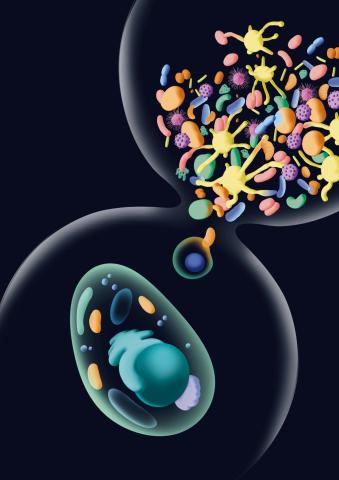
The origin and the process by which eukaryotic cells arose remains one of the great unanswered questions in biology, with Lynn Margulis’s theories regarding the incorporation of a bacterium that would later become the mitochondrion marking a major turning point. Now, Spanish research carried out by IRB Barcelona and the Barcelona Supercomputing Center challenges this view. Without denying the role of mitochondria, it suggests that the process was longer and more complex than previously thought, stretching over hundreds of thousands of years. At least two other different bacteria contributed to the development of eukaryotic cells, and giant viruses appear to have acted as vehicles for genetic transfer. The findings, published in Nature, suggest a much more protracted and gradual process of exchange between microorganisms.
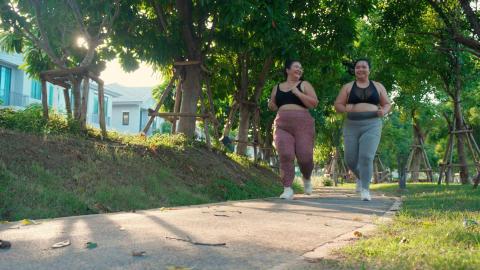
A global analysis of data from more than 232 million people shows that the rise in obesity has slowed or stabilised in some high-income countries since the 1990s among children and adolescents, and, a decade later, among adults. In Spain, this stabilisation or even a slight decline is also observed. In most low- and middle-income regions, the prevalence of obesity continues to increase and, in some cases, has already surpassed that of more developed economies. The study, published in Nature, included 4,050 studies covering the period from 1980 to 2024 across 200 countries.