
University of Extremadura
If you are the contact person for this centre and you wish to make any changes, please contact us.
Professor of Physiology at the University of Extremadura (UEx), Neuroimmunophysiology and Chrononutrition group.
Substitute lecturer and researcher at the Department of Physiology, Faculty of Medicine and Health Sciences of the University of Extremadura
Professor of Physical Education in the Faculty of Teacher Training at the University of Extremadura
Head of the Environmental Radioactivity Laboratory
Professor of Earth Physics at the University of Extremadura
Member of the working group of the European Academies' Science Advisory Council (EASAC) author of the report, member of the science and technology advisory group (E-STAG) of the United Nations Office for Disaster Risk Reduction (UNDRR), retired professor at the University of Extremadura, member of the Academia Europaea (The Academy of Europe) and associate researcher at the Institute for Studies on Conflicts and Humanitarian Action (IECAH).

Polycystic ovary syndrome (PCOS) has recently been renamed polyendocrine metabolic ovarian syndrome (PMOS), to emphasise its metabolic and endocrine dimensions, rather than viewing it solely as a gynaecological condition. A study involving more than 400,000 women has linked PPOS to an increased incidence of cardiovascular events, specifically atherosclerotic cardiovascular disease. This association was observed independently of traditional cardiovascular risk factors such as diabetes, dyslipidaemia, obesity, and hypertension, suggesting that these factors alone do not fully explain the relationship. The study included women aged 18–50 years with PMOS and drew data from the Optum Clinformatics Data Mart patient database. The findings were published in The Lancet Obstetrics, Gynaecology & Women’s Health.

A team in the United States has developed an open-source tool that enables the analysis of health data related to the menstrual cycle. So far, after analyzing 5,674 non-reproductive cycles recorded by 753 participants, they have found correlations between cycle variability, basal body temperature, and aging. According to the authors, who published the results in Science Advances, the algorithm could help advance the discovery of digital biomarkers, and they note that “most attention in menstrual health focuses exclusively on the reproductive aspect and fails to leverage these non-reproductive menstrual cycles (99%) as health indicators.”
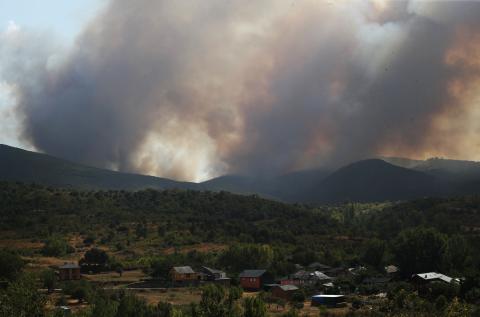
Forest disturbances in Europe—including fires, insect pest outbreaks, and windstorms—could double by the end of the 21st century compared with the 2001–2020 period if emissions are not reduced. In the case of wildfires, the annual area burned could nearly triple. The Mediterranean region ranks among the most vulnerable, and almost 90% of Mediterranean forests could be affected by increased fires and pest outbreaks under higher warming scenarios. The findings are published in a study in the journal Science involving Spanish research centers such as CREAF, the CTFC and the University of Girona.

The claim that one type of tree—Picea abies—can anticipate a solar eclipse through electrical signals is based ‘on speculative interpretations and unsupported evolutionary assumptions,’ according to an opinion piece published in the journal Trends in Plant Science. The paper refutes another from 2025 that claimed these trees synchronised their bioelectrical behaviour hours before a solar eclipse in Italy's Dolomite region. According to the authors of the new article, this electrical activity can be explained by temperature changes and atmospheric electrical discharges.

Menstrual cycles were synchronised with lunar cycles until 2010, but according to research published in Science Advances, after this date, this synchrony is only found in January, when lunar gravity is at its strongest. The team analysed the menstrual records of 176 women and attributes the loss of synchrony to the increasing use of smartphones and LED night lights, which became widespread from 2010 onwards.

Extreme wildfires are becoming more frequent and causing greater environmental and social impact. Current policies that prioritise fire suppression have not only failed to prevent this situation from arising, but actually made it worse. The report Changing Wildfires - Policy Options for a Fire-literate and Fire-adapted Europe, released by the European Academies' Science Advisory Council (EASAC), addresses this issue by outlining eight policy options. The report's key recommendations focus on putting landscape management first —by regulating biomass structure and land use — and empowering local communities.

A team in the United States has analysed how exposure to environmental chemicals in previous generations influences the onset of the first menstruation. The researchers used data from the California Child Health and Development Study (CHDS) and analysed blood samples taken from 250 pairs from the 1960s. The results, presented at the annual meeting of the Endocrine Society in San Francisco (USA), show that although the average age of first menstruation remained stable between grandmothers and their daughters, it decreased by one year between daughters and granddaughters. Certain chemicals present in the blood of the mother and father were linked to the onset of puberty in their descendants, with stronger effects in granddaughters, according to the study, and with greater weight of male exposure.
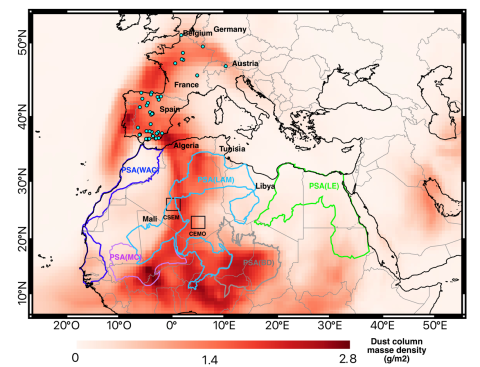
The Saharan dust intrusion that reached Spain and other European countries in March 2022 posed no risk to human health in terms of exposure to radioactivity, according to an analysis of samples collected by citizens in Spain, Germany, Austria, Belgium, France, Belgium, France, and Luxembourg. The dust came from southern Algeria, says the analysis published in Science Advances, and contained plutonium isotopes characteristic of nuclear tests conducted by the U.S. and the Soviet Union - not from French tests in the Reggane area in the 1960s.

Artemisinins, plant-based antimalarials, may serve as a treatment for polycystic ovary syndrome - which affects millions of women worldwide and can lead to infertility - according to a new study published in Science. The compounds suppressed ovarian androgen production in rodents, as well as in a small cohort of 19 human patients for 12 weeks, leading to more regular menstrual cycles without side effects.

Research published in JAMA Network Open indicates that women with premenstrual disorders diagnosed before the age of 25 have a higher risk of all-cause mortality and death by suicide. For death by suicide, the risk increased regardless of age at diagnosis. However, in general, women with premenstrual disorders do not have an increased risk of premature death from natural and unnatural causes. The study compares over several years a group of more than 67,000 women in Sweden with a diagnosed disorder with a group of more than 338,000 women without such a diagnosis.