Press Offices

Press Offices

SMC Spain amplifies the voices of experts on current topics that provoke controversy. 

¿Qué me ofrece?

The sources that collaborate with SMC Spain will multiply their national and international media impact. Register your office to become part of a directory on this website that journalists can consult. Our guides on communication and science can help you in your daily work.

Icono
Cómo trabajamos

We will rely on you when we contact sources from your organization or when we organize briefing sessions with them. We will provide you with support resources to facilitate your work. You can learn more about our method here

Título qué me ofrece
What We Offer You
Título cómo trabajamos
How We Work

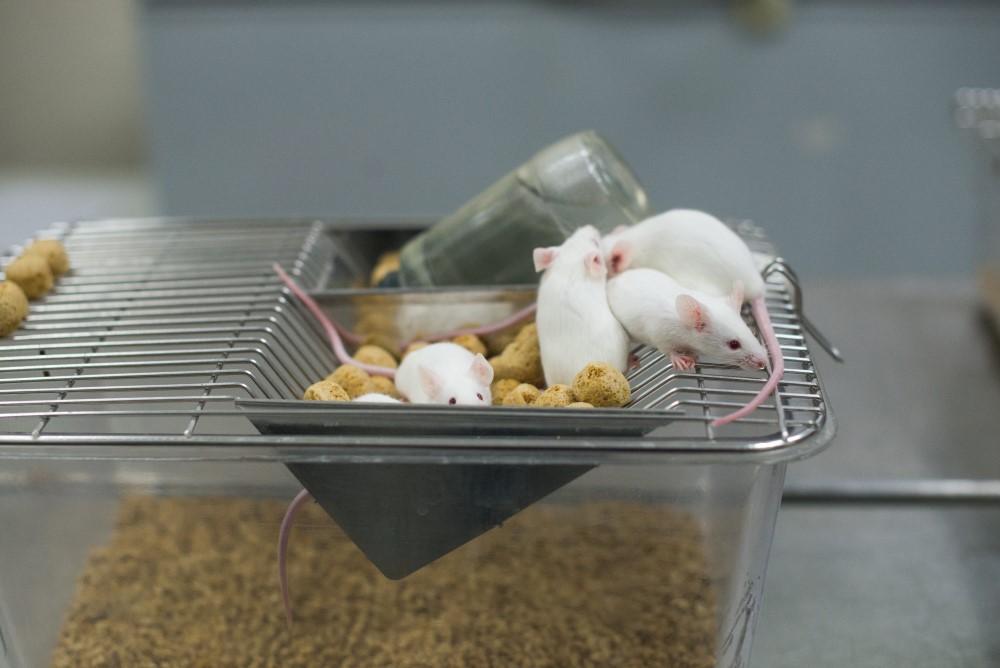
A change in diet generates rejuvenated ‘super stem cells’ in mice

A research team has managed to ‘rejuvenate’ embryonic stem cells from mice to give them greater differentiation potential, according to an article published in the EMBO Journal. Changing the type of sugar these cells use to grow modifies their metabolism and, according to the researchers, could improve their therapeutic potential or their use in in vitro fertilisation treatments.  


0

The increase in colorectal cancer in young adults could be due to a bacterial infection in childhood

A study published today in Nature with the participation of the CNIO points to the bacterial toxin colibactin, produced by some strains of Escherichia coli, as a possible culprit in the increase in early-onset colorectal cancer. The study shows that exposure to the toxin during early childhood leaves a genetic signature in colon cells and demonstrates a substantial increase in these mutations in cases of colorectal cancer in people under 50.

0

Quantum messages successfully sent using commercial telecommunications network

An international team has successfully sent quantum messages 254 kilometres away using an existing telecommunications network in Germany. A quantum Internet would theoretically be faster and more secure, and this demonstration suggests that this type of communication can be achieved in real-world conditions. The results are published in the journal Nature.

0

Climate change is increasing sudden temperature changes

An international team has analyzed the sudden changes in temperature that occurred in the world between 1961 and 2023. Their conclusions are that more than 60% of the regions included in the analysis - including Western Europe - have experienced an increase in the frequency and intensity of these sudden changes, which can endanger health, agriculture or infrastructures. Moreover, the trend will continue to rise as a result of climate change. The results are published in the journal Nature Communications.

0

Synapses in individual neurons do not follow a single strategy during learning as previously thought

A new study sheds light on how the brain adjusts its ‘wiring’ during learning, concluding that different dendritic segments of the same neuron follow different rules for communicating through their connections - synapses. The findings challenge the idea that neurons follow a single learning strategy and offer a new perspective on how the brain learns and adapts its behaviour. The work, carried out in mice, is published in the journal Science.

0

15% of the world's crops could be contaminated by heavy metals

Up to 1.4 billion people may be living in areas with soil contaminated by heavy metals such as arsenic, cadmium, cobalt, chromium, copper, nickel and lead, according to research published in Science. The paper, which used data from more than 1,000 studies, estimates that 14-17% of farmland worldwide could be contaminated by at least one toxic metal. Cadmium is the most widespread, especially in South and East Asia, parts of the Middle East and Africa.

0

Study finds three sigma probability of biological activity outside our solar system

Using data from the James Webb Space Telescope (JWST), a group of astronomers has detected the chemical fingerprints of dimethyl sulfide (DMS) and dimethyl disulfide (DMDS) in the atmosphere of exoplanet K2-18b, which orbits its star in the habitable zone. The detection has been published in The Astrophysical Journal Letters

0