High concentrations of nanoplastics found in Atlantic Ocean
Most research on the presence of plastics in the seas has focused on macro- and microplastics. Now, an international team has analyzed the presence of nanoplastics - smaller in size - in different locations and depths of the North Atlantic Ocean, including areas near the European coasts. The results suggest that these may account for the majority fraction of the total mass of plastic in the oceans and that the total mass of marine plastic may be greater than previously thought. The work is published in the journal Nature.
Morales - Nanoplásticos EN)
Carmen Morales
Lecturer at the University of Cadiz, researcher at the Institute of Marine Research (INMAR) and Scientists Coalition for an Effective Plastics Treaty
The article addresses one of the most unknown and methodologically complex dimensions of marine plastic pollution: nanoplastics. Their detection, analysis and quantification continue to face enormous challenges throughout the whole process, from material preparation and sampling to processing and quantification. This work represents a relevant advance by providing empirical data on bulk nanoplastics at different depths and ocean regions (coastal zones and areas inside and outside a subtropical gyre), with which the authors estimate nanoplastic loading on a larger scale.
Although the study has limitations inherent to the sampling and the volume analyzed, it contributes significantly to reducing knowledge gaps. The results reinforce the idea that coastal areas act as important accumulation areas and suggest that, by incorporating the smaller size fraction, the total mass of plastics in the ocean would be much higher than previously estimated.
This work also offers a critical lesson: plastics do not disappear, but fragment into invisible but persistent particles. So cleaning up is not enough. The only way to reverse this trend is through preventive management, reducing the production and unnecessary use of plastics, incorporating criteria of essentiality, and establishing more ambitious regulations on traceability, composition and final destination of the material.
All this is precisely what is at stake in the negotiations of the Global Plastics Treaty that resume next month in Geneva. This type of scientific evidence should guide ambitious and structural decisions.
Edo - Nanoplásticos (EN)
Carlos Edo
Researcher at the Danish Museum of Natural History at the University of Copenhagen
The article provides one of the first estimates, albeit preliminary, of the abundance of nanoplastics (<1 µm) in the Atlantic basin. Although the scientific community has been refining protocols for macro- and microplastics for almost a decade, the reliable detection of nanoplastics remains complex: few techniques avoid false positives in environmental matrices.
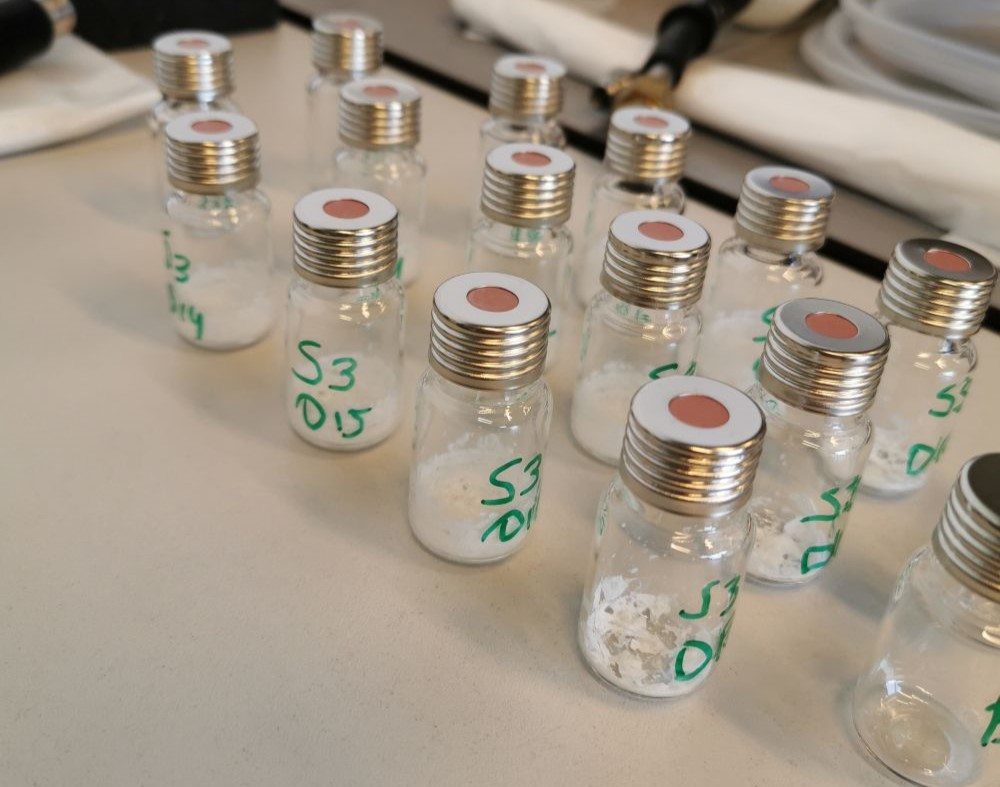
In this study, Atlantic Ocean waters were sampled at twelve stations at three depths and analysed using thermal desorption coupled with proton transfer mass spectrometry (TD-PTR-MS). To make it understandable, the sample is heated, the polymers are volatilised, they are loaded by proton transfer and the spectrometer measures the mass/charge ratio; this identifies and quantifies the polymers present.
The work is very well structured, has a broad sample design, contamination controls have been carried out, and it shows complete transparency about its limitations from the outset. These are:
- Laboratory controls corrected, but not zero. Traces of plastic are found (0.90 ± 1.45 mg/m3), although they consider this to be controlled as the values are much lower than those in the samples.
- Conservative concentrations, due to 1 µm filtering to remove dirt and real organic matter, as well as partial recovery (not all plastic can be recovered in the tests carried out), which leads us to believe that the actual estimates are probably higher.
- Only one campaign has been carried out (in November 2020): all temporal variability remains to be explained.
With all this, the authors report averages of approximately 18 mg/m3 in the top 10 metres and about 5.5 mg/m3 near the bottom. These values, to be clear, are one or two orders of magnitude higher than most microplastic data in the open sea, but at the same time 10 times lower than the high values found on beaches (sometimes exceeding 100 mg/m3).
To understand whether these data are high or low, we need to take a look at history. It should be borne in mind that, since the mid-1950s, global plastic production has multiplied exponentially, and every decade millions of tonnes have been dumped into the ocean, where they have been subjected to ultraviolet radiation, waves and biofouling. This means that materials have been fragmenting into the nano range for decades, increasing the available concentration. Of this ‘soup’ that has been building up for 70 years, there has only been recent systematic monitoring of the macro and micro fractions, not of nanoplastics. The values for nanoplastics are completely unknown; it is only now that the scientific community is trying to understand how they are generated, and therefore, despite the gaps described, the study presented sets a quantitative precedent and will serve as a reference for future multi-temporal campaigns and complementary methods, which will correct or improve the results.
Herrera - Nanoplásticos
Alicia Herrera Ulibarri
Viera y Clavijo" researcher of excellence in the EOMAR IU-ECOAQUA research group at the University of Las Palmas de Gran Canaria
I find the article very interesting, of good quality and novel.
The article presents, for the first time, data on the concentrations of nanoplastics -plastic particles of less than one micron- in the North Atlantic. Until now, knowledge about the presence of these pollutants in the ocean has been very limited, mainly due to methodological difficulties in detecting them. The results of the study suggest that the amount of nanoplastics could exceed that of micro- and macroplastics in marine ecosystems.
These findings force us to rethink key questions: how do nanoplastics affect marine organisms? Although much research remains to be done, preliminary studies already warn that nanoplastics pose a greater risk than other forms of plastic because of their ability to cross biological barriers and cause damage at the cellular level.
Another pressing question is: how much more evidence do we need to push for a binding global treaty to address plastic pollution? It has been more than two decades since the term “microplastics” was first used in the scientific literature. Since then, thousands of studies have accumulated documenting not only their alarming abundance in the oceans, but also their negative impacts on the health of marine organisms and humans.
The science is clear: urgent and ambitious measures are required to curb the production and discharge of plastics into the environment.
The limitations of studying nanoplastics are always methodological, as it is very difficult to avoid contamination. For example, particles of polyethylene and polypropylene, two of the most frequent polymers in studies of macro and microplastics, were not detected. This may be due, as the authors suggest, to methodological difficulties in which the modified polymers are not detected or are masked by organic particles.
Ethel Eljarrat - nanoplásticos Atlántico
Ethel Eljarrat
Director of the Institute of Environmental Assessment and Water Studies (IDAEA-CSIC)
The article published in the journal Nature shows the presence and concentrations of nanoplastics in the North Atlantic, highlighting that the total amount of nanoplastics found is in the same range or exceeds previous estimates of macroplastics and microplastics for the entire Atlantic. They therefore suggest that nanoplastics constitute the dominant fraction of marine plastic pollution, representing the largest fraction of plastic mass in the ocean.
Although a large number of scientific studies have been conducted on the environmental problem of microplastics, fewer studies have focused on nanoplastics, which are of greater interest because the smaller the plastic particle size, the greater its toxicity. Nanoplastics have a greater ability to cross biological barriers and accumulate in living organisms, including humans.
However, it should be noted that the fact that there are fewer studies on nanoplastics is partly due to the difficulty in establishing methodologies for their analysis. The authors themselves mention possible overestimates due to false positives caused by the presence of organic matter from algae. They also point out the strangeness of not having detected either polyethylene or polypropylene, when these two polymers are the most common found in floating plastic in seas and oceans.
To date, there is no consensus on how to determine and quantify microplastics, let alone nanoplastics. The authors make estimates of nanoplastics levels and compare them with previous studies on microplastics, without mentioning the problem of comparing data obtained using different analytical methods.
Sophie ten Hietbrink et al.
- Research article
- Peer reviewed